How Can Hope And Courage Help Us?

For many involved today in movements of social transformation, hope is rooted in faith in God. Religious hope is not simply a conviction that certain objectives will occur. Among religiously sensitive people, hope in God sustains practical efforts, nurtures commitment to seek out alternative pathways and motivates continued action even in the face of delay or defeat. Through faith and hope, we are free even to fail in the world’s eyes.

Courage serves as a healing emotion. When we confront injustice or indifference, the arousal of courage heals the fear and anger that would weaken our response. Courage welcomes hope — the hope that predicts, even against present evidence, a better future. In the face of a world that does not support our deepest desires, courage engenders patience and faith that good will ultimately triumph.

Nourishing the Spirit
Nourishing the Spirit: The Healing Emotions of Wonder, Joy, Compassion and Hope
James & Evelyn Whitehead

Background on James & Evelyn Whitehead

Where Are Our Memories Located? Brain, Body, Or Both…

One could argue that, if memories are indeed associated with the body as a whole, amputation of an organ or general tissue loss should noticeably impair recall, which doesn’t seem to be the case. The problem is: it isn’t the case with the brain  either. Memory lapses in Alzheimer’s patients only become noticeable after 40% to 50% of brain cells are already dead.

Illnesses that affect only the brain, such as Alzheimer’s, as well as localized physical trauma to the brain alone, can significantly impair recall even when the rest of the body remains intact. This doesn’t imply, however, that memories are all in the brain. It suggests only that brain illness and trauma can impair our ability to amplify otherwise obfuscated experiences, wherever these experiences may reside.

We know that the reverberation process that amplifies mental contents happens only in the brain, taking up relatively small amounts of neurons in specific areas. It’s thus no surprise that, if damage to key brain pathways prevents the flow of information into these specific areas, lucid awareness of the corresponding experiences becomes impossible. The memories will still be there in the body, but the patient will report an inability to remember — that is, to become lucidly aware of — certain things.

Brief Peeks Beyond
Brief Peeks Beyond: Critical Essays on Metaphysics, Neuroscience, Freewill, Skepticism, and Culture

Bernardo Kastrup

Background on Bernardo Kastrup

Kindness – We Crave It, Yet Often Find It Disturbing

Most people, as they grow up now, secretly believe that kindness is a virtue of losers. But agreeing to talk about winners and losers is part and parcel of the phobic avoidance, the contemporary terror of kindness. Because one of the things the enemies of kindness never ask themselves — and this is now an enemy within all of us — is why we feel it at all. Why are we ever, in any way, moved to be kind to other people, not to mention to ourselves? Why does kindness matter to us?

It is, perhaps one of the distinctive things about kindness — unlike an abstract moral ideal, such as justice — that in the end we know exactly what it is, in most everyday situations; and yet our knowing what it is makes it easier to avoid. We usually know what the kind thing to do is — and when kindness is done to us, and register its absence when it is not. We usually have the wherewithal to do it (kindness is not an expert skill); and it gives us pleasure. And yet we are extremely disturbed by it.

We are never as kind as we want to be, but nothing outrages us more than people being unkind to us. There is nothing we feel more consistently deprived of than kindness; the unkindness of others has become our contemporary complaint. Kindness consistently preoccupies us, and yet most of us are unable to live a life guided by it.

On Kindness
On Kindness
Adam Phillips and Barbara Taylor
.
.
.
.


Background on Adam Phillips and Barbara Taylor.


Gratitude: A Discipline That’s A Conscious Choice

Gratitude as a discipline involves a conscious choice. I can choose to be grateful even when my emotions and feelings are hurt.

Henri Nouwen
Henri Nouwen
1932-1996
 .
 .
.
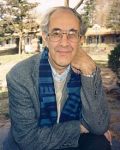
Henri Nouwen was a Dutch Catholic priest, professor, writer and theologian. His interests were rooted primarily in psychology, pastoral ministry, spirituality, social justice and community.  He served as professor at Notre Dame, Yale, and Harvard. He wrote many books, all touching deeply on emotions.
.
Over the course of his life, Nouwen was heavily influenced by the work of Anton Boisen, Thomas Merton, Rembrandt, Vincent van Gogh and Jean Vanier. Though extremely gifted in many ways, Nouwen suffered from life-long bouts of depression, which caused him to be more introspective, and see the world from a deeper understanding.
.
Nouwen wrote over 40 books on spirituality and the spiritual life that have sold millions of copies and been translated into dozens of languages. His vision of spirituality was broad and inclusive, and his compassion embraced all of humankind.
.
In his later years, Nouwen gave up his prestigious teaching career to go live with developmentally disabled folks at L’Arche Daybreak Community in Ontario, Canada. He lived at L’Arche for the last 10 years of his life. He died in 1996, at age 64.
.
The Henri Nouwen Society, whose motto is “Fostering the spirituality of solitude, community, and compassion” keeps his teachings alive for anyone interested.
.

Book by Henri Nouwen include:


Want Meaning And Purpose? What Theology And Natural Sciences Offer Us

Theology is an attempt to see past the ‘brain scan’ and infer how it ‘feels to feel’ love in a direct way; it is an attempt to see past the footprints and understand where the hiker wants to go, as well as why he wants to go there. In this sense, theology and the natural sciences are entirely complimentary.

Both nature itself and religious texts are expressions of a mysterious divine perspective and, as such, valid sources of concrete data for theological study. Theology has a clear, concrete subject, as well as a clear and concrete challenge: to decode the divine mystery behind the images — both ‘unconscious’ and empirical — that we experience during life.

While the natural sciences attempt to model and predict patterns and regularities of nature, theology attempts to interpret those patterns and regularities so to make some sense of their first-person perspective; that is, God’s perspective. Theology also attempts to interpret the symbols and allegories in religious literature so to reveal the ‘unconscious’ psychic processes behind them, which betray something about the inner-workings of God’s mind. In both cases, theology represents an attempt to provide a hermeneutics of texts and nature. This is essential, because a life worth living isn’t only about practical applications; it is about meaning and purpose.

Brief Peeks Beyond
Brief Peeks Beyond: Critical Essays on Metaphysics, Neuroscience, Freewill, Skepticism, and Culture

Bernardo Kastrup

Background on Bernardo Kastrup