How Is Meditation Practicing Who We Are?

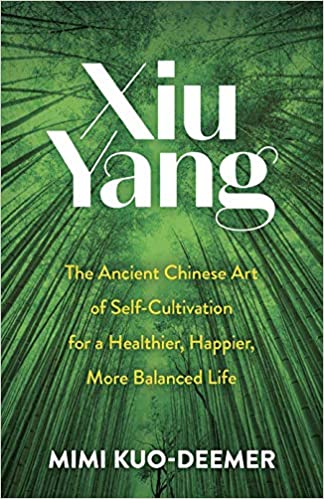
Meditation involves simply being aware in the timeless flow of experiencing. When we meditate, we notice hearing, feeling, sensing, all arising in and inseparable from being. We realize that we can disengage from the stories in our mind and stay as awareness as we experience the urge to act. We can fully and lovingly welcome our feelings. Eventually, we realize that meditation isn’t something we do — it’s effortlessly being who we are.


The End of Self-Help
Gail Brenner
What Is The Ancient Chinese Art Of Self-Cultivation?

Self-Cultivation

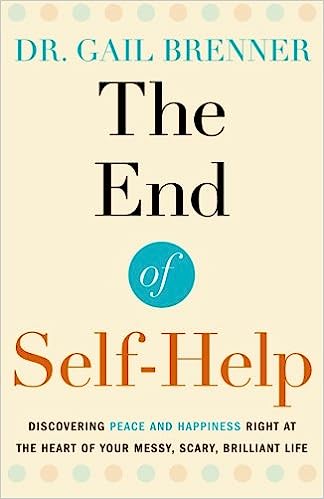
Xiu Yang is the ancient Chinese art of self-cultivation.  The translated meaning is below:

  • xiu yang (修養 ) is short for xiu xin yang xin (修心養心)
  • xiu means to cultivate
  • yang means to nurture
  • xin means the heart
  • xiu yang is the practice of cultivating and nurturing one’s heart

In Daoism the heart represents infinite space, the seat of consciousness, the home of the eternal. When the heart awakens, it radiates the light of compassion in all directions. 


Xiu Yang: The Ancient Chinese Art of Self-Cultivation for a Healthier, Happier, More Balanced Life
Mimi Kuo-Demer

What Is The God Beyond God?

Meister Eckhart, one of the greatest mystics, said that he prays to God to rid him of God, to make him free from God. That is a memorable formulation of a mystical atheism and of radical theology. 

The God Eckhart is trying to free us from is a God of our own construction, a God cut to fit the size of our images and concepts, propositions and arguments, not just the God of philosophers but also the God of theologians, of anything and anything we can say of God. But getting rid of that God does not spell the simple end of God for Eckhart, but the beginning, the genuine entry or breakthrough into the depths of God — the God to whom Eckhart is praying, let us say the God beyond God, the God without God. This God is not beyond and above, but in the “ground” of the soul, where God is lodged in our hearts or minds. 


The Folly of God
John Caputo 

Mary Magdalene & The Gospel Of Philip

There are three important new source materials for the study of Mary Magdalene: the Gospel of Thomas & the Gospel of Philip (both from the Nag Hammadi collection); and, the Gospel of Mary Magdalene (not from Nag Hammadi, but from Cairo). Of these three works, the Gospel of Philip is the most ornate & intricate. 

The Gospel of Philip is essentially tantric in orientation (centered in the transformation of eros), but as in all tantric teaching, prudence and spiritual subtlety are required to catch the real meaning. This is the Gospel in which Mary Magdalene appears the most undisguised as Jesus’ companion and beloved… But in this gospel even more than in most, it is dangerous to pull lines out of context in an effort to glean personal information. The whole gospel unfolds as a single tapestry around the theme of bridal mysticism as the core metaphor for the Christian path.


The Meaning of Mary Magdalene
Cynthia Bourgeault

Was Early Christianity Pluralistic?

Contrary to the Roman Catholic story of unbroken transmission of church doctrine, the real origin of Christianity is far more fascinating and believable. Rather than an unadulterated “pure doctrine” handed on from apostle to apostle, early Christianity was a melting pot of pluralism, as different in ethnicity and temperament as the Mediterranean lands themselves. 

There were Jewish Christians, Greek Christians, Roman Christians, a whole line of Syrian and Aramaic Christians that has largely dropped out of sight, initiates of Mystery schools, keepers of the Torah, millennialists and mystics, misogynists, and matriarchs. Each community struggled within the terms of its own frame of understanding to make sense of the Jesus event, and within each community that vision looked a little different.

Far from bowing to some objective standard of orthodoxy, what gave these early Christian communities their seat-of-the-pants dynamism was that everything had to be worked out from scratch. What did Jesus actually teach? Who was an apostle and who wasn’t? How did one tell? Needless to say, there were many local options, and the texts that circulated among these early outposts of Christians comprised an ongoing conversation rather than an unbroken monologue. 


The Meaning of Mary Magdalene 
Cynthia Bourgeault