Conventionally, one may say that the mind creates the notion of a substantial, independent self and that this belief is sustained in memory. There is no harm in that as far as it goes. But the truth is that it is all simply present thoughts. And there is no separate thinker or ‘me’ to be found. Your actual identity is that space-like, utterly free awareness itself. All self-centered thoughts are baseless, as there is no one to whom they apply. See this clearly and there is really nothing else needed. It is the heart of the matter. Seeing this, suffering, doubt, seeking and personal problems vanish.
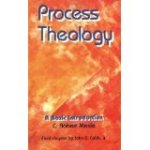
In process theology, God is constantly, in every moment and in every place, doing everything within God’s power to bring about the good. Divine power, however, is persuasive rather than coercive. God cannot force people or the world to obey God’s will. Instead, God works by sharing with us a vision of the better way, of the good and the beautiful. God’s power lies in patience and love, not force.
Our power is of the kind that arises from our existence in small, organic bodies with eyes, ears, hands and a nervous system. God has no body like ours. God’s power is the power that enables all of reality to continue its creative advance, that makes creatures free, that shares the experience of every creature and is experienced by every creature. God’s creative power sustains the universe. Yet, it is only through the creatures of the world that God has hands.
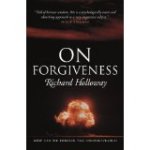
Forgiveness, when it happens, is able to remove that dead weight from our past and give us back our lives. The real beauty of forgiveness is that it can deliver the future to us.
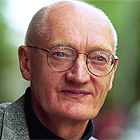
Richard Holloway is a Scottish writer and broadcaster. Holloway was formerly Bishop of Edinburgh in the Scottish Episcopal Church. He is a former Gresham Professor of Divinity and Chairman of the Joint Board of the Scottish Arts Council and Scottish Screen. He is a member of the Royal Society of Edinburgh.
Holloway is the author of over twenty books. He has presented many series for BBC television and radio.
It is a mistake to assume that the church — or the synagogue, or any ancient religious group — proceeded formally with the development of its organization, like modern political bodies which begin by calling together a “constitutional assembly” to draft a declaration of principles, a set of definitions, a series of by-laws, and a governing code. The most ancient church had no idea of legislating for posterity or of thinking out the propositions of its practice. It emerged upon the broad stage of Greco-Roman history as one more religion of a book, indeed as an offshoot or sect of “the religion of the book,” Judaism.
Frederick C. Grant was a New Testament scholar. He was professor of Biblical Theology at the Union Theological Seminary in New York City. Grant studied at Western Theological Seminary, Chicago, Illinois.





 Who Knows Anyhow?