How Did The Earliest Christians Remember Their Stories About Jesus?

When we remember what has happened before now, it is just as much about the present as the past. It is the relevance of the past that makes us remember it in the present. This applies to the early Christian storytellers in the oral stages of the stories about Jesus, stories that weren’t written down until 40 to 65 years after the fact. They told stories that remembered Jesus’s past in light of the community’s present. These may have been “distorted” memories, but nonetheless they were valuable memories, and no less real to the people who held them and shared them than recollections that actually were rooted in the life of the historical Jesus.

Oral cultures have a different conception of tradition from written cultures. In written cultures, such as ours, the idea of preserving a tradition means to keep it intact, verbatim, the same, from one telling to the next. In oral cultures, all one can do is try to remember if a spoken version of a tradition is the “same” as an earlier version. But in fact, being exactly “the same” — in our sense of verbatim repetition — is not a concern in oral traditions. That concern came into existence in written cultures, where such things could be checked.

Studies have shown that those passing along traditions in oral traditions are not interested in preserving exactly the same thing. They are interested in making the same thing relevant for the new context. That necessarily involves changing it. Every time. For that reason, when someone in an oral culture claims that the current version of the tradition — a story, a poem, a saying — is the “same” as an earlier one, they do not mean what we mean. They mean “the same basic thing.” They do not mean “exactly” the same. At all.
Jesus Before the Gospels
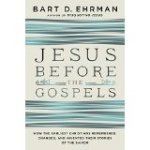
Jesus Before the Gospels: How the Earliest Christians Remembered, Changed, and Invented Their Stories of the Savior
Bart Ehrman
.
.
.


Bart Erhrman
Bart Ehrman
born 1955

. Bart D. Ehrman
. Wikipedia
. Bart Ehrman Blog

Bart Ehrman is an American New Testament scholar. Ehrman is the James A. Gray Distinguished Professor of Religious Studies at the University of North Carolina at Chapel Hill. He completed his M.Div. and Ph.D. degrees at Princeton Seminary, and began his teaching career at Rutgers University.

Ehrman’s work focuses on textual criticism of the New Testament, the historical Jesus, and the development of early Christianity. He has written and edited 30 books, including three college textbooks. He has also achieved acclaim at the popular level, authoring five New York Times bestsellers.

Books by Bart Ehrman include:


Living in the Present is Hard – The Past & Future Keep Harassing Us

It is hard to live in the present. The past and the future keep harassing us. The past with guilt, the future with worries.

So many things have happened in our lives about which we feel uneasy, regretful, angry, confused, or, at least, ambivalent. And these feelings are often colored by guilt. Guilt that says: “You ought to have done something other than what you did; you ought to have said something other than what you said.” These “oughts” keep us feeling guilty about the past and prevent us from being fully present to the moment.

Worse, however, than our guilt are our worries. Our worries fill our lives with “What ifs”:  “What if I lose my job, what if my father dies, what if there is not enough money, what if the economy goes down, what if a war breaks out?” These many “ifs” can so fill our mind that we become blind to the flowers in the garden and the smiling children on the streets, or deaf to the grateful voice of a friend.

The real enemies of our life are the “oughts” and the “ifs.” They pull us backward into the unalterable past and forward into the unpredictable future. But real life takes place in the here and the now.

Here and Now by Henri Nouwen
Here and Now: Living in the Spirit
Henri Nouwen


Henri Nouwen
Henri Nouwen
1932-1996

Background on Henri Nouwen


What Can We Experience Through Contemplation?

Divine love has no conditions. We are invited into it not as an abstract idea or as a ritual only, but as an experience. Contemplation is the experience of God that is becoming continuous and permanent even in the details of everyday life and amid the distractions of computers and the ghastly horrors of violence throughout the world. The divine goodness and the presence of divine love are always there. As our contemplative clarity deepens, we move from the occasional experience of the Presence to a permanent state of loving interaction on a moment by moment basis.

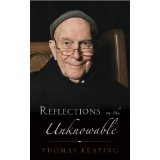
Reflections on the Unknowable

Thomas Keating

Background on Thomas Keating


How Can We Experience Our True Nature?

As awareness becomes more penetrating, it breaks through into the realm of pure consciousness, Mind, or Spirit. Here there are no objects, thoughts, or things, no time or change, no minds to suffer or bodies to decay and die. There is only the bliss of unbounded awareness, transcendent to space and time, eternally free.

At this stage exclusive identity with the body and mind are gone. Practitioners never again wholly believe that they are merely separate egos, bound to and by the body, and inevitably doomed to die with it. Shankara, 9th century spiritual philosopher from India, described this recognition as one in which “The knower of the Atman [our underlying self, or soul] does not identify himself with his body. He rests within it, as if within a carriage.” The practitioner discovers that though all things change and all bodies die, there is a realm beyond things and bodies, and therefore beyond all change, suffering, and death.

This understanding naturally weakens attachments to the world and its transient pleasures, which pale in comparison to the bliss of the Divine. In Shankara’s words: “a man is free from worldliness if he has realized Brahman, the infinite bliss.”

The advice of Jesus now takes on a deeper meaning:

Do not store up for yourselves treasures on earth where moth and rust can consume and where thieves break in and steal; but store up for yourselves treasure in heaven [which is in your midst and within you, Luke 17:21] where neither moth nor rust consume and where thieves do not break in and steal. For where your treasure is, there your heart will also be.
…..— New Testament, Matthew 6:19

The key insight is that a sacred realm of pure awareness is our natural, true nature and home, and that by awakening to it, suffering can be transcended and divine bliss directly known. The challenge is to stabilize this insight and to reorient our behavior so we experience and express this revelation in more and more of our life.


Essential Spirituality
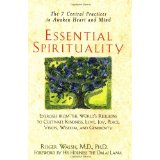
Essential Spirituality: The 7 Central Practices to Awaken Heart and Mind

Roger Walsh

Background on Roger Walsh

What Do We Experience Consciously Versus Unconsciously?

Mind.E
.
Consciousness
is notoriously hard to pin down, and when it comes to experience, the question is what’s within our conscious grip, as opposed to what takes place once removed, at an unconscious level?

We think of intelligence as a deliberate, conscious activity guided by the laws of logic. Yet much of our mental life is unconscious, based on processes alien to logic; gut feelings and intuitions.

Intelligence is not identical with conscious thought. The paradox is that the cerebral cortex in which the flame of consciousness resides is packed with unconscious processes, as are the older parts of the brain. The unconscious parts of our minds can decide without us — the conscious self — knowing it’s reasons.

…..— Neuroscientist Gerd Gigerenzer

This is the case, for example, in the regulation of our breathing and in the release of hormones that energize us to act in the face of danger. These vital functions are activated within the autonomic nervous system, the network of neural pathways that generate energy to support our most basic physical activities — stimulating digestion, fight or flight behaviors, or moving the body through space (how we do that seemingly simple process is most amazing)..

Our minds process vast amounts of information outside of consciousness, beyond language. In fact, most of our everyday thinking, feeling and acting operate outside conscious awareness. We are aware of many things (the pressure of our feet on the floor, the temperature in the room) without being consciously attuned to this information. More than we realized over a decade ago, thinking occurs not on stage, but off stage, out of sight. The growing scientific appreciation of non-rational, intuitive forms of knowing lends credence to spirituality.

…..—Psychologist David Myers


Gerd Gigerenzer.
Gerd Gigerenzer
born 1947

. Max Plank Institute for Human Development
. Wikipedia

Gerd Gigerenzer is a German neuroscientist/psychologist.    Gigerenzer is currently director of the Center for Adaptive Behavior and Cognition (ABC) at the Max Planck Institute for Human Development and director of the Harding Center for Risk Literacy, both in Berlin, Germany. He has studied the use of bounded rationality and heuristics in decision making.

Gigerenzer has investigated how humans make inferences about their world with limited time and knowledge. His research shows that in an uncertain world, probability theory is not sufficient — people also use smart heuristics, that is, rules of thumb. He conceptualizes rational decisions in terms of the “adaptive toolbox” (the repertoire of heuristics an individual or institution has) and the ability to choose a good heuristics for the task at hand.

Gigerenzer argues that heuristics are not irrational or always second-best to optimization, as the accuracy-effort trade-off view assumes. In contrast, his and associated researchers’ studies have identified situations in which “less is more”, that is, where heuristics make more accurate decisions with less effort. This contradicts the traditional view that more information is always better or at least can never hurt if it is free.

Books by Gerd Gigerenzer include:


David Myers
David Myers
born 1942

David Myers | Hope College
. Social Psychology Network
. Wikipedia

David Myers is a psychology professor at Hope College, Michigan. Myers is interested in social psychology, psychology and religion, and personal and societal well-being. His work on group polarization has been honored with the Gordon Allport Intergroup Relations Prize. He is the author of 17 books, including several popular textbooks  and general-audience books dealing with issues related to Christian faith as well as scientific psychology.

Myers is a fellow of the American Psychological Association, the American Psychological Society and the American Association of Applied and Preventive Psychology. He is one of the most important authors of psychology textbooks and is the recipient of honorary doctorates from three different educational institutions. In addition, Myers has helped found a Community Action Center that assists poverty-level families, and is an advocate for people with hearing loss.

Books by David Myers include: