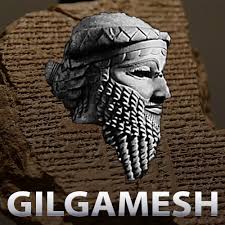
Gilgamesh & The Secret of Life

Gilgemesh

Ancient Sumerian Tale of Gilgamesh

The stubborn, hard king Gilgamesh sought to ask the Immortal One the secret of life. He was told that there would be stones on his path to guide him.

But in his urgency and and pride, Gilgamesh was annoyed to find his path blocked, and so smashed the very stones that would have helped him. In his blindness of heart, he broke everything he needed to discover his way.

We too, in the same confusion, break what we need, push away those we love, and isolate ourselves when we need to be held most.
Book of Awakening
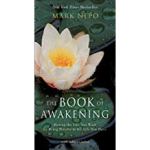
Book of Awakening: Having the Life You Want by Being Present to the Life You Have

Mark Nepo

.
.


Mark Nepo
Mark Nepo
born 1951

. Mark Nepo website
. Wikipedia

Mark Nepo is a poet and spiritual adviser who has taught in the fields of poetry and spirituality for over 35 years. He is a cancer survivor. In his 30s he was diagnosed with a rare form of lymphoma, a struggle which helped to form his philosophy of experiencing life fully while staying in relationship to an unknowable future.

Nepo has a doctorate in English. He taught for 18 years at the State University of New York in Albany, New York.

Nepo is best known for his New York Times #1 bestseller, The Book of Awakening.

Books written by Mark Nepo include:


On the One Life We’re Given – Mark Nepo

Where Can We Find The Deepest Human Life?

Deepest Human Life

The Deepest Human Life is Everywhere 

Plato helps us realize that within each of us the very depths of being human are present – we see that each human life reflects something important about who we are.

The difference between regular folks and someone like Kant, pertains to our differing abilities to articulate the shape of a philosophical constellation – it has nothing to do with our inner substance. The pursuit of wisdom involves a confrontation with our ignorance, most famously embodied in the “I know I know nothing” of Socrates.

Regardless how challenging things may be, we take solace in the fact that even a profound confusion is a profound confusion. Whatever holiness can be found in Socrates and Confucius is within our reach.

Exploring Life Through Philosophy

Philosophy, as Plato shows, involves confronting the fact that our most stubborn attempts to think clearly come up short, but we nonetheless have to live as if we had answers to the stubborn mysteries. Philosophy is everything that humanly follows from a real confrontation with our strange predicament.

At it’s best it’s a way of life. The division between the wise and the foolish is not between those with all the answers and those who are confused. The great dividing line is between our usual folly and an enlightened folly, by which one understands life itself and has found a way of happily living in an impossible relationship.

Can Beliefs & Wisdom Coexist?

Thomas Aquinas, the master of the theologians, is said to have come down from his vision of God and declared his thousands of learned pages so much straw. Yet, as Socrates and other great ones teach us, we can’t do without beliefs. They’re a necessary part of being human.

Wisdom is compatible with any number of traditions, religious or otherwise. For wisdom is not so much the possession of right beliefs (though it involves dodging the worst of them) as finding a way to relate to our beliefs in such a way that the good parts of us are liberated. Wisdom isn’t a doctrine: it’s a style.

The Deepest Human Life
The Deepest Human Life: An Introduction to Philosophy for Everyone

Scott Samuelson

Background on Scott Samuelson

What is the Origin and Meaning of “Agnosticism”?

For T.H. Huxley, who coined the term in 1869, agnosticsm was as demanding as any moral, philosophical, or religious creed. Rather than a creed, though, he saw it was a method realized through “the rigorous application of a single principle.”

He expressed it positively as: “Follow your reason as far as it will take you,” and negatively as: “Do not pretend that conclusions are certain which are not demonstrated or demonstrable.”

This principle runs through the Western tradition: from Socrates, via the Reformation and Enlightenment, to the axioms of modern science. Huxley called it the “agnostic faith.”

Buddhism Without Beliefs
Buddhism Without Beliefs: A Contemporary Guide to Awakening
Stephen Batchelor

Background on Stephen Batchelor

How Did Ancient People Use Calendars?

Oldest Calendars

The oldest ‘calendars‘ are vast archaeological sites that aligned posts or megaliths (giant stones) with the rising of the Sun or Moon on significant dates, such as the summer or winter solsticeThe earliest structures built as calendars seem to be designed to help calculate the solar and lunar months. Priest-astronomers used these. 

Prehistoric astronomers left no user manuals for their monuments – their uses had to be rediscovered by archaeoastronomersarchaeologists with knowledge of astronomy. 

Warren Field, Scotland, found in 2004, is the earliest site found so far. It tracks events some 10,000 years ago.

Development of Accurate Calendars

Calendar development was often driven by the need to fix religious festivals and observance, an impulse that continued with the formation of new religions such as Christianity and Islam. Both put astronomy to use in this way.

Arab astronomers and engineers were zealous in their pursuit of improved methods for keeping time so that daily prayers could be received by the devout at the right time.

Time-keeping on a larger scale was essential in scheduling religious festivals.

Lunar Calendars 

Time is naturally divided astronomically by the Earth’s orbit around the Sun (a year), the Earth’s rotation (a day) and the phases of the Moon. A lunar month (a full cycle from one new or full moon to the next is approximately 29 1/2 days. A year is 365 1/4 days.

Inconveniently, a year is 12.37 lunar months long. For early societies, a lunar month was a useful and countable period of time, one that could be easily observed and checked just by looking up at the night sky.

But if you use 12  lunar months as the basis of your year, the calendar will drift out of sync quite quickly. It will be a month out after only 3 years, and 6 months out after 18 years. To avoid this, an extra (intercalary) month has to be added every few years.

Egyptian Calendars

The ancient Egyptians began their year with the rising of Sirius (which they called Sopdet) above the horizon before sun rise.

  • System dates to c. 3000 BC.
  • Divided year into 365 days.
  • Used two different calendars.
  • Sirius, a stable star, and the brightest star in the night sky, was the basis for the Egyptian calendar.
  • Ptolemaic rulers depended on calendars.

Other cultures developed independent calendars, notably China and Mesoamerican (Central American) civilizations.

Chinese Yin-Yang Li Traditional Calendar

Origins of the Chinese calendar can be traced back to 14th century BC, though legend says it was invented in 2637 BC.

  • Literally ‘heaven-Earth’ calendar.
  • Used alongside imported calendars such as the Hindu calendar.
  • Used until 1912, when China officially adopted the Western Gregorian calendar.

How the World Works: Astronomy: From Plotting the Stars to Pulsars and Black Holes
How the World Works: Astronomy: From Plotting the Stars to Pulsars and Black Holes 

Anne Rooney

Background on Anne Rooney

How is Our World Formed by Culture and Language?

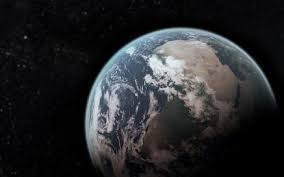
Earth

Look Around You

Look out at your own present visual field. What you see before you is in the minutest detail framed and formed by culture and language – framed by cultural categories, seen in the light of theories formed by words colored by our feelings and evaluations. Our world is our own self-objectification.

Our Conscious Experience

It remains curiously difficult to recognize that we made it all up. We evolved the entire syllabus. We slowly evolved our own languages, our values, our systems of knowledge, our religions, and our worldviews. We evolved our own subjective consciousness, because the brightness, the consciousness, of conscious experience is a by-product of language.

After God: The Future of Religion
After God: The Future Of Religion
Don Cupitt

Background on Don Cupitt