Third Principle of Biocentrism – The Observer

Nothing is Real Unless It’s Perceived

Quantum physics says that before a measurement is made, a subatomic particle doesn’t really exist in a definite place or have an actual motion. Instead, it dwells in a strange nether realm, without actually being anywhere in particular. This blurry indeterminate existence ends only when it is observed — in other words, nothing is real unless it’s perceived.


There are 7 Principles of Biocentrism, all of which are built on established science, and all of which demand a rethinking of the physical universe.

Third Principle of Biocentrism: The behavior of subatomic particles — indeed all particles and objects — is inextricably linked to the presence of an observer. Without the presence of a conscious observer, they at best exist in an undetermined state of probability waves.

Biocentrism
Biocentrism: How Life and Consciousness are the Keys to Understanding the True Nature of the Universe

Robert Lanza, MD
with Bob Berman

Second Principle of Biocentrism – Perception

Cognition is Awareness or Consciousness

Modern knowledge of the brain shows that what appears “out there” is actually occurring within our own minds, with visual and tactile experiences located not in some external disconnected location that we have grown accustomed to regarding as being distant from ourselves. We can refer to all cognition as awareness or consciousness.


There are 7 Principles of Biocentrism, all of which are built on established science, and all of which demand a rethinking of the physical universe.

Second Principle of Biocentrism: Our external and internal perceptions are inextricably intertwined. They are different sides of the same coin and cannot be divorced from one another.

Biocentrism
Biocentrism: How Life and Consciousness are the Keys to Understanding the True Nature of the Universe

Robert Lanza, MD
with Bob Berman

First Principle of Biocentrism

Background of Biocentrism

Nothing in modern physics explains how a group of molecules in your brain create consciousness. Our current model simply does not allow for consciousness, and understanding of this most basic phenomenon of our existence is virtually nil. Interestingly, our present model of physics does not even recognize this as a problem.

A new perspective, called Biocentrism, which accounts for life and consciousness has been put forward. In this view, life is not an accidental by-product of the laws of physics. The conclusions of biocentrism are based on mainstream science. Biocentrism cements the groundwork for new lines of investigation in physics and cosmology.


There are 7 Principles of Biocentrism, all of which are built on established science, and all of which demand a rethinking of the physical universe.

First Principle of Biocentrism: What we perceive as reality is a process that involves our consciousness.

An “external” reality, if it existed, would — by definition — have to exist in space. But this is meaningless, because space and time are not absolute realities but rather tools of the human and animal mind.


Biocentrism
Biocentrism: How Life and Consciousness are the Keys to Understanding the True Nature of the Universe

Robert Lanza, MD
with Bob Berman

Why Biocentrism Makes Sense

Biocentrism is perhaps most valuable in helping us decide what not to waste time with — areas where biocentrism suggests our efforts at attempting to better understand the universe as a whole may be futile. “Theories of Everything” that do not account for life or consciousness will certainly lead ultimately to dead-ends, and this includes string theory. Models that are strictly time-based, such as further work on understanding the Big Bang as the putative natal event of the cosmos, will never deliver full satisfaction or closure. Conversely, biocentrism is in no way anti-science; science dedicated to processes or technological leaps create untold benefits within circumscribed fields of endeavor. But those that attempt to provide deep or ultimate answers — to a population that remains hungry for them — must ultimately turn to some form of biocentrism if they are to succeed.

Biocentrism
Biocentrism: How Life and Consciousness are the Keys to Understanding the True Nature of the Universe

Robert Lanza, MD
with Bob Berman


Biocentrism – Life and Consciousness are Key to Understanding the Universe

Biocentrism, also known as the biocentric universe, is a theory of everything.  Biocentrism proposes that, rather than a belated and minor outcome after billions of years of lifeless physical processes, life and consciousness are absolutely fundamental to our understanding of the universe. From the perspective of Biocentrism, our current theories of the physical world don’t work, and can never be made to work, until they account for life and consciousness.

Biocentrism was proposed in 2007 by American scientist Robert Lanza.

Biocentrism
Biocentrism: How Life and Consciousness are the Keys to Understanding the True Nature of the Universe

Robert Lanza, MD
with Bob Berman



Robert Lanza
Robert Lanza, MD (Robert Lanza, MD website, Wikipedia)
born 1956

Robert Lanza, MD is an American medical doctor and scientist. Lanza is one of the most respected scientists in the world. He is Chief Scientific Officer of Ocata Therapeutics (formerly named Advanced Cell Technology) and Adjunct Professor at the Institute for Regenerative Medicine, Wake Forest University School of Medicine. Lanza has 100’s of publications and inventions and more than two dozen scientific books to his credit. He is the author of Principles of Tissue Engineering (4th Edition 2013), recognized as the definitive reference in the world.

Robert Lanza’s books include:
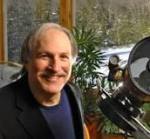
 

Bob Berman
Bob Berman
birthdate undisclosed

Robert Berman — known as Bob Berman — is an American astronomer, author, and science popularizer. Berman runs Overlook Observatory at his home in Woodstock, New York, USA. He was an adjunct professor of astronomy at Marymount Manhattan College, from 1996 to 2000. He is “Strange Universe” columnist for Astronomy magazine, is responsible for the astronomy section of The Old Farmer’s Almanac, and has led aurora and eclipse expeditions as far away as the Arctic and Antarctic.

Bob Berman conducts a weekly radio broadcast, “Skywindow”, and a monthly, hour-long call-in show on Northeast Public Radio. He is also heard nightly on Slooh.com, an internet-based Community Observatory. Check out Bob Berman’s event calendar here: Astronomer Bob’s Schedule.

Bob Berman’s books include: