Hope – Transformative Power to Heal the Past and Anticipate the Future

Hope is a transformative power. It carries the potential to change our present, to heal our past and to foresee and craft a future we had previously not anticipated. Hope allows us to see through the present, the binding force of the status quo and the received wisdom that the current arrangement of society and self is the way things have to be.

Present circumstances and prevailing structures — in world politics, in the national economy or in our own families — can exercise a tyranny and lock us into socially prescribed behaviors. The passion of hope “loosens the hold that routines or character exercise over the imagination.

Hope can likewise alter the past. Each of us has learned that the past is over and finished; we cannot undo the “spilled milk” of our mistakes. Our culture encourages us, whatever our failings or regrets, to put it behind us and move on. If we are fortunate we may later learn that the past is not over because it is not finished with us. It survives in unhealed wounds, inherited fears and unquenched desires for revenge. Hope rallies us against this fatalism, giving us “the ability to downgrade the influence of the past and present structure and compulsions.”

The transformative power of hope is especially addressed to the future. Through the gift and grace of hope we can imagine that the future is not simply “more of the same.” We are now able to picture our own future in more generous ways. Just as hope challenges the finality of the past, so it questions the fatalism of the future. Hope says that it need not be so. This ennobling passion awakens in us extravagant dreams, visions of a society and self that do not yet exist.
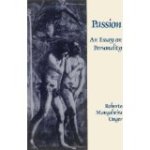
Passion: An Essay on Personality
Roberto Mangabeira Unger


image.jpg
Roberto Mangabeira Unger

Roberto Mangabeira Unger is a philosopher and politician. 

Unger was educated in Brazil and the United States. He studied law at the Federal University of Rio de Janeiro and was awarded a research doctorate by Harvard after he had already been teaching there for several years.

His work offers a vision of humanity and a program for society aimed at empowering individuals and changing institutions. Unger has developed his views and positions across many fields, including social, political, and economic theory. 

In legal theory, Unger is best known by his work in the 1970s/80s as part of the Critical Legal Studies movement, which helped disrupt the methodological consensus in American law schools. His political activity helped bring about democracy in Brazil, and culminated with his appointment as the Brazilian Minister of Strategic Affairs in 2007 and again in 2015.

Unger views humanity as greater than the contexts in which it is placed. He sees each individual possessed of the capability to rise to a greater life. At the root of his social thought is the conviction that the world is made and imagined. His work begins from the premise that no natural social, political, or economic arrangements underlie individual or social activity. Property rights, liberal democracy, wage labor — for Unger, these are all historical artifacts that have no necessary relation to the goals of free and prosperous human activity.

For Unger, the market, the state, and human social organization should not be set in predetermined institutional arrangements, but need to be left open to experimentation and revision according to what works for the project of the empowerment of humanity. Doing so, he holds, will enable the realization of the full extent of human potential and, as he puts it, “make us more god-like”.

Unger has long been active in Brazilian opposition politics. He was one of the founding members of the Brazilian Democratic Movement Party and drafted its manifesto. He directed the presidential campaigns of Leonel Brizola and Ciro Gomes, ran for the Chamber of Deputies, and twice launched exploratory bids for the Brazilian presidency. He served as the Minister of Strategic Affairs in the second Luiz Inácio Lula da Silvaadministration and the beginning of the second Dilma administration.

Unger’s website, The Works of Roberto Mangabeira Unger, is exhaustive and loaded with detailed writings.

Books by Roberto Mangabeira Unger include:


How We See Things And The Value Of Prediction

What is striking is the huge amount of brain contributing to vision, giving immense added value to the images of the eye. Where does this extra richness for vision come from? By some authorities it is simply denied — they see perception as passive acceptance of what is out there, as a window facing the world. But this does not begin to explain how we see objects from the sketchy images of the eyes, even from sparse lines and crude dots to seemingly inadequate pictures.

Even in ideal conditions object perception is far richer than any possible images in the eyes. The added value must come from dynamic brain processes, employing knowledge stored from the past, to see the present and predict the immediate future. Prediction has immense survival value. It not only makes fast games possible in spite of the physiological signal delays from eye to brain, and brain to hand. Anticipating dangers and potential rewards is essential for survival — made possible by buying time from seeing objects distant in space.

Eye and Brain.
Eye and Brain: The Psychology of Seeing, Fifth Edition (Princeton Science Library)
Richard L. Gregory

Since first published in 1966, Eye and Brain has established itself worldwide as an essential introduction to the basic phenomena of visual perception. Richard L. Gregory offers clear explanations of how we see brightness, movement, color, and objects, and he explores the phenomena of visual illusions (optical illusions) to establish principles about how perception normally works and why it sometimes fails.

Illusion is a major theme in the book, and it provides a comprehensive classification system. There are also sections on what babies see and how they learn to see, on motion perception, the relationship between vision and consciousness, and on the impact of new brain imaging (neuroimaging) techniques.

Eye and Brain is lively and engaging, while scientifically sound and very informative.


Richard Gregory
Richard L. Gregory
1923-2010
.

. Wikipedia
. Professor Richard Gregory
. Obituary at The Guardian

Richard L. Gregory CBE FRS FRSE was a British psychologist and Emeritus Professor of Neuropsychology at the University of Bristol, England. Gregory was strongly involved with the Royal Institution (Ri) of Great Britain for over 40 years. His Ri Christmas Lectures in 1967, titled The Intelligent Eye, are noteworthy. Gregory was particularly enthused by the Ri’s role in igniting a curiosity about science and technology in young people.

Gregory received the Michael Faraday Prize, awarded by the Royal Society of London for “excellence in communicating science to UK audiences”, in 1992.

Richard L. Gregory’s high honors: CBE (Order of the British Empire), FRS (Fellow of the Royal Society of London), FRSE (Royal Society of Edinburgh, Scotland).

Some Books Written by Richard L. Gregory:


Love – From Romance To Intimacy – Challenges Of The Unknown

Mature love is expressed in a cognitive, behavioral, and emotional stance toward another. Gradually this beloved’s well-being becomes as important to us as our own. We are willing to sacrifice our own comfort, even our own safety, on this person’s behalf.

In love we stand ready to devote our time, our resources, and our ingenuity to supporting the one we love. Our relationship matures as the arousals of early attraction and romance expand to include a love that is a chosen and cultivated commitment.

The expression of unconditional love is central in the ethical systems of most of the world’s great religion traditions. Love draws energy from its arousals — of compassion, of altruistic concern. But love as caritas or agape is more than an emotional arousal. Love fuels unselfish actions that move beyond ourselves. Perhaps it is more accurate to say that love matures as it draws the energy of romance to nurture a wider range of responsiveness and responsibility.

Intimacy names the ability to commit ourselves to a particular person in a relationship that lasts over time. Intimacy moves us beyond idealized expectations to embrace real persons in their particular uniqueness (and peculiarity!). Intimacy strengthens the intellectual and emotional resources that enable us to pledge our future, based on what we know in the present.

From one perspective this might seem like a foolish endeavor; the future is unknown. How can we pledge ourselves to be constant when so much of the future remains hidden? Who will you be, who will I be, what practical circumstances will shape our life together? Yet without this capacity to pledge our future, we will remain alone — we will not thrive.

Nourishing the Spirit
Nourishing the Spirit: The Healing Emotions of Wonder, Joy, Compassion and Hope

James & Evelyn Whitehead

Background on James & Evelyn Whitehead


Our Brain’s Adaptive Capacity – How Does It Help Us With Emotional Relationships?

Those with whom we establish close emotional relationships throughout our life can both reinforce earlier emotional patterns and — when necessary — help new and more adaptable patterns to emerge. The plasticity of the human brain holds out this promise. In an adult relationship with a person who shows us attentive care and is comfortable with our feeling world, we can become more accurately in touch with our own feelings.

“The presence of a caring, trusted other person, one who is attuned to our internal world, is often the initial key.”

The Developing Mind: How Relationships and the Brain Interact to Shape Who We Are
Daniel Siegel

When we are supported by sensitive human presence — in friendship, in psychological counseling, in spiritual direction — the neural connections required for mature attachment will begin to emerge. Here the limbic brain’s adaptive capacity can be recruited for therapeutic healing.

Nourishing the Spirit
Nourishing the Spirit: The Healing Emotions of Wonder, Joy, Compassion and Hope
James & Evelyn Whitehead

Background on James & Evelyn Whitehead


The Developing Mind How Relationships and the Brain Interact to Shape Who We Are
The Developing Mind: How Relationships and the Brain Interact to Shape Who We Are
Daniel Siegel
.
.
.
.

Daniel Seigel
Daniel Siegel
born 1957
.
.

. Dr. Dan Siegel
. Mindsight Institute

Daniel J. Siegel, MD, is an internationally acclaimed author, award-winning educator, and renowned child psychiatrist. Siegel received his medical degree from Harvard University and completed his postgraduate medical education at UCLA with training in pediatrics and child, adolescent and adult psychiatry.

Siegel is Clinical Professor of Psychiatry at the School of Medicine, UCLA, where he serves as Co-Investigator at the Center for Culture, Brain, and Development, and Co-Director of the Mindful Awareness Research Center. He is also the Executive Director of the Mindsight Institute, an educational center devoted to promoting insight, compassion, and empathy in individuals, families, institutions, and communities.


Books written by Daniel Siegel include:

How Can Hope And Courage Help Us?

For many involved today in movements of social transformation, hope is rooted in faith in God. Religious hope is not simply a conviction that certain objectives will occur. Among religiously sensitive people, hope in God sustains practical efforts, nurtures commitment to seek out alternative pathways and motivates continued action even in the face of delay or defeat. Through faith and hope, we are free even to fail in the world’s eyes.

Courage serves as a healing emotion. When we confront injustice or indifference, the arousal of courage heals the fear and anger that would weaken our response. Courage welcomes hope — the hope that predicts, even against present evidence, a better future. In the face of a world that does not support our deepest desires, courage engenders patience and faith that good will ultimately triumph.

Nourishing the Spirit
Nourishing the Spirit: The Healing Emotions of Wonder, Joy, Compassion and Hope
James & Evelyn Whitehead

Background on James & Evelyn Whitehead