How Can We Move Forward Without Abandoning Others or Ourselves?

As you move forward along the path of reason, people will stand in your way. They will never be able to keep you from doing what’s sound, so don’t let them knock you out of your goodwill for them.

Keep a steady watch on both fronts, not only for well-based judgments and actions, but also for gentleness with those who would obstruct our path or create other difficulties. For getting angry is also a weakness, just as much as abandoning the task or surrendering under panic. For doing either is an equal desertion – the one by shrinking back and the other by estrangement from family and friend.

…..Marcus Aurelius, from Meditations, 11.9

As we begin to make progress in our lives, we’ll encounter the limitations of the people around us. It’s like a diet. When everyone is eating healthy, suddenly there are opposing agendas. Now there’s an argument about where to go for dinner.

Just as we must not abandon our new path simply because other people may have a problem with it, we must not abandon those other folks either. Don’t simply write them off or leave them in the dust. Don’t get mad or fight with them. After all, they’re at the same place we were not long ago.

The Daily Stoic
The Daily Stoic:  
366 Meditations on Wisdom, Perseverance, and the Art of Living
Ryan Holiday

Background on Marcus Aurelius
How Can We Live Today Fully, Before It Slips Into The Past?

What will you manage to make of today before it slips from your fingers and becomes the past? 

“Let us therefore set out whole-heartedly, leaving aside our many distractions and exert ourselves in this single purpose, before we realize too late the swift and unstoppable flight of time and are left behind. As each day arises, welcome it as the very best day of all, and make it your own possession.”

…..Seneca, Moral Letters, 108.27b-28a

You will get only one shot at today. You have only twenty-four hours with which to take it. And then it is gone and lost forever. Will you fully inhabit all of today? Will you call out, “I’ve got this,” and do your very best to be your very best?

The Daily Stoic
The Daily Stoic: 366 Meditations on Wisdom, Perseverance, and the Art of Living
Ryan Holliday


Seneca
Seneca
4 BCE-65CE

. Internet Encyclopedia of Philosophy
Stanford Encyclopedia of Philosophy
. Wikipedia

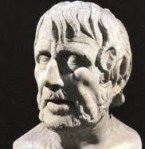
Seneca (full name: Lucius Annaeus Seneca) was a Roman Stoic philosopher, statesman, and dramatist. He was a tutor and later advisor to emperor Nero. He was born in Cordoba in Hispaniaand raised in Rome, where he was trained in rhetoric and philosophy.

Seneca writings expose traditional themes of Stoic philosophy: the universe is governed for the best by a rational providence; contentment is achieved through a simple, unperturbed life in accordance with nature and duty to the state; human suffering should be accepted and has a beneficial effect on the soul; study and learning are important. Seneca emphasized practical steps by which the reader might confront life’s problems. In particular, he considered it important to confront one’s own mortality. Discussion of how to approach death dominates many of his letters.

Works attributed to Seneca include a dozen philosophical essays, one hundred and twenty-four letters dealing with moral issues, nine tragedies, and a satire.

Seneca’s written works include: 


Self or No Self? – Early Buddhist Teachings on the Question

Buddha’s Teaching

When the wanderer Vacchagotta asked whether there is a self, Buddha (480-400 BCE) remained silent. After Vacchagotta had gone away, Buddha explained to his disciple Ananda that to have affirmed or denied the existence of self would have led to a metaphysical dead end (from Samyutta Nikaya).

Buddha made and acted on decisions that made a profound difference in his life. Had he not believed this was possible for others, too, there would have been little point to spending forty-five years encouraging people to pursue a path of moral responsibility, contemplative practice, and philosophical reflection. The self may not be an aloof, independent “ruler” of the body and mind, but neither is it an illusory product of impersonal physical and mental forces. Buddha is interested in what people can do, not with what they are. The task he proposes entails distinguishing between what is to be accepted as the natural condition of life (the unfolding of experience) and what is to be let go of (reactivity).

Nagarjuna’s Teaching

The ambiguity and elusiveness of self is captured in a verse from Nagarjuna (150-250 CE) :

If the self were the bundles,
It would be something that arises and passes away;
If it were other than the bundles,
It would not bear their characteristics.

…..Mulamadhyamaka-karika

Were I reducible to my body, feelings, perceptions, inclinations, and consciousness, then, since they are constantly changing, I would be constantly changing. But, that is clearly not the case. Nagarjuna takes it for granted that to be a self means to have a perspective on experience that remains constant while the feelings, perceptions, and inclinations that make up one’s experience arise and pass away. At the same time he recognizes the absurdity of thinking of the self as something different from what makes up its experience. Why? Because the only way “I” or “you” can be known is through our features: our name, our physical appearance, our moods, our thoughts, our acts. Remove these features, and the self to whom they belong vanishes as well.

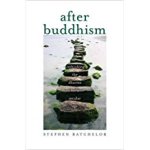
After Buddhism: Rethinking the Dharma for a Secular Age
Stephen Batchelor

Background on Stephen Batchelor


How Can We Wash Away the Dust of Earthly Life?

“Watch the stars in their courses and imagine yourself running alongside them. Think constantly on the changes of the elements into each other, for such thoughts wash away the dust of earthly life.”

…..Marcus Aurelius, from Meditations, 7.47

It’s almost impossible to stare up at the stars and not feel something. As cosmologist Neil deGrasse Tyson has explained, the cosmos fills us with complicated emotions. On the one hand, we feel an infinitesimal smallness in comparison to the vast universe; on the other hand, an extreme connectedness to this larger whole.

The Daily Stoic
The Daily Stoic:  366 Meditations on Wisdom, Perseverance, and the Art of Living
Ryan Holiday


Books written by Ryan Holiday include:


Marcus Aurelius
Marcus Aurelius
121-180 CE

. Internet Encyclopedia of Philosophy
. Stanford Encyclopedia of Philosophy
. Wikipedia

Marcus Aurelius was Emperor of Rome from 161 to 180. He ruled with Lucius Verus as co-emperor from 161 until Verus’ death in 169. Marcus Aurelius was the last of the so-called Five Good Emperors. He was a practitioner of Stoicism, and his untitled writing, commonly known as Meditations, is a significant source of the modern understanding of ancient Stoic philosophy, and is considered by many commentators to be one of the greatest works of philosophy.

Aurelius wrote Meditations in Greek while on campaign between 170 and 180. Meditations is still revered as a literary monument to a philosophy of service and duty, describing how to find and preserve equanimity, a state of psychological stability and composure, in the midst of conflict by following nature as a source of guidance and inspiration.


What is Postmodern Philosophy?

In contemporary philosophy, ‘postmodern’ ideas are those which, from the mid-nineteenth century set about dismantling the humanist creed of modernity.

In the same way that the Enlightenment broke with the grand cosmologies of Antiquity and brought about a new critique of religion, so too postmodernity set about demolishing the two strongest convictions of the Moderns from the seventeenth to the nineteenth centuries: the belief that the human is at the center of the modern world – which came to form the basis of all moral and political values; and, the belief that reason is an irresistible force for emancipation.

A Brief History of Thought
A Brief History of Thought: A Philosophical Guide to Living
Luc Ferry


Luc Ferry
Luc Ferry
born 1951

. Wikipedia

Luc Ferry is a French philosopher at the University of Paris, a prolific author, and a notable proponent of secular humanism. From 2002 and until 2004 Ferry served in the French government as the Minister of Education. He lives in Paris.

Ferry has been awarded the Prix Medicis, Prix Jean-Jaques-Rosseau, and Aujourd’hui.

Books Luc Ferry has written include: