Alchemy – Our Quest for Immortality

Alchemy Transformation

Origin of Alchemy

The name alchemy itself reflects the art’s mysterious origins. We have inherited the word from the Arabic al-kimia, as it was the Islamic world that did most to keep its practice alive during the early Middle Ages. However, the Arabs took the word from the Greek word chemeia, when they occupied Alexandria in the seventh century. And, chemeia, which is also the origin of the word chemistry, meant “those who have knowledge of the Egyptian arts.” As is often the case with the quest for immortality, all roads lead back to the Nile.

Two Goals of Alchemy

The oldest mention of alchemy in history is in the records of the first-century BC Chinese historian Sima Qian. He describes how the royal court alchemist sought to transform cinnabar, a bright red mercury ore, into gold – and that if this was used for eating and drinking it would ensure “you will never die.” Thus, from its earliest days, alchemy has been associated with the pursuit of two goals united by the idea of transformation: the transformation of base metals into gold and of mortal humans into immortals.

Achieving Immortality

Although now more associated with the transformation of base metals into gold, most alchemists would have considered at the very least that they were inextricably linked, and very often, as in Sima Qian’s description, that the production of gold was merely the means to the end of achieving immortality.

When aspiring to live forever, the elixir was whatever helped to stave off aging and death a little bit longer, and its pursuit encompassed what we would now consider to be very disparate traditions, from medicine to magic and science to religion. Yet, despite these many strands, the quest for the elixir has come to be known by one name: alchemy.

Taoism and Life Extension 

In China, at the time of the First Emperor (220-210 BC), alchemy was a vital part of Taoism – the prevalent religious-philosophical system. Taoist practitioners developed life-extension techniques that are now, over 2000 years later, continuing to prosper: meditation, breathing exercises, the gymnastics of tai chi and qigong, and the consumption of tea, ginseng and many other herbs and minerals. One of Taoism’s core texts, known as The Yellow Emperor’s Inner Canon, remains the central source for Chinese traditional medicine.
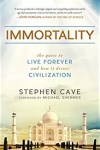
Immortality book
Immortality: The Quest to Live Forever and How It Drives Civilization
Stephen Cave

.

.


Stephen Cave
Stephen Cave

Stephen Cave is Executive Director of the Leverhulme Centre for the Future of Intelligence and Senior Research Fellow at the University of Cambridge. He has a PhD in Philosophy from Cambridge.  Before turning to full-time writing, he worked as a diplomat. He writes regularly for the Financial Times and also contributes to the New York Times.


 The 4 Stories We Tell Ourselves About Death – TED Talk by Stephen Cave

How Did Ancient People Use Calendars?

Oldest Calendars

The oldest ‘calendars‘ are vast archaeological sites that aligned posts or megaliths (giant stones) with the rising of the Sun or Moon on significant dates, such as the summer or winter solsticeThe earliest structures built as calendars seem to be designed to help calculate the solar and lunar months. Priest-astronomers used these. 

Prehistoric astronomers left no user manuals for their monuments – their uses had to be rediscovered by archaeoastronomersarchaeologists with knowledge of astronomy. 

Warren Field, Scotland, found in 2004, is the earliest site found so far. It tracks events some 10,000 years ago.

Development of Accurate Calendars

Calendar development was often driven by the need to fix religious festivals and observance, an impulse that continued with the formation of new religions such as Christianity and Islam. Both put astronomy to use in this way.

Arab astronomers and engineers were zealous in their pursuit of improved methods for keeping time so that daily prayers could be received by the devout at the right time.

Time-keeping on a larger scale was essential in scheduling religious festivals.

Lunar Calendars 

Time is naturally divided astronomically by the Earth’s orbit around the Sun (a year), the Earth’s rotation (a day) and the phases of the Moon. A lunar month (a full cycle from one new or full moon to the next is approximately 29 1/2 days. A year is 365 1/4 days.

Inconveniently, a year is 12.37 lunar months long. For early societies, a lunar month was a useful and countable period of time, one that could be easily observed and checked just by looking up at the night sky.

But if you use 12  lunar months as the basis of your year, the calendar will drift out of sync quite quickly. It will be a month out after only 3 years, and 6 months out after 18 years. To avoid this, an extra (intercalary) month has to be added every few years.

Egyptian Calendars

The ancient Egyptians began their year with the rising of Sirius (which they called Sopdet) above the horizon before sun rise.

  • System dates to c. 3000 BC.
  • Divided year into 365 days.
  • Used two different calendars.
  • Sirius, a stable star, and the brightest star in the night sky, was the basis for the Egyptian calendar.
  • Ptolemaic rulers depended on calendars.

Other cultures developed independent calendars, notably China and Mesoamerican (Central American) civilizations.

Chinese Yin-Yang Li Traditional Calendar

Origins of the Chinese calendar can be traced back to 14th century BC, though legend says it was invented in 2637 BC.

  • Literally ‘heaven-Earth’ calendar.
  • Used alongside imported calendars such as the Hindu calendar.
  • Used until 1912, when China officially adopted the Western Gregorian calendar.

How the World Works: Astronomy: From Plotting the Stars to Pulsars and Black Holes
How the World Works: Astronomy: From Plotting the Stars to Pulsars and Black Holes 

Anne Rooney

Background on Anne Rooney

Why is Easter Celebrated on Different Calendar Dates From Year To Year?

Easter

Standardization of Easter Celebration Date

The Catholic Church fixes the date of Easter, its celebration to mark the resurrection of Christ, using a method set out in AD 325 by the Council of Nicaea. In the first centuries AD, Easter was celebrated on different days by different groups of Christians, the Council of Nicaea sought to standardize it.

Role of Full Moon

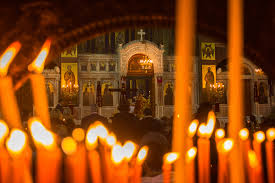
Easter is now celebrated on the first Sunday after the full moon occurring on or after the spring equinox. Early Christians couldn’t simply wait to find out when the full moon would fall, then quickly celebrate Easter. They had to fit in Lent – 40 days of fasting – immediately beforehand, so had to know several weeks in advance when that full moon would fall, a task that could only be achieved by keeping astronomical records and projecting into the future.

Easter Dates 

How the World Works: Astronomy: From Plotting the Stars to Pulsars and Black Holes
Anne Rooney

Background on Anne Rooney

Persian Road System – The World’s Original Information Superhighway

Persian Empire Royal Road System

The ultimate basis of the Persian Empire’s greatness was not its bureaucracy, nor even its armies, but its roads the world’s original information superhighway. It’s no wonder control of such a service by Darius, the Great King, should have overawed his subjects, and struck them as the surest gauge and manifestation of Persian power.

Persia’s road system, known as the Royal Road, provided the immensity of the empire’s body with its nervous system, along which news was perpetually flowing, from synapse to synapse, to and from the brain. 

The distances were routinely annihilated by royal couriers. Every evening, after a hard day’s ride, the messenger would find a posting station waiting for him, equipped with a bed, provisions and a fresh horse for the morning.

A truly urgent message, one brought at a gallop through storms and the dead of night, might arrive in Persepolis from the Aegean in under two weeks. This was an incredible, almost magical, degree of speed. Nothing to equal it had ever been known before.

Persian Road System

Access to the Road System

Access to the road system was ferociously restricted. No one could set foot on it without a pass, a viyataka.  Mere possession of such a pass was a mark of prestige. So tightly controlled were the itineraries of travelers on the roads that those who dawdled on the way and failed to arrive at a given destination on an alloted date could expect to forfeit their rations for the night.

Those who traveled on the roads without a viyataka pass would not merely go hungry, but very quickly be hunted down and killed. Even mail if it were sent without royal approval would be destroyed. Only the most cunning could hope to evade the vigilance of the highway patrols.

Immensity of the Persian Empire

The first dynasty of the Persian Empire was created by Achaemenids, established by Cyrus the Great in 550 BCE with the conquest of the MedianLydian and Babylonian empires. It covered much of the Ancient world and controlled the largest percentage of the earth’s population in history when it was conquered by Alexander the Great.

Persian Empire
………………The Persian Empire

Darius, the Great King, ruled the Persian Empire at its peak, from 552-486 BCE (36 years), when it included a vast area, including: much of West Asia, the Caucasus, parts of the Balkans (ThraceMacedonia and Paeonia), most of the Black Sea coastal regions, parts of the North CaucasusCentral Asia, as far as the Indus Valley in the far east, and portions of north and northeast Africa including Egypt (Mudrâya), eastern Libya and coastal Sudan.

Persian Fire: The First World Empire and the Battle for the West
Tom Holland


Tom Holland
Tom Holland

born 1968

. Tom Holland website
. Wikipedia

Tom Holland is a British writer and popular historian. He has published several non-academic works on classical and medieval history. In addition to his writing work, he has worked with BBC, adapting Homer, Herodotus, Thucydides and Virgil for TV documentaries also focusing on history.

Holland lives in London with his wife and two daughters. He is a keen cricket fan and member of the Authors XI cricket team.

Books Tom Holland has written include:


Frankincense and Myrrh – Ancient Treasure

Kings

Incense Kingdoms of Southern Arabia

The incense kingdoms of Southern Arabia (today’s Yemen and Oman) produced the finest quality frankincense and myrrh – two of the most sought-after commodities of the ancient world. They also had a virtual monopoly on the transport and distribution of these two valuable items.

In the comparative peace brought by the Roman Emperor Augustus, at the end of the first century BC, demand for frankincense and myrrh was soaring. Thousands of pounds of incense were making their way by land and sea to Alexandria, Rome and Gaza, to the former Persian Empire now controlled by Parthians, to India and even China.

Frankincense and Myrrh

Frankincense – Good as Gold

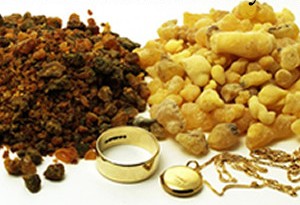
Frankincense, the resin from the Boswellia tree, was as expensive as gold at the time of Jesus. Frankincense was the ancient world’s equivalent of crude oil. It was an indispensable element of public and private life, of all religious and state ceremonies in the Roman Empire as in the rest of the then known world.

Frankincense was probably the most essential luxury of the ancient world, and it made the kingdoms of Southern Arabia fabulously wealthy.

Myrrh – More Expensive Than Frankincense

Myrrh, a thorny bush, which like frankincense grew in Southern Arabia, was the essential ingredient for embalming bodies. More expensive than frankincense, it was in less demand and used less frequently in religious ceremonies.

Like frankincense, myrrh was mixed in cosmetics and perfumes and was used as a cure-all, including to prevent poisoning. It was also used to relieve pain, which may have been why Jesus was offered a mixture of myrrh and wine before the crucifixion.


More About Frankincense…

Ingredient in Worship by Various Traditions

  • Temple of the Greek sun-god Apollo.
  • Roman God of war Mars.
  • Babylonian sun-god Bel.
  • Temple in Jerusalem.
  • Buddhist temples in India.
  • Italian peasant farmer shrines.

Variety of Uses

  • Used to fend off the stench of ordinary living if you could afford it.
  • In oils for massages at the baths.
  • In face packs for pampered women.
  • To perfume Cleopatra’s barge when she sailed from Egypt to Tarsus for her first encounter with Mark Antony.
  • Mixed in the mortar of houses.
  • Was the aspirin of its day, used as a cure for anything from depression to dysentery.
  • In eye makeup.

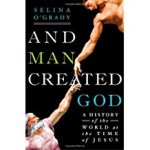
And Man Created God
And Man Created God: A History of the World at the Time of Jesus

Selina O’Grady


Selina O'Grady
Selina O’Grady

. Selina O’Grady (website)

Selina O’Grady is a writer, producer, and speaker.

O’Grady is the co-editor of two books: Great Spirits: The Fifty-Two Christians who Most Influenced their Millennium and A Deep But Dazzling Darkness. She has reviewed regularly for the San Francisco Chronicle, Literary Review and Tablet.

O’Grady was a producer of BBC1’s moral documentary series Heart of the Matter presented by Joan Bakewell, Channel 4’s live chat show After Dark, and Radio 4’s history series Leviathan.