Parables – Exploring the Unexpected & Liberating the Possible

Parables

Default World vs. Parable World

The default world is the world of procedural knowledge. It is composed of what we commonly accept, see, and operate in as the world at hand. Procedural knowledge is the assumed knowledge used daily in the default world. The parable world, however, is the world in contrast to the default world, and the knowledge needed to understand a parable is counter-intuitive to procedural knowledge.

Parables and the Anonymous Self

When reading a parable, we must necessarily free ourselves of procedural knowledge, but the most difficult part of this insight involves recognizing that procedural knowledge includes the habitual way we think about the self. To enter the parable world, I must overcome assumptions I hold about myself – assumptions such as my self-importance, my fixed identity, and my preoccupations with self-satisfaction. The act of getting into the parable world begins with seeing my self as a social construct. The self is my identity. It is constructed from my status in society: the amount of money I have, the class I belong to, the influence my status gives to my decisions, the reasons people know or want to know about me (or avoid me), the level of self-esteem gained in relationships with others or within social systems that become vital to the self because they signify to the self the importance (place, position, power) of the self.

In the world of procedural knowledge, the self can win or lose, can hold status or shame, can be satisfied or disappointed. The default world consists of the interactivity of the desires and the social positions of human selves. Yet, in the parable world, there is no self. Or, another way to imagine it, in relation to itself the self in parable is an anonymous self, a self without a name. The self in parable is not self-important or self-centered; it is not a self in need of a system of meaning to signify importance to itself.

The no-name self of the parable, the self that is anonymous to itself, is one that accepts itself merely and miraculously as a location of awareness, as a “happenstance” as the philosopher/theologian Don Cupitt says, born out of the history of coincidental human relationships on our planet. The anonymous self sees the fabrication of relationships that create default reality and can pierce through the fabric with a liberty of consciousness that accepts the self as a host of the coincidental history of relationships that have produced this one location of awareness. The anonymous self is a self that accepts itself anonymously as a location of awareness.

Clutching and grabbing, so essential to winning in the default world, are a loss in the parable world of the anonymous self. In the parable world, I celebrate winning by losing, gaining by letting go. In the default world, winning and losing create or harm my self-esteem, but in the parable world winning and losing are exactly what need to be pierced to in order to be free. In the parable world, there is no such thing as the power of God or the favor of God for a worldly, historical figure. These things in the parable are seen as the way the default world hides its emptiness from itself. They are the lights and the sound of importance that, in parable, distract from the joyfulness of authentic life. Indeed, in parable, ironically, the sounds of importance are the least important thing. When the values of success in the default world become that for which I clutch and grab, the “I” of myself has lost the parable’s gift of anonymity; the default reality has become who I am and how I think. In the world I may have won, but in parable I have lost.

To be in the “counter-intuitive” world of the parable is to be an “anonymous self,” a self who is not the consequent result of clutching and grabbing after life. In parable, everything in the world that is and that can be is already part of the whole story. Everything that is in the world is already the consequence of the total relationship of things that compose the world. Nothing exists in isolation; nothing is self-created; everything in this sense is anonymous, that is, without singular identity or without an absolute name.

Parables of Jesus – Liberation for the Possible

The quest to find a stable identity is not the point of the parables of Jesus. One’s name or occupation is no privilege. Of course, we need names and identities in order to build societies and to advance learning, but in the parable the emptiness of these default necessities is exposed in the larger vision of anonymity. Every “thing” in parable breaks across the line of singular identity to the other side of anonymity, where it can play host to a world liberated from the status quo. A vineyard worker who strains all day crosses over to anonymity when his co-worker who strains less than an hour is paid the same wage. The older brother of the prodigal son crosses over to anonymity when he cares less about his inheritance and joins the celebration of his younger brother’s return. In parable, the promise is that the world can be differently arranged and differently reasoned because its current default form is only one set of possibilities within an infinite set of possibilities. Parable is liberation for the possible.

Embracing the Human Jesus
Embracing the Human Jesus: A Wisdom Path for Contemporary Christianity
David Galston


David Galston
David Galston

David Galston is the Executive Director of the Westar Institute and the Ecumenical Chaplain at Brock University in St. Catharines, Ontario, where he is also an Adjunct Professor of Philosophy. He has a PhD in the Philosophy of Religion from McGill University.

Galston is a co-founder and Academic Advisor of the SnowStar Institute of Religion, a Fellow of the Jesus Seminar, and a United Church minister.  David has written several articles and led many workshops on the question of the historical Jesus, the future of Christianity, and the problems of Christian theology in light of the historical Jesus.

Books written by David Galston include:


Our Universe – What’s It Made Of?

The Universe

What’s the universe made of? The biggest thing we know about the universe is that we don’t really know that much. All the stuff (matter and energy) in the universe we know about accounts for only about 5% of the total.  According to our current understanding, we don’t know what the other 95% is made of. All the atoms in our body and in our galaxy, all the stars and dust and planets, amounts to just a tiny fraction of the whole.  Is this not mind-boggling?

What We Know About the Universe
.
Universe Pie Chart

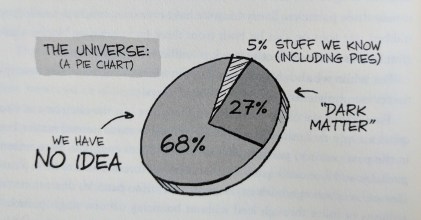
This pie might look mysterious, but it shows our current understanding of the the universe:

  • 5% of it is stuff we know, including stars, planets, and everything on them.
  • 27% is something called dark matter, which has mass, is invisible, and clumps together in huge chunks that float in space, and is present in galaxies.
  • 68% of the universe, by far the biggest chunk of reality, is something we barely understand at all – physicists call it dark energy, and think it is causing the universe to expand, but that’s about all that’s known about it.

It’s notable that even within the 5% of the stuff we know about, there are still a lot of things we don’t know (for example, details about neutrinos). In some cases, we don’t even know how to ask the right questions that will reveal these mysteries.

Lots of Exploration Still to be Done

There’s a huge amount of exploration left to do. In fact, we are in the early days of a whole new age of exploration. We are entering a period where we will likely redefine our understanding of the universe. On the one hand, we presently know we know very little; on the other hand, we are building incredible new tools, such as powerful new particle colliders, gravitational-wave detectors, and telescopes that will help us get the answers we are seeking.

The history of science is one of revolutions in which we discover each time that our view of the world was distorted by our particular perspective. A flat Earth, an Earth-centered solar system, a universe dominated by stars and planets – these were all reasonable ideas given the data at the time, but now we see them as embarrassingly naïve. Almost certainly, there are more such revolutions  around the corner, in which important ideas we accept now, such as relativity and quantum physics, might be shattered and replaced with currently unforeseen new ones.

We Have No Idea: A Guide to the Unknown Universe
We Have No Idea: A Guide to the Unknown Universe (2017)
Jorge Cham & Daniel Whiteson


Jorge Cham
Jorge Cham earned his PhD in robotics at Stanford. Cham is the creator of the popular online comic Piled Higher and Deeper, also known as PhD Comics.


Daniel Whiteson
Daniel Whiteson is a professor of experimental particle physics at the University of California, Irvine, and is a fellow of the American Physical Society. Whiteson conducts research using the Large Hadron Collider at CERN, a European research organization that operates the largest particle physics laboratory in the world, located in Geneva, Switzerland.

How Can We Move Forward Without Abandoning Others or Ourselves?

As you move forward along the path of reason, people will stand in your way. They will never be able to keep you from doing what’s sound, so don’t let them knock you out of your goodwill for them.

Keep a steady watch on both fronts, not only for well-based judgments and actions, but also for gentleness with those who would obstruct our path or create other difficulties. For getting angry is also a weakness, just as much as abandoning the task or surrendering under panic. For doing either is an equal desertion – the one by shrinking back and the other by estrangement from family and friend.

…..Marcus Aurelius, from Meditations, 11.9

As we begin to make progress in our lives, we’ll encounter the limitations of the people around us. It’s like a diet. When everyone is eating healthy, suddenly there are opposing agendas. Now there’s an argument about where to go for dinner.

Just as we must not abandon our new path simply because other people may have a problem with it, we must not abandon those other folks either. Don’t simply write them off or leave them in the dust. Don’t get mad or fight with them. After all, they’re at the same place we were not long ago.

The Daily Stoic
The Daily Stoic:  
366 Meditations on Wisdom, Perseverance, and the Art of Living
Ryan Holiday

Background on Marcus Aurelius

How Can We Live Today Fully, Before It Slips Into The Past?

What will you manage to make of today before it slips from your fingers and becomes the past? 

“Let us therefore set out whole-heartedly, leaving aside our many distractions and exert ourselves in this single purpose, before we realize too late the swift and unstoppable flight of time and are left behind. As each day arises, welcome it as the very best day of all, and make it your own possession.”

…..Seneca, Moral Letters, 108.27b-28a

You will get only one shot at today. You have only twenty-four hours with which to take it. And then it is gone and lost forever. Will you fully inhabit all of today? Will you call out, “I’ve got this,” and do your very best to be your very best?

The Daily Stoic
The Daily Stoic: 366 Meditations on Wisdom, Perseverance, and the Art of Living
Ryan Holliday


Seneca
Seneca
4 BCE-65CE

. Internet Encyclopedia of Philosophy
Stanford Encyclopedia of Philosophy
. Wikipedia

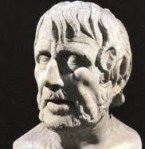
Seneca (full name: Lucius Annaeus Seneca) was a Roman Stoic philosopher, statesman, and dramatist. He was a tutor and later advisor to emperor Nero. He was born in Cordoba in Hispaniaand raised in Rome, where he was trained in rhetoric and philosophy.

Seneca writings expose traditional themes of Stoic philosophy: the universe is governed for the best by a rational providence; contentment is achieved through a simple, unperturbed life in accordance with nature and duty to the state; human suffering should be accepted and has a beneficial effect on the soul; study and learning are important. Seneca emphasized practical steps by which the reader might confront life’s problems. In particular, he considered it important to confront one’s own mortality. Discussion of how to approach death dominates many of his letters.

Works attributed to Seneca include a dozen philosophical essays, one hundred and twenty-four letters dealing with moral issues, nine tragedies, and a satire.

Seneca’s written works include: 


Self or No Self? – Early Buddhist Teachings on the Question

Buddha’s Teaching

When the wanderer Vacchagotta asked whether there is a self, Buddha (480-400 BCE) remained silent. After Vacchagotta had gone away, Buddha explained to his disciple Ananda that to have affirmed or denied the existence of self would have led to a metaphysical dead end (from Samyutta Nikaya).

Buddha made and acted on decisions that made a profound difference in his life. Had he not believed this was possible for others, too, there would have been little point to spending forty-five years encouraging people to pursue a path of moral responsibility, contemplative practice, and philosophical reflection. The self may not be an aloof, independent “ruler” of the body and mind, but neither is it an illusory product of impersonal physical and mental forces. Buddha is interested in what people can do, not with what they are. The task he proposes entails distinguishing between what is to be accepted as the natural condition of life (the unfolding of experience) and what is to be let go of (reactivity).

Nagarjuna’s Teaching

The ambiguity and elusiveness of self is captured in a verse from Nagarjuna (150-250 CE) :

If the self were the bundles,
It would be something that arises and passes away;
If it were other than the bundles,
It would not bear their characteristics.

…..Mulamadhyamaka-karika

Were I reducible to my body, feelings, perceptions, inclinations, and consciousness, then, since they are constantly changing, I would be constantly changing. But, that is clearly not the case. Nagarjuna takes it for granted that to be a self means to have a perspective on experience that remains constant while the feelings, perceptions, and inclinations that make up one’s experience arise and pass away. At the same time he recognizes the absurdity of thinking of the self as something different from what makes up its experience. Why? Because the only way “I” or “you” can be known is through our features: our name, our physical appearance, our moods, our thoughts, our acts. Remove these features, and the self to whom they belong vanishes as well.

After Buddhism: Rethinking the Dharma for a Secular Age
Stephen Batchelor

Background on Stephen Batchelor