Making Spectacles of Ourselves with Eyeglasses

Eye Glasses

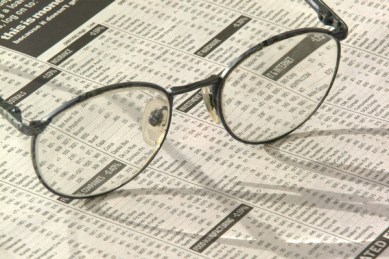
The great invention of eyeglasses was not based on the science of the time, but from craftsmen playing about with lenses, probably Venetian glass workers in about 1286. This made spectacles socially suspect to the aristocracy for hundreds of years, and unfortunately scholars associated weak eyes with weak brains, so they were worn in secret. The earliest spectacles were convex, for short sight. Concave glasses were not available before the middle of the fifteenth century.

Eyeglasses are perhaps the invention, next only to fire, that brings most aid and comfort. And what else works forever with no maintenance and no energy costs? Spectacles lengthen our effective lives as with their aid we can see to read and perform skilled tasks into old age. Before they were available, scholars and craftsmen were made helpless by lack of sight just as their skills matured.

The discovery that the lens of the eye works by simple physics — exactly like a glass lens — opened the mind to seeing our bodies as understandable through experiments and by analogies with the physical world. Seeing the eyes’ lenses as within physics, was a significant step away from the vitalism which blocked biological understanding, holding that every aspect of life is essentially unique and so beyond explanation. Our uniqueness is surely being able to question and discover, and sometimes to explain ourselves and what we see.
 

Why Does the World Exist?: An Existential Detective Story

The World
.
Why Does the World Exist?
 — A Potentially Exhausting Subject Turned into a Page-Turner

Why Does the World Exist?: An Existential Detective Story is a detailed account of why there’s something rather nothing in our world. Author Jim Holt combines his saucy erudition with accounts of his travels to tap the minds of cosmologists, theologians, particle physicists, philosophers, mystics and others.

Holt lays bare the thinking of everyone from SocratesPlatoHeidegger, and Leibniz, to Stephen Hawking and Richard Dawkins. Along the way, he hashes through intriguing arguments about quantum physics and string theory. He walks away from most of his interviews muttering about the logical defect in this approach or that one.

In the course of Holt’s narrative, he spends time with his mother during her final days and witnesses her passing. He mentions his younger brother died a few years earlier, “at a party after taking too much cocaine.” As if this isn’t enough, Holt’s beloved dog suddenly becomes ill, and he sits and holds him for 10 days. The dog, too, expires. Holt doesn’t linger long over any of these events.

Holt’s intimacy with mortality lends heft and emotion to one of his fundamental questions: whether the universe, like life, is anything more than a short interlude between two vast nothings. Holt ventures guesses about this puzzle, but his propositions tend to be darkly humorous, in a Woody Allen sort of way.

Throughout his adventure, traveling from one geographical location across Europe and the US to another, Holt presents mouth-watering accounts of his meals, like this one: “At the table I ordered monkfish and heritage pork and heirloom beets, and I drank a delicious bottle of a locally produced Cabernet Franc.”

As the book draws to a close, one gets the distinct feeling that Holt seems to be enjoying himself on earth, and is in no rush to nail every mystery to the wall. “There is nothing I dislike more,” he says, “than premature intellectual closure.”

Why Does the World Exist?
Why Does the World Exist?: An Existential Detective Story
Jim Holt

. Amazon
. Wikipedia

The book was a New York Times Bestseller and a National Book Critics Award finalist for nonfiction in 2012.


Jim Holt
Jim Holt
born 1954

Jim Holt has contributed to The New York Times, The New York Times Magazine, The New York Review of Books, The New Yorker, The American Scholar, and Slate.

Holt hosted a weekly radio spot on BBC Wales called “Living in America, with Jim Holt” for ten years. He has appeared on William F. Buckley’s Firing Line, NBC News with Tom Brokaw, and CNN. In 1997, he was editor of The New Leader, a political magazine. He lives in Greenwich Village, NY.

Books by Jim Holt include:


What Do We Experience Consciously Versus Unconsciously?

Mind.E
.
Consciousness
is notoriously hard to pin down, and when it comes to experience, the question is what’s within our conscious grip, as opposed to what takes place once removed, at an unconscious level?

We think of intelligence as a deliberate, conscious activity guided by the laws of logic. Yet much of our mental life is unconscious, based on processes alien to logic; gut feelings and intuitions.

Intelligence is not identical with conscious thought. The paradox is that the cerebral cortex in which the flame of consciousness resides is packed with unconscious processes, as are the older parts of the brain. The unconscious parts of our minds can decide without us — the conscious self — knowing it’s reasons.

…..— Neuroscientist Gerd Gigerenzer

This is the case, for example, in the regulation of our breathing and in the release of hormones that energize us to act in the face of danger. These vital functions are activated within the autonomic nervous system, the network of neural pathways that generate energy to support our most basic physical activities — stimulating digestion, fight or flight behaviors, or moving the body through space (how we do that seemingly simple process is most amazing)..

Our minds process vast amounts of information outside of consciousness, beyond language. In fact, most of our everyday thinking, feeling and acting operate outside conscious awareness. We are aware of many things (the pressure of our feet on the floor, the temperature in the room) without being consciously attuned to this information. More than we realized over a decade ago, thinking occurs not on stage, but off stage, out of sight. The growing scientific appreciation of non-rational, intuitive forms of knowing lends credence to spirituality.

…..—Psychologist David Myers


Gerd Gigerenzer.
Gerd Gigerenzer
born 1947

. Max Plank Institute for Human Development
. Wikipedia

Gerd Gigerenzer is a German neuroscientist/psychologist.    Gigerenzer is currently director of the Center for Adaptive Behavior and Cognition (ABC) at the Max Planck Institute for Human Development and director of the Harding Center for Risk Literacy, both in Berlin, Germany. He has studied the use of bounded rationality and heuristics in decision making.

Gigerenzer has investigated how humans make inferences about their world with limited time and knowledge. His research shows that in an uncertain world, probability theory is not sufficient — people also use smart heuristics, that is, rules of thumb. He conceptualizes rational decisions in terms of the “adaptive toolbox” (the repertoire of heuristics an individual or institution has) and the ability to choose a good heuristics for the task at hand.

Gigerenzer argues that heuristics are not irrational or always second-best to optimization, as the accuracy-effort trade-off view assumes. In contrast, his and associated researchers’ studies have identified situations in which “less is more”, that is, where heuristics make more accurate decisions with less effort. This contradicts the traditional view that more information is always better or at least can never hurt if it is free.

Books by Gerd Gigerenzer include:


David Myers
David Myers
born 1942

David Myers | Hope College
. Social Psychology Network
. Wikipedia

David Myers is a psychology professor at Hope College, Michigan. Myers is interested in social psychology, psychology and religion, and personal and societal well-being. His work on group polarization has been honored with the Gordon Allport Intergroup Relations Prize. He is the author of 17 books, including several popular textbooks  and general-audience books dealing with issues related to Christian faith as well as scientific psychology.

Myers is a fellow of the American Psychological Association, the American Psychological Society and the American Association of Applied and Preventive Psychology. He is one of the most important authors of psychology textbooks and is the recipient of honorary doctorates from three different educational institutions. In addition, Myers has helped found a Community Action Center that assists poverty-level families, and is an advocate for people with hearing loss.

Books by David Myers include:

I May Have Lost My Mind…

I had my gall bladder taken out last fall.

According to some ancients, with the surgical removal of my gall bladder, I may have lost my mind”


It has not always been obvious that brains are involved in thinking, memory, sensation, or perception. In the ancient world, including the great civilizations of Egypt and Mesopotamia, reaching back 5000 years, the brain was regarded as as unimportant organ, because in death it is bloodless and in life it is seldom felt by its owner. The mind was associated with the stomach, the liver or gall bladder, and especially with the heart which is clearly responsive to emotion and effort. Echoes linger from these ideas in modern speech, in words such as ‘phlematic‘, ‘gall‘, ‘choleric‘, as well as ‘heartless‘.
 .
.
.

Creativity – Turning Up What is Already There

Creativeness often consists of merely turning up what is already there. Did you know that right and left shoes were thought up only a little more than a century ago?
…..— Bernice Fitz-Gibbon


Bernice Fitz-Gibbon
Bernice Fitz-Gibbon
1894-1982

. AdvertisingAge
. Wikipedia
. Obiturary in The New York Times

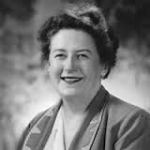
Bernice Fitz-Gibbon was an American advertising executive and a pioneer in retail advertising, working at Marshall Field’s, Macy’s, Gimbels and Wanamaker’s. She was inducted into the Advertising Hall of Fame in 1982.

Fitz-Gibbon was the creator of the Macy’s slogan “It’s great to be thrifty” and “Nobody, but nobody, undersells Gimbels.” A former ad manager at Marshall Field’s, Macy’s, Gimbels and Wanamaker, she became retailing’s most important and highly paid advertising director.

She influenced department store and fashion advertising by introducing “events” — fashion shows, dance instruction, lectures, demonstrations, etc. — and chatty, informative eight-column newspaper ads. The award-winning agency she opened in 1954 jump-started copywriter careers for many women.