Finding Answers to Our Core Question: ‘What Does It All Mean?’

Prompted by our universal curiosity, we ask ourselves ‘What does it all mean?’ And, we routinely trek off in many directions, seeking possible answers.

Here’s a little book, What Does It All Mean?, that helps us plumb the depths of our questioning. Anyone who approaches the book with a ‘beginner’s mind’ will benefit greatly from its wisdom. The book is a lucid introduction to some of the key problems of philosophy, and it sets forth the central problems of philosophical inquiry in an easy to follow, conversational tone, coupled with a dose of humor.

A rich world of possibilities is available to us when we keep a ‘beginner’s mind’. It is when we are beginners that we are eager to learn, receptive, and open to possibilities. Even if we feel as though we’ve crossed the threshold and become advanced, with a ‘beginner’s mind’ we are still open to new insights, and to different, perhaps deeper, ways to appreciate even the basics.

Arguing that the best way to learn about philosophy is to think about its questions directly, nine core questions are posed: Is there really an external world? Are there other minds? How does the mind relate to the brain? Is there such a thing as free will? What is the nature of morality and justice? How do words manage to refer to things? How should one feel about death? What is the meaning of life? Following each question there is a short, engaging discussion.

True to the spirit of philosophical inquiry, answers to questions are left open-ended, allowing us to consider other solutions and encouraging us to think for ourselves.

What Does It All Mean?
What Does It All Mean?: A Very Short Introduction to Philosophy
Thomas Nagel

.

.
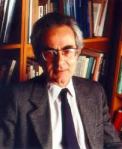

Thomas Nagel
Thomas Nagel
born 1937

. NYU Department of Philosophy
. Wikipedia

Thomas Nagel is Professor of Philosophy and Law at New York University, where he has taught since 1980.  His main areas of philosophical interest are philosophy of mind, political philosophy and ethics.

Nagel is well known for his critique of reductionist accounts of the mind, particularly in his essay “What Is it Like to Be a Bat?“, along with his contributions to deontological and liberal moral and political theory in The Possibility of Altruism (1970) and subsequent writings. Nagel continues his critique of reductionism in Mind and Cosmos (2012), in which he argues against a reductionist view, and specifically the neo-Darwinian view, of the emergence of consciousness.

Books by Thomas Nagel include:

Living in the Present is Hard – The Past & Future Keep Harassing Us

It is hard to live in the present. The past and the future keep harassing us. The past with guilt, the future with worries.

So many things have happened in our lives about which we feel uneasy, regretful, angry, confused, or, at least, ambivalent. And these feelings are often colored by guilt. Guilt that says: “You ought to have done something other than what you did; you ought to have said something other than what you said.” These “oughts” keep us feeling guilty about the past and prevent us from being fully present to the moment.

Worse, however, than our guilt are our worries. Our worries fill our lives with “What ifs”:  “What if I lose my job, what if my father dies, what if there is not enough money, what if the economy goes down, what if a war breaks out?” These many “ifs” can so fill our mind that we become blind to the flowers in the garden and the smiling children on the streets, or deaf to the grateful voice of a friend.

The real enemies of our life are the “oughts” and the “ifs.” They pull us backward into the unalterable past and forward into the unpredictable future. But real life takes place in the here and the now.

Here and Now by Henri Nouwen
Here and Now: Living in the Spirit
Henri Nouwen


Henri Nouwen
Henri Nouwen
1932-1996

Background on Henri Nouwen


If Seeing Is Believing, How Do We Know What We See?

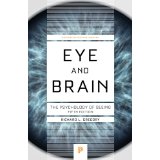
The eye is a simple optical instrument. With internal images projected from objects in the outside world, it is Plato’s cave with a lens. The brain is the engine of understanding. There is nothing closer to our intimate experiences, yet the brain is less understood and more mysterious than a distant star.

We have only to open our eyes, and spread before us lies a banquet of colors and shapes, shadows, and textures: a pageant of rewarding and threatening objects, miraculously captured by sight. All this, from two tiny distorted upside-down patterns of light in the eyes. Seeing is so familiar, apparently so easy, it takes a leap of imagination to appreciate that the eyes set extremely difficult problems for the brain to solve for seeing to be possible.

Light does not enter or leave the brain, locked privily in its box of bone. All the brain receives are minute electrochemical pulses of various frequencies, as signals from the senses. The signals must be read by rules and knowledge to make sense. Yet what we see, and what we know, can be very different. As science advances, differences between perceived appearances and accepted realities become even greater.

What is striking is the huge amount of brain contributing to vision, giving immense added value to the images of the eyes. Where does this added value come from? Even in ideal conditions object perception is far richer than any possible images in the eyes. The added value must come from dynamic brain processes, employing knowledge stored from the past, to see the present, and predict the immediate future. Prediction has immense survival value. It makes fast games possible in spite of the physiological delays from eye to brain, and brain to hand. Moreover, anticipating dangers and potential rewards is  essential for survival — made possible by buying time from seeing objects distant in space.

What Can We Experience Through Contemplation?

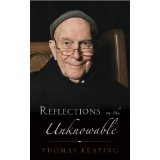
Divine love has no conditions. We are invited into it not as an abstract idea or as a ritual only, but as an experience. Contemplation is the experience of God that is becoming continuous and permanent even in the details of everyday life and amid the distractions of computers and the ghastly horrors of violence throughout the world. The divine goodness and the presence of divine love are always there. As our contemplative clarity deepens, we move from the occasional experience of the Presence to a permanent state of loving interaction on a moment by moment basis.

Reflections on the Unknowable

Thomas Keating

Background on Thomas Keating


How Can We Experience Our True Nature?

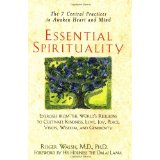
As awareness becomes more penetrating, it breaks through into the realm of pure consciousness, Mind, or Spirit. Here there are no objects, thoughts, or things, no time or change, no minds to suffer or bodies to decay and die. There is only the bliss of unbounded awareness, transcendent to space and time, eternally free.

At this stage exclusive identity with the body and mind are gone. Practitioners never again wholly believe that they are merely separate egos, bound to and by the body, and inevitably doomed to die with it. Shankara, 9th century spiritual philosopher from India, described this recognition as one in which “The knower of the Atman [our underlying self, or soul] does not identify himself with his body. He rests within it, as if within a carriage.” The practitioner discovers that though all things change and all bodies die, there is a realm beyond things and bodies, and therefore beyond all change, suffering, and death.

This understanding naturally weakens attachments to the world and its transient pleasures, which pale in comparison to the bliss of the Divine. In Shankara’s words: “a man is free from worldliness if he has realized Brahman, the infinite bliss.”

The advice of Jesus now takes on a deeper meaning:

Do not store up for yourselves treasures on earth where moth and rust can consume and where thieves break in and steal; but store up for yourselves treasure in heaven [which is in your midst and within you, Luke 17:21] where neither moth nor rust consume and where thieves do not break in and steal. For where your treasure is, there your heart will also be.
…..— New Testament, Matthew 6:19

The key insight is that a sacred realm of pure awareness is our natural, true nature and home, and that by awakening to it, suffering can be transcended and divine bliss directly known. The challenge is to stabilize this insight and to reorient our behavior so we experience and express this revelation in more and more of our life.


Essential Spirituality
Essential Spirituality: The 7 Central Practices to Awaken Heart and Mind

Roger Walsh

Background on Roger Walsh