
Contemplation when fully developed is the highest realization of the unity of science and religion. It is the science of love.

Reflections on the Unknowable
Thomas Keating
Background on Thomas Keating
Contemplation when fully developed is the highest realization of the unity of science and religion. It is the science of love.
Reflections on the Unknowable
Thomas Keating
Background on Thomas Keating
We can find wisdom everywhere: in every person, situation, and experience to which we bring an open inquiring mind. Although it is possible to learn from all people and all things, religious traditions especially recommend five sources.
.
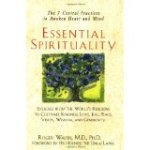
Essential Spirituality: The 7 Central Practices to Awaken Heart and Mind
Roger Walsh
Background on Roger Walsh
.
Religious Traditions Advise Us to Seek Wisdom from Five Sources
Those who would, may reach the utmost height — but they must be eager to learn.
…..— Buddha
When one claims that reality is in consciousness, one is claiming precisely that consciousness is irreducible, primary, fundamental. Consciousness, as such, is not generated by complex entities, or for that matter, by anything outside consciousness: it simply is. To say that irreducible consciousness generates reality poses no more problem than to say that irreducible laws of physics generate reality. In fact, it poses less problems, since it avoids the so-called ‘hard problem of consciousness’ altogether.
For the same reason that materialists believe that simple laws of physics generated the unfathomable complexity of today’s universe, fairly simple ‘laws of consciousness’ could generate the phenomenology of all existence. In both cases, very simple rules generate unfathomable complexity, something well understood in complexity science. The difference is that materialism postulates these complexity-creating rules to exist fundamentally outside consciousness and, in some totally non-understood way rather akin to magic, to generate consciousness. Monistic idealism, on the other hand, sticks to the obvious: the complexity-generating rules are intrinsic regularities of the unfolding of consciousness itself. This is not only much more parsimonious and empirically honest, it avoids the artificial and unsolvable ‘hard problem of consciousness’ altogether.

Brief Peeks Beyond: Critical Essays on Metaphysics, Neuroscience, Freewill, Skepticism, and Culture
Bernardo Kastrup
The pleasure of kindness is that it connects us with others; but the terror of kindness is that it makes us too immediately aware of our own and other people’s vulnerabilities (vulnerabilities that we are prone to call failings when we are at our most frightened). Vulnerability — particularly the vulnerability we call desire — is our shared biological inheritance. Kindness, in other words, opens us up to the world (and worlds) of other people in ways that we both long for and dread. How can people, from childhood onward, feel confident to take such risks?
Kindness is the foundation of the world’s greatest religions and most-enduring philosophies. Why, then, does being kind feel so dangerous? If we crave kindness with such intensity, why is it often the last pleasure we permit ourselves? And why — despite our longing — are we frequently suspicious when we are on the receiving end of it?
.Drawing on intellectual history, literature, psychoanalysis, and contemporary social theory, this brief and essential book will return to its readers what Marcus Aurelius declared was mankind’s “greatest delight”: the intense satisfactions of generosity and compassion.

Adam Phillips
born 1954
Adam Phillips is a British psychotherapist and essayist. He began his career working as a child psychotherapist. Presently, Phillips divides his time between writing and his private practice in Notting Hill. He is a prolific author.
Phillips has been the general editor of the new Penguin Modern Classics translations of Sigmund Freud since 2003. From 1990 to 1997 he was principal child psychotherapist at Charing Cross Hospital in London. He worked in Britain’s National Health Service for seventeen years. Since 2006, Phillips has been a visiting professor at the University of York English department. He is also a regular contributor to the London Review of Books.
Phillips has been described as: 1) Britain’s foremost psychoanalytic writer; and, 2) the best theorist of the modes and malfunctions of modernist psychology. For his intellectual resources, Phillips draws from philosophy, literature, and politics, as well as other fields. Though highly touted by many experts, some question his opinions and methodology.
Books by Adam Phillips include:
.
Taylor has written a biography of Mary Wollstonecraft, the early English feminist and republican, and she continues to speak on Mary Wollstonecraft’s life.
.Upon coming to Queen Mary University in 2012, Taylor took up a joint professorship in the Schools of History, and English & Drama. Her previous post, which she held since 1993, was a post in History at the University of East London. She has I also held visiting professorships at the universities of Amsterdam, Indiana, Notre Dame, and at the School for Advanced Studies in the Social Sciences, a leading French institution for research and higher education in the social sciences.
Taylor is an intellectual and cultural historian with a special interest in the subjective dimension of historical change. Her early research focused on feminist theory and history. She has published two well-known books on early British feminism.
Books by Barbara Taylor:
Barbara Taylor has edited these books:
Divine love has no conditions. We are invited into it not as an abstract idea or as a ritual only, but as an experience. Contemplation is the experience of God that is becoming continuous and permanent even in the details of everyday life and amid the distractions of computers and the ghastly reports of the horrors of violence throughout the world. The divine goodness and the presence of divine love are always there. As our contemplative clarity deepens, we move from the occasional experience of the Presence to a permanent state of loving interaction on a moment by moment basis.
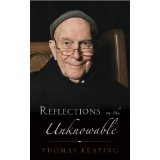
Reflections on the Unknowable
Thomas Keating
This brief text, only 168 pages long, is a distillation of over 70 years as a monastic and more than 30 years writing on centering prayer.
.
.
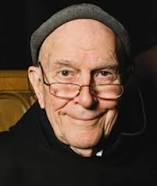
Thomas Keating
born 1923
– Wikipedia
– Spirituality & Practice
– Contemplative Outreach
– What is Centering Prayer?
Thomas Keating was born on March 7, 1923. He is a Trappist monk and priest. Keating is one of the foremost teachers of contemplative prayer in the Christian tradition. He is one of the founders of the Centering Prayer movement. The roots of Centering Prayer go back to the 4th century Desert Fathers. Keating also started Contemplative Outreach, Ltd. He attended Deerfield Academy, Yale University, and Fordham University, graduating in December 1943.
Keating has presented the Centering Prayer method and its related mystical theology to gatherings of non-Christians, Protestants, and Roman Catholics worldwide. He has also taken this ministry to seminarians, priests, lay people, and prisoners. Keating also frequently participates in dialogues with contemplatives of other religions.
Books by Thomas Keating include:
Audio by Thomas Keating include:
Thomas Keating – Oneness & The Heart of the World
.
Thomas Keating – Buddha at the Gas Pump Interview
.
Thomas Keating – The Method of Centering Prayer

 Who Knows Anyhow?