The Horrors We Bless

The scientist Jacob Bronowski faced a question on the ultimate fate of humanity one night in 1945 when he was driven in a Jeep through the ashy ruins of Nagasaki. In the dark, he had not sensed that they had moved from the open country to the “city.” The “city” was a dark and desolate ruin. The only sound he heard was that of an American military radio playing the popular tune “Is You Is or Is You Ain’t My Baby?” In the context the question was a piercing one.

What Bronkowski saw in this peak moment of truth was ‘civilization face to face with its own implications. The implications are both the industrial slum that Nagasaki was before it was bombed, and the ashy desolation that the bomb made of the slum. And civilization asks of both ruins, ‘Is You Is, or Is You Ain’t My Baby?’ [quoted from Bronowski in Science and Human Values]

The Horrors We Bless
The Horrors We Bless: Rethinking the Just-War Legacy

Daniel C. Maguire


.
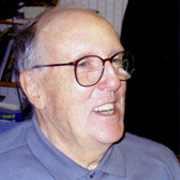
Daniel Maguire
Daniel C. Maguire
1927-2013

Maguire was a professor at Marquette University. He specialized in religious ethics focusing upon issues of social justice and medical and ecological ethics.

.
Daniel Maguire’s books include:

He wrote over 200 articles in professional journals and magazines.


Science and Human Values
Jacob Bronowski


.

.
.

Jacob Bronkowski
Jacob Bronowski
1908-1974

Bronkowski was a Polish-Jewish British mathematician, biologist, historian of science, theatre author, poet and inventor.

He is best remembered as the presenter and writer of the 1973 BBC television documentary series, The Ascent of Man, and the accompanying book. For the BBC series,  Bronowski travelled around the world in order to trace the development of human society through its understanding of science.

 

It’s Time to Shift Our Understanding of the Divine Presence

It is time to take seriously what Christianity has always proclaimed: that this Mysterious Presence we call “God” is everywhere and it is beyond all our human concepts. It is time to make a significant shift in our understanding of “God.” It is time to shift from notions of a deity to an understanding and appreciation of the Divine Presence always here, always and everywhere active in an expanding universe and in the evolution of life on this planet.

It's Time
It’s Time: Challenges to the Doctrine of the Faith

Michael Morwood
.
;
;


Michael Morwood
Michael Morwood

Michael Morwood has over 40 years’ experience in retreat, education, parish and adult faith development ministries, and is well known in Progressive Christian movements in Australia and the USA.

Morwood advocates that Christianity, along with other major religions, has to make sense of its major beliefs in light of contemporary knowledge about the universe and our place in it. A major overhaul is needed in how we understand “God”, how we interpret Jesus as revealing the Divine Presence in human form, and what this means for worship and prayer. This contemporary “story” is radically different from the traditional Christian story about an elsewhere, heavenly God who is disconnected from humanity.


“Jesus Through a 21st Century Lens” by Michael Morwood
Part 1 of 3

.

Part 2 of 3

.

Part 3 of 3
https://www.youtube.com/watch?v=qGV3X2Oay80&feature=youtu.be

Zen Practice and Enlightenment

Thinking that practice and enlightenment are not one is no more than a view that is outside the Way [that is, deluded]. In buddha-dharma, practice and enlightenment are one and the same. Because it is the practice of enlightenment, a beginner’s wholehearted practice of the Way is exactly the totality of original enlightenment. For this reason, in conveying the essential attitude for practice, it is taught not to wait for enlightenment outside practice. This must be so because [this practice] is the directly indicated original enlightenment. Since it is already the enlightenment of practice, enlightenment is endless; since it is the practice of enlightenment, practice is beginningless.

The Wholehearted Way

Eihei Dogen’s Bendowa

Yoga – A Worldwide Phenomenon

Yoga

Yoga has become a worldwide phenomenon. Historically, Yoga is a practice with direct links to the Hindu faith and scriptures. However, the motivation behind today’s obsession with Yoga is more commercial exploitation than its original purpose as a spiritual practice and ingredient for a healthy lifestyle.

An article on Wikipedia explains Yoga’s relationship with Hindu religion:

Yoga is an Indian physical, mental, and spiritual practice or discipline. There is a broad variety of schools, practices and goals in Hinduism, Buddhism (including Vajrayana and Tibetan Buddhism) and Jainism. The best-known are Hatha yoga and Raja yoga….

Yoga gurus from India introduced yoga to the west, following the success of Swami Vivekananda in the late 19th and early 20th century. In the 1980s, yoga became popular as a system of physical exercise across the Western world. Yoga in Indian traditions, however, is more than physical exercise; it has a meditative and spiritual core.

The origins of Yoga have been speculated to date several thousand years to pre-Vedic Indian traditions. But, most likely Yoga developed around the sixth and fifth centuries BCE, in ancient India’s ascetic circles.

For a detailed analysis of the current state of Yoga as a worldwide phenomenon, see Yoga, Hinduism and Market, written by Dr. Javed Jamil.


Jesus in Today’s World

What significance might Jesus have in today’s world?  Obviously there cannot be any single answer. What that question may signify for Chinese peasants would likely be of little interest to modern European university students, and vice versa; what may be important in that question for some African politicians would hardly be of pertinence to American soldiers in Iraq or Afghanistan, and vice versa. The conception of us humans as fundamentally historical beings has itself developed in a particular historical context — largely among intellectuals in the modern West. Like all other conceptions, it has its meaning, significance, and truth principally within that context, and the extent to which it will be taken seriously into account in other situations will depend very much on those situations themselves.

Jesus as Creativity
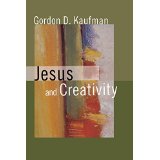
Jesus And Creativity
Gordon Kaufman