We Are Unchanging Being-Awareness

When we look to see what we are, we find that the only thing that can qualify as our essential nature is the unchanging sense of our being, which is both existent and aware. In looking at this sense of being-awareness, we see that it is already here and easily recognized. Not only is it present, but it remains present and undisturbed in the midst of all thinking, feeling and experiencing. It is not something that we get from a book or obtain as a result of practices, techniques or processes. Nor is it something that comes to us from outside, from a teacher, a divine being or any other source. We do not need an awakening or enlightenment experience to know our true nature. It is effortlessly present. In fact, there is nothing we can do to escape it.
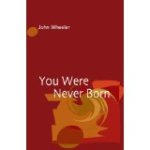
You Were Never Born
You Were Never Born
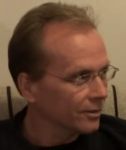
John Wheeler


John Wheeler.
.
John Wheeler

John Wheeler is a student and teacher of nondualism (also called non-duality), which “points to the idea that the universe and all its multiplicity are ultimately expressions or appearances of one essential reality.”

Wheeler pursued a decades-long search, during which he visited the East, and mingled with students of Ramana Maharshi. His search ended when he met Bob Adamson (a student of Nisargadatta Maharaj) on a trip to Australia in 2003. In short order, Adamson cleared up Wheeler’s doubts and questions and pointed out to him the fact of our real nature: self-shining, ever-present awareness.

For several years, Wheeler held Q & A meetings in the California Bay area, hosted a website, and answered questions via email. However, he has discontinued his public interactions in favor of a private life.

John Wheeler has written several books, each one adopting a similar format of dialogues, questions answered, and pointers.

Books John Wheeler has written include:

Seeing The True Nature Of Being

True reality is hidden by the practice of thoughts
but also in the denial.
Accept the reality of not naming things
and rest in the silence of being.

The need to name, the need to distinguish
are born of a clinging fear.
Remain unattached to every thought
and know the true nature of being.

The Book of Nothing
The Book of Nothing: A Song of Enlightenment
(original Chinese title: Hsin Hsin Ming)
Sosan
S

.


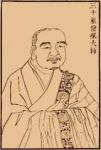
Sosan
Sosan
died 606

Sosan was the third patriarch of the Zen tradition of Buddhism. Sosan is the Japanese translation of the Chinese name Seng T’san (also known as Sengcan). Not much is known about Sosan, though he was a layman. His short work, The Book of Nothing (just 80 pages of poetry), is an inspiration to seekers of many traditions. The Book of Nothing succinctly, and very simply, captures the essence of the empty mind that in the generations following Sosan was to be the hallmark of the Zen tradition.

The empty mind, or no-mind, loosely describes the state in which reality is experienced directly without being filtered through the thought process of the mind. Without this filter, reality is experienced as completely fresh, radiant, and luminous — and, as if for the first time. Inherent in this experience is a feeling of both joy and bliss.

Like Bodhidharma (first patriarch) and Huike (second patriarch) before him, Sosan was reputed to be a devotee and specialist in the study of the Lankavatara Sutra, which taught the primacy of consciousness, the elimination of all duality, and the “forgetting of words and thoughts.”

An online collection of Sosan’s works is available at Terebess Asia Online.

Do You Have The Faith Of A Heretic?

Heresy is a set of opinions “at variance with established or generally received principles.” In this sense, heresy is the price of all originality and innovation.

In theology, any “opinion that is contrary to the fundamental doctrine or creed of any particular church” is heretical. From the point of view of churches to which we do not belong – and none of us can belong to the lot – we are all heretics.

For centuries heretics have been persecuted by men of strong faiths who hated non-conformity and heresy and criticism. In our time, millions have been murdered in cold blood by foes of non-conformity and heresy and criticism.

The Faith of a Heretic

Walter Kaufmann


Republished in June 2015 (originally published in 1959), The Faith of a Heretic is Walter Kaufmann’s most personal statement of his beliefs. He also provides the fullest account of his views on religion. Although he considered himself a heretic, he was not immune to the wellsprings and impulses from which religion originates, declaring it among the most vital and radical expressions of the human mind.

The book covers a lot of ground, touching on theology, organized religion, morality, suffering, and death – all examined from the perspective of a “quest for honesty.” Kaufmann also subjects philosophy’s faith in truth, reason, and absolute morality to the same heretical treatment. Four words summarize this book: engaging, provocative, refreshing, rewarding.


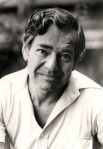
Walter Kaufmann
Walter Kaufmann
1921-1980

Walter Kaufmann was a German-American philosopher, translator, and poet. He was a professor at Princeton University for over 30 years. Kaufmann was a prolific author, and wrote extensively on a broad range of subjects, including: authenticity and death, moral philosophy and existentialism, theism and atheism, Christianity and Judaism, as well as philosophy and literature. He is renowned as a scholar and translator of Nietzsche.

Internet resources for Walter Kaufmann:

Books written by Walter Kaufmann include:

Complete list of books & articles written by Walter Kaufmann.


Walter Kaufmann Discusses Existentialism (Part 1 of 2)


Walter Kaufmann Discusses Existentialism (Part 2 of 2)


How Do We See Our World?

We have learned that we do not see directly, but mediately, and that we have no means of correcting these colored and distorting lenses which we are, or of computing the amount of their errors. Perhaps these sense-lenses have a creative power; perhaps there are no objects.

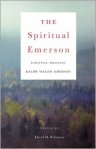
The Spiritual Emerson
Experience (1844)
Essay from The Works of Ralph Waldo Emerson

see also The Spiritual Emerson: Essential Writings by Ralph Waldo Emerson


Ralph Waldo Emerson
Ralph Waldo Emerson
1803-1882

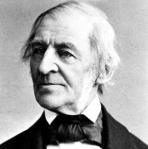
Ralph Waldo Emerson was an American essayist, lecturer, and poet who led the Transcendentalist movement of the mid-19th century. He was seen as a champion of individualism and a discerning critic of the countervailing pressures of society. Emerson formulated the philosophy of Transcendentalism in his 1836 essay, Nature. Centered in New England during the 19th century, Transcendentalism was a reaction against scientific rationalism. Emerson disseminated his thoughts through dozens of published essays and more than 1,500 public lectures across the United States.

Internet resources for Ralph Waldo Emerson:

Gratefulness – the Source of Happiness

The universe is gratis. It cannot be earned. From this simple fact of experience springs grateful living, grace-filled living. Gratefulness is the heart’s full response to the gratuitousness of all that exists. And gratefulness makes us grateful in a double sense. In gratefulness we open ourselves to this gratuitous universe and so we become fully graced with it. And in doing so we learn to move gracefully with its flow, as in a universal dance.

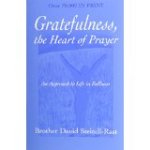
Gratefulness, the Heart of Prayer
Gratefulness, The Heart of Prayer: An Approach to Life in Fullness
David Steindl-Rast
.
.
.
.


David Steindl-Rast
David Steindl-Rast (Wikipedia, Gratefulness website)
born 1926

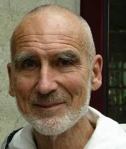
David Steindl-Rast is a Benedictine monk, notable for his active participation in interfaith dialogue and his work on the interaction between spirituality and science. He meditates and writes on “the gentle power” of gratefulness.


Books written by Brother David Steindl-Rast include:


Want to Be Happy? Be Grateful
TED Talk given by David Steindl-Rast

The one thing all humans have in common is that each of us wants to be happy, says Brother David Steindl-Rast, a monk and interfaith scholar. And happiness, he suggests, is born from gratitude. An inspiring lesson in slowing down, looking where you’re going, and above all, being grateful.