Benefits of Living Mindfully

To live mindfully… is to bring greater awareness to each activity, to be more present to each moment, and to catch subtle experiences that all too often go unnoticed.
Essential Spirituality
Essential Spirituality: The 7 Central Practices to Awaken Heart and Mind
Roger Walsh
.

.
.


.Mindfulness Has Five Benefits

  1. Interpersonal Sensitivity
    Mindfulness makes us more present to each person we meet, more aware of the other person’s feelings and many messages conveyed by subtle body movements and vocal tones. This allows us to attune to their motives and emotions and to be more empathic with their feelings.
    .
    Empathy is the ability to share another person’s feelings. Empathy is an especially crucial skill, and research shows that meditation is one of the few methods known to enhance it.
    .
  2. Refining the Senses
    There is much talk in spiritual circles about giving up sensory pleasures, but much of this discussion is superficial and mistaken.We don’t necessarily need to give up sensory pleasures, but we do need to give up our attachment to them. Sooner or later any attachment causes suffering, and sensory attachments are no exception. Free of craving, we can enjoy our pleasures without fear or worry.We also need to refine the senses by honoring each experience and bringing to it a careful, gentle, and penetrating awareness or mindfulness.
    .
    Refined Senses Offer Three Major Gifts
    1) They enhance the appreciation and pleasure of each moment.
    2) Because each experience is more rich and satisfying, there is less craving for more experiences. The appreciation of quality experiences replaces the raw hunger for quantity — the glutton becomes a gourmet.
    3) Refining the senses is an excellent mental training that fosters beneficial qualities such as concentration and calm.
    .
  3. Knowing One’s Mind
    As awareness matures, it is able to observe not only the outer but also the inner world with increasing precision. Much that was formerly unconscious becomes conscious. Making the unconscious conscious has been the essence of meditation for thousands of years, and meditative awareness can penetrate far below the levels of psychotherapy.
    .
  4.  Freedom from Automaticity
    Awareness can break the chain of dependent origination in the instant after a crisis. This deconditions and weakens the habits of craving and aversion, and thereby liberates us from our own conditioning.
    .
  5. The Healing Power of Awareness
    Mindfulness heals. Many of the unhealthy and self-destructive things we do spring from automatic, unconscious responses. We feel anxious and find ourselves smoking, feel lonely and suddenly realize we’ve finished a box of chocolates, feel hurt by a casual remark and damage a friendship by lashing back automatically. These responses are born of mindlessness and can be prevented by mindfulness.
    .
    Mindfulness allow us to guard the mind. To be mindful and guard the mind means we are aware as we reach for a cigarette, chocolate, or harsh word and can therefore choose whether to continue or to make a different response.

Be always mindful of what you are doing and thinking. So that you may put the imprint of your immortality on every passing incident of your daily life.

     Abd’l-Khaliq Ghijdewani, 13th century Sufi
Do One Thing At A Time

Living Our Modern Lives, We Want to Do Multiple Things at Once…

Our frantic minds reflect our frantic lives as we try to fit more and more into each day. We constantly do two or more things at a time. We dress while listening to the radio; prepare a meal while planning our day; then eat the meal while reading the paper and watching television. We listen to the radio while driving and at work talk on the telephone while preparing a report. Our lives feel fragmented, our minds are agitated, blood pressure is raised, and our attention span is shortened.

Thomas Merton, one of the twentieth century’s most influential Christians, summarized the dilemma we face:

The rush and pressure of modern life are a form, perhaps the most common form, of its innate violence. To allow oneself to be carried away by a multitude of conflicting concerns, to surrender to too many demands, to commit oneself to too many projects, to want to help everyone in everything is to succumb to violence. The frenzy of the activist neutralizes his or her work for peace.

Essential Spirituality
Essential Spirituality: The 7 Central Practices to Awaken Heart and Mind
Roger Walsh

How Can We Heal The Past?

Guidelines for Healing the Past

  • Undo any damage. If you caused pain or harm, it is wise to undo it wherever possible. For example, if you hurt someone’s  feelings, you may want to apologize; if you stole something, it may be appropriate and healing to replace it or pay for it.
  • Aim for solutions in which everyone wins. The ideal solution is one in which everyone involved gains and learns from the process. For example, if someone hurt you, it is far better to gently explain that the behavior was hurtful than it is to attack. Ideally, both of you will learn from and be healed by the interaction.
  • Avoid attack. It is terribly tempting to retaliate when someone hurts you. The painful result, however, is usually only a dizzying spiral of ever-increasing anger, attack, and counterattack.
  • Communicate. Simply telling someone honestly and openly about your pain can be remarkably healing. This kind of communication is so effective that it forms the basis of the healing offered by religious confession, psychotherapy, and self-help groups such as Alcoholics Anonymous.
  • Learn. As always, learn as much as possible from your experience. For example, when you have resolved a dilemma, see what worked and what didn’t, so you can proceed more effectively in the future.


Essential Spirituality
Essential Spirituality: The 7 Central Practices to Awaken Heart and Mind
Roger Walsh

Socrates, Buddha, Confucius, and Jesus

Of all the great minds that have influenced contemporary thought, Socrates, Buddha, Confucius, and Jesus have had the most profound and lasting impact. These exemplary individuals taught us how to live as well as how to think. They were individual personalities, and seminal philosophers of unsurpassed importance.

Socrates, Buddha, Confusius, Jesus
Socrates, Buddha, Confucius, and Jesus
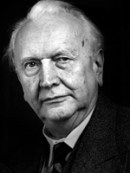
Karl Jaspers

This text is taken from The Great Philosophers, Volume I, by Karl Jaspers. The Great Philosophers is Karl Jaspers’ four volume universal history of philosophy, a history organized around those philosophers who have influenced the course of human thought. The first two volumes of this work appeared in Jasper’s lifetime; the third and fourth were gathered from the vast material of his posthumous papers.


Karl Jaspers
Karl Jaspers
1883-1969

. Karl Jaspers Society of North America
. Stanford Encyclopedia of Philosophy
. Wikipedia

Karl Jaspers was a German-Swiss psychiatrist and philosopher. Jaspers had a strong influence on modern theology, psychiatry and philosophy. After being trained in and practicing psychiatry, Jaspers turned to philosophical inquiry and attempted to discover an innovative philosophical system. He was often viewed as a major exponent of existentialism in Germany, though he did not accept this label.


Books written by Karl Jaspers include:


Love – Its Role In Nondual Vedanta

The teachings of Advaita (nondual) Vedanta can appear drab and unfeeling. Luckily, there’s more to the story…

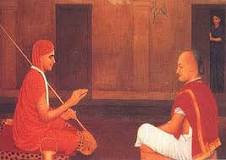
Mandanamisra
Long back in the 8th century, there lived a teacher of Advaita Vedanta named Mandana Misra. He was a contemporary of Sankara, who is credited with reviving Hinduism in India. Mandana Misra taught that love, in the form of passionate affection, is a driving force that initially induces one to seek the higher reality.

Mandana Mimisra wrote a treatise called Brahma-siddhi (Realization of Brahman, or Ultimate Reality) which had a profound impact on the development of post-Sankara Advaita.

In Mandana Misra’s words, from his prosaic Brahma-siddhi (Realization of Brahman) we find:

“It is established that Brahman is essentially bliss, the higher self-luminosity of atman; the atman is essentially bliss, since it is attained through the higher passion.”

Passionate love (prema), preached by Mandana Misra, bears a strong resemblance not only to bhakti (literally: being a part of, hence — attachment, devotion), propounded by Ramanuja, a follower of Vishnu, but also to the ‘gentle tenderness’ (sneha), which is so important for the religious mysticism of Madhva and other Krishna devotees.