. .
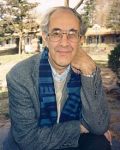
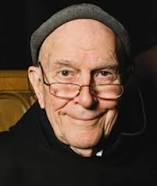
Henri Nouwen was a Dutch Catholic priest, professor, writer and theologian. His interests were rooted primarily in psychology, pastoral ministry, spirituality, social justice and community. He served as professor at Notre Dame, Yale, and Harvard. He wrote many books, all touching deeply on emotions.
.
Over the course of his life, Nouwen was heavily influenced by the work of Anton Boisen, Thomas Merton, Rembrandt, Vincent van Gogh and Jean Vanier. Though extremely gifted in many ways, Nouwen suffered from life-long bouts of depression, which caused him to be more introspective, and see the world from a deeper understanding.
.
Nouwen wrote over 40 books on spirituality and the spiritual life that have sold millions of copies and been translated into dozens of languages. His vision of spirituality was broad and inclusive, and his compassion embraced all of humankind.
.
In his later years, Nouwen gave up his prestigious teaching career to go live with developmentally disabled folks at L’Arche Daybreak Community in Ontario, Canada. He lived at L’Arche for the last 10 years of his life. He died in 1996, at age 64.
.
The Henri Nouwen Society, whose motto is “Fostering the spirituality of solitude, community, and compassion” keeps his teachings alive for anyone interested. .
Theology is an attempt to see past the ‘brain scan’ and infer how it ‘feels to feel’ love in a direct way; it is an attempt to see past the footprints and understand where the hiker wants to go, as well as why he wants to go there. In this sense, theology and the natural sciences are entirely complimentary.
Both nature itself and religious texts are expressions of a mysterious divine perspective and, as such, valid sources of concrete data for theological study. Theology has a clear, concrete subject, as well as a clear and concrete challenge: to decode the divine mystery behind the images — both ‘unconscious’ and empirical — that we experience during life.
While the natural sciences attempt to model and predict patterns and regularities of nature, theology attempts to interpret those patterns and regularities so to make some sense of their first-person perspective; that is, God’s perspective. Theology also attempts to interpret the symbols and allegories in religious literature so to reveal the ‘unconscious’ psychic processes behind them, which betray something about the inner-workings of God’s mind. In both cases, theology represents an attempt to provide a hermeneutics of texts and nature. This is essential, because a life worth living isn’t only about practical applications; it is about meaning and purpose.
We can find wisdom everywhere: in every person, situation, and experience to which we bring an open inquiring mind. Although it is possible to learn from all people and all things, religious traditions especially recommend five sources.
Religious Traditions Advise Us to Seek Wisdom from Five Sources
In Nature
Whether it is a mountain peak, a forest valley, or an ocean shore, somehow nature sifts the trivia of our minds and reminds us of the timeless and important. .
In Silence and Solitude
In silence — even more so in solitude — we escape the superficial demands of society. Silence allows the mind to rest. Then the inner chatter of thoughts and fantasies ceases and inner silence mirrors the outer silence. .
When silence reigns both within and without, we can hear what can never be spoken, the wisdom that waits beyond words. .
From the Wise
Who better to teach wisdom than the wise? But who are the wise? The great religious founders such as Buddha, Lao Tsu, Confucius, Jesus and Mohammad; also, the great men and women who invigorated these traditions. But we need not remain fixated on the past or assume that wise people became extinct thousands of years ago. .
If valued and cultivated, wisdom can flower in people of all times and places. The 20th century produced many wise and compassionate people. The vast majority of them are unknown, while some — such as Gandhi, Mother Teresa, and the Dalai Lama — are household names. .
Not only saints and sages can inspire us. There are many degrees of wisdom, and those only a few steps ahead can help, as can friends traveling the path with us. .
In Ourselves
As practice deepens, we gradually awaken to a startling realization: We do not really know ourselves. Of course, we know our habits and the personality we put on each day and pretend it is our Self. But we come to realize that we don’t really know our own inner depths, how our mind works, and our deepest Self. .
So many wise people have urged us to “know thyself.” The rewards of self-knowledge are profound because our Self — our true spiritual Self — is the doorway to the sacred. .
When we finally turn our attention inward, we discover that we are not who we thought we were. To know ourselves is to recognize that we are far, far more than we believed. It is to exchange our shabby self-image for our true Self and to discover that our true Self is a sacred Self and a doorway to the Divine. What is the secret of life? You are! .
From Reflecting on the Nature of Life and Death
There are four ideas, known as “the four mind-changers” that help us to understand the nature of life, to change our minds, and to live our lives accordingly: .
• Life is inconceivably precious.
• Life is short and death is certain.
• Life contains inevitable difficulties.
• Our ethical choices mold our lives.
Those who would, may reach the utmost height — but they must be eager to learn. …..— Buddha
Divine love has no conditions. We are invited into it not as an abstract idea or as a ritual only, but as an experience. Contemplation is the experience of God that is becoming continuous and permanent even in the details of everyday life and amid the distractions of computers and the ghastly reports of the horrors of violence throughout the world. The divine goodness and the presence of divine love are always there. As our contemplative clarity deepens, we move from the occasional experience of the Presence to a permanent state of loving interaction on a moment by moment basis.
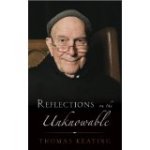
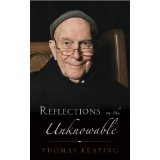
Thomas Keatingwas born on March 7, 1923. He is a Trappist monk and priest. Keating is one of the foremost teachers of contemplative prayer in the Christian tradition. He is one of the founders of the Centering Prayer movement. The roots of Centering Prayer go back to the 4th century Desert Fathers. Keating also started Contemplative Outreach, Ltd. He attended Deerfield Academy, Yale University, and Fordham University, graduating in December 1943.
Keating has presented the Centering Prayer method and its related mystical theology to gatherings of non-Christians, Protestants, and Roman Catholics worldwide. He has also taken this ministry to seminarians, priests, lay people, and prisoners. Keating also frequently participates in dialogues with contemplatives of other religions.