How Do We Create the World We Live In?

Each of us lives in a world we have personally constructed, though usually we are not aware we have done so. Further, we have been able to construct our own personal world because we, in turn, have already been shaped by the culture into which we have been born.

Our personal world is largely drawn from the shared world which has given our culture its identity and coherence. This shared world is the result of a long and complex cultural evolution and has been collectively constructed by all our ancestors. There have been as many shared worlds as there have been human cultures.

Tomorrow's God: How We Create Our Worlds
Tomorrow’s God: How We Create Our Worlds

Lloyd Geering

Background on Lloyd Geering

Frankincense and Myrrh – Ancient Treasure

Kings

Incense Kingdoms of Southern Arabia

The incense kingdoms of Southern Arabia (today’s Yemen and Oman) produced the finest quality frankincense and myrrh – two of the most sought-after commodities of the ancient world. They also had a virtual monopoly on the transport and distribution of these two valuable items.

In the comparative peace brought by the Roman Emperor Augustus, at the end of the first century BC, demand for frankincense and myrrh was soaring. Thousands of pounds of incense were making their way by land and sea to Alexandria, Rome and Gaza, to the former Persian Empire now controlled by Parthians, to India and even China.
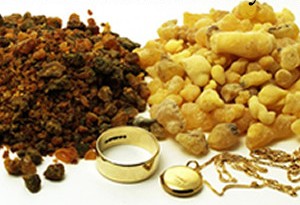
Frankincense and Myrrh

Frankincense – Good as Gold

Frankincense, the resin from the Boswellia tree, was as expensive as gold at the time of Jesus. Frankincense was the ancient world’s equivalent of crude oil. It was an indispensable element of public and private life, of all religious and state ceremonies in the Roman Empire as in the rest of the then known world.

Frankincense was probably the most essential luxury of the ancient world, and it made the kingdoms of Southern Arabia fabulously wealthy.

Myrrh – More Expensive Than Frankincense

Myrrh, a thorny bush, which like frankincense grew in Southern Arabia, was the essential ingredient for embalming bodies. More expensive than frankincense, it was in less demand and used less frequently in religious ceremonies.

Like frankincense, myrrh was mixed in cosmetics and perfumes and was used as a cure-all, including to prevent poisoning. It was also used to relieve pain, which may have been why Jesus was offered a mixture of myrrh and wine before the crucifixion.


More About Frankincense…

Ingredient in Worship by Various Traditions

  • Temple of the Greek sun-god Apollo.
  • Roman God of war Mars.
  • Babylonian sun-god Bel.
  • Temple in Jerusalem.
  • Buddhist temples in India.
  • Italian peasant farmer shrines.

Variety of Uses

  • Used to fend off the stench of ordinary living if you could afford it.
  • In oils for massages at the baths.
  • In face packs for pampered women.
  • To perfume Cleopatra’s barge when she sailed from Egypt to Tarsus for her first encounter with Mark Antony.
  • Mixed in the mortar of houses.
  • Was the aspirin of its day, used as a cure for anything from depression to dysentery.
  • In eye makeup.

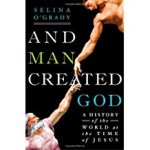
And Man Created God
And Man Created God: A History of the World at the Time of Jesus

Selina O’Grady



Selina O'Grady
Selina O’Grady

. Selina O’Grady (website)

Selina O’Grady is a writer, producer, and speaker.

O’Grady is the co-editor of two books: Great Spirits: The Fifty-Two Christians who Most Influenced their Millennium and A Deep But Dazzling Darkness. She has reviewed regularly for the San Francisco Chronicle, Literary Review and Tablet.

O’Grady was a producer of BBC1’s moral documentary series Heart of the Matter presented by Joan Bakewell, Channel 4’s live chat show After Dark, and Radio 4’s history series Leviathan.


Finding Meaning – A Lifelong Quest

Human existence is the quest for meaning – meaning for ourselves, meaning for society, meaning for the cosmos. It is the quest for meaning, and not the possession of final answers, which is the key to human existence.

The meaning of life has to be custom-built, tailored to individual circumstances, relative to time and place. There is no value in simply repeating, like a ventriloquist’s dummy, the meaning which has come out of somebody else’s life. The meaning of a person’s life is very personal and unique to that person.

Tomorrow's God: How We Create Our Worlds
Tomorrow’s God: How We Create Our Worlds
Lloyd Geering


Lloyd Geering
Lloyd Geering
born 1918
  .

National Portrait: Lloyd Geering, the honest heretic (2016 article from Stuff, New Zealand news site)
. Westar Institute
. Wikipedia

Lloyd Geering was born and lives in New Zealand. Geering is a theologian, popular lecturer/commentator, and prolific author. Geering holds a Doctor of Divinity from the University of Otago, New Zealand. He began his career as a Presbyterian minister, then turned to theological teaching in 1956.

In 1966, Geering published an article on “The Resurrection of Jesus” and, in 1967, another on “The Immortality of the Soul,” which together sparked a two-year public, theological controversy that culminated in charges by the Presbyterian Church of New Zealand of doctrinal error and disturbing the peace of the church. After a dramatic, two-day televised trial, the Assembly judged that no doctrinal error had been proved, dismissed the charges and declared the case closed.

Geering is a member of the Jesus Seminar and a participant in the Living the Questions program. He is also a member of the Sea of Faith Network (New Zealand), as well as Principal Lecturer at St Andrew’s Trust for the Study of Religion and Society.

Geering was honoured in 1988 as a Commander of the Order of the British Empire. In the 2007 he was made a Member of the Order of New Zealand.

Books written by Lloyd Geering include:


The Courage of Truth in Theology Series – Part 8 of 10 – Lloyd Geering

Forgiveness – Healing Our Past & Shaping Our Future

Forgiveness is a skill, a way of preserving clarity, sanity and generosity in an individual life, a beautiful way of shaping the mind to a future we want for ourselves; an admittance that if forgiveness comes through understanding, and if understanding is just a matter of time and application then we might as well begin forgiving right at the beginning of any drama rather than put ourselves through the full cycle of festering, incapacitation, reluctant healing and eventual blessing,

To forgive is to put oneself in a larger gravitational field of experience than the one that first seemed to  hurt us. We reimagine ourselves in the light of our maturity and we reimagine the past in the light of our new identity, we allow ourselves to be gifted by a story larger than the story that first hurt us and left us bereft.

At the end of life, the wish to be forgiven is ultimately the chief desire of almost every human being. In refusing to wait; in extending forgiveness to others now, we begin the long journey of becoming the person who will be large enough, able enough and generous enough to receive, at the very end, that absolution ourselves.

Consolations
Consolations: The Solace, Nourishment and Underlying Meaning of Everyday Words
David Whyte

Background on David Whyte