How Can We Experience Healthy Love?

“Healthy love” is the warm cherishing of another person without expectation and without clinging. This love “accepts” all aspects of another person and “requires” nothing from them. This love is something we create in our own heart and give as our gift, freely, willingly.

We create this contentment in order to share it; we don’t depend on the other person in order to feel it. This “unselfish” love doesn’t need the other person’s happiness in order to exist, but it knows that when we increase someone else’s happiness, everyone’s happiness, satisfaction, and contentment multiply exponentially. Love is an essential part of life. It is the expression of inner happiness and contentment.

We do experience authentic happiness in the presence of another, but then we almost immediately cling to the feeling and believe we “need” the other to feel it. We don’t want to lose the feeling. We desire authentic, healthy love, and in our confusion, pursue it wrong-headedly. Authentic, “unselfish” love changes the moment we try to cling to it and possess it. The moment of experiencing authentic love quickly gets replaced by self-centered thoughts.

We need to become familiar with how the mind works. When we experience authentic love, we feel so good we want to freeze the moment. Clinging takes over. This dynamic is the same as with any other desire or pleasure. If any previously loving and fulfilling relationship comes to feel harmful, toxic, unhealthy, or simply unsatisfying, then we benefit the relationship, ourselves, and the other person by examining our attitudes and becoming aware of our desires, our wants, our needs, and our demands.
The Misleading Mind
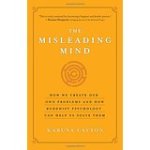
The Misleading Mind: How We Create Our Own Problems and How Buddhist Psychology Can Help Us Solve Them
Karuna Cayton

.

.

The whole mission of this book, one could say my own life mission, is to be able to communicate the profound and useful ideas of Buddhist thought for any person in any walk of life. This mission is rooted in the idea that Buddhism is a system of thought and ideas rather than a religion or dogma.

— Karuna Cayton


Karuna Cayton


Karuna Cayton

.
.

. Brief Bio
. Q & A with Karuna from Spirituality & Practice
The Karuna Group
. Lama Yeshe Wisdom Archive

Karuna Cayton is a therapist and has been a student of Buddhist psychology and philosophy for over 40 years.

A long time student of Lama Yeshe and Lama Zopa Rinpoche, Karuna worked for the lamas at Kopan Monastery from 1975-1988.  During that time he created and taught the secular studies program for the resident Tibetan and Nepali monks. He also assisted in running the Buddhist programs for foreign visitors and was the co-founder and director of the city center in Kathmandu, Himalayan Yogic Institute.

Karuna teaches workshops and classes in the integration of western and Buddhist psychology.


The Misleading Mind – Karuna Cayton
Introspection is a Dance Teacher, Telling Us : “Try It Yourself And Find Out”

Introspection is easy to misunderstand. Superficially, the introspectionist seems to say: “Here’s how my mind works; I infer that some other minds (or many others, or all others) work the same way.” But that is not the introspectionist proposition. The introspectionist is a dance teacher, not a dancer. He demonstrates a move and then says, you try it! His goal is not to explain dancing by showing you how he does it. His goal is to explain dancing by showing you how to do it. Then you will reach your own conclusions.

Thus the introspectionist goes in one leap from the weakest possible argument to the strongest — from a weak argument based on his experience alone to an irrefutable one based on yours.

The Tides of Mind
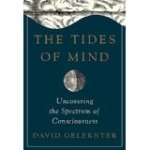
The Tides of Mind: Uncovering the Spectrum of Consciousness
David Gelernter

I May Have Lost My Mind…

I had my gall bladder taken out last fall.

According to some ancients, with the surgical removal of my gall bladder, I may have lost my mind”


It has not always been obvious that brains are involved in thinking, memory, sensation, or perception. In the ancient world, including the great civilizations of Egypt and Mesopotamia, reaching back 5000 years, the brain was regarded as as unimportant organ, because in death it is bloodless and in life it is seldom felt by its owner. The mind was associated with the stomach, the liver or gall bladder, and especially with the heart which is clearly responsive to emotion and effort. Echoes linger from these ideas in modern speech, in words such as ‘phlematic‘, ‘gall‘, ‘choleric‘, as well as ‘heartless‘.
 .
.
.

Creativity – Turning Up What is Already There

Creativeness often consists of merely turning up what is already there. Did you know that right and left shoes were thought up only a little more than a century ago?
…..— Bernice Fitz-Gibbon


Bernice Fitz-Gibbon
Bernice Fitz-Gibbon
1894-1982

. AdvertisingAge
. Wikipedia
. Obiturary in The New York Times

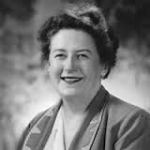
Bernice Fitz-Gibbon was an American advertising executive and a pioneer in retail advertising, working at Marshall Field’s, Macy’s, Gimbels and Wanamaker’s. She was inducted into the Advertising Hall of Fame in 1982.

Fitz-Gibbon was the creator of the Macy’s slogan “It’s great to be thrifty” and “Nobody, but nobody, undersells Gimbels.” A former ad manager at Marshall Field’s, Macy’s, Gimbels and Wanamaker, she became retailing’s most important and highly paid advertising director.

She influenced department store and fashion advertising by introducing “events” — fashion shows, dance instruction, lectures, demonstrations, etc. — and chatty, informative eight-column newspaper ads. The award-winning agency she opened in 1954 jump-started copywriter careers for many women.

The Feast of Love – Relationship Stories from Charles Baxter

Relationships, all sorts of relationships, that’s what life’s really all about – whether it be marriage, getting a divorce, having an affair, or living as a single person, each of these situations is interrelated.  And, we endeavor to enter into our relationships with love being the driving force, though sometimes it seems fuzzy to us.

Keep love in your heart. A life without it is like a sunless garden when the flowers are dead.
     —  Oscar Wilde 

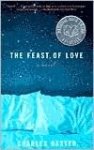
Here’s where Charles Baxter’s The Feast of Love comes in, it’s a wonderful, twisting, sensitive, and quirky-comical romp through a series of characters whose lives at first seem disparate, but then begin to intertwine as Baxter unfolds his superb story of love.  The characters are ordinary people – a man who runs a coffee shop, a just out of high school young punker-style boyfriend-girlfriend, an over-sexed female attorney having an affair with a married man, the list goes on  –  who experience the sort of hardships and trials we can all relate to.  Yet, with the deft hand of Baxter, we see beyond the surface of seemingly plain-looking events, and we sense the depth of emotions these people experience.

Since The Feast of Love is the first book I have read by Baxter, I wasn’t familiar with his style of writing.  As I set out to dive into his story, I found myself upset early on, thinking to myself: “What is this guy trying to do?”  I took offense at the liberties Baxter was taking with me, the reader.  First off, he would make rather abrupt narrative changes from one character to another, and that made me do some work to keep up.  Secondly, I became angry at the detail Baxter provided in describing the bedroom activities of those engaging in ongoing affairs.

At times, I was ready to give up and toss the book onto the pile for donation, but I am known to be stubborn, and I managed to stick it out.  It paid off big time, as I learned a lot during my endeavor.  I came away with an understanding of why it made sense for Baxter to unfold his story the way he did.  He was presenting a true-to-life snapshot of life as it really is , with all its rough edges.  And, now, even days after finishing the book, I find myself thinking about some of the characters, and wondering what they would be doing now.

The Feast of Love
The Feast of Love
Charles Baxter

The Feast of Love was a finalist for the 2000 National Book Award for Fiction.


Charles Baxter
Charles Baxter
born 1947

Charles Baxter
. Wikipedia

Charles Baxter was born in Minnesota.  He lives in Minneapolis and teaches at the University of Minnesota. He is the author of eight works of fiction. Although his body of work includes poetry and essays, he is best known for his fiction – brilliantly crafted, non-linear stories that twist and turn in unexpected directions before reaching surprising yet nearly always satisfying conclusions.