What Does It Mean To Have Patience?

Patience is the ability to hold still under threat until we can discern what is at stake. Patience demands neither passivity nor docility, but a fierce attentiveness to what is really happening.

The medieval philosopher Thomas Aquinas observed that patience girds us “to endure immediate injuries in such a way as not to be unduly dejected by them.”

Transforming Our Painful Emotions
Transforming Our Painful Emotions: Spiritual Resources in Anger, Shame, Grief, Fear, and Loneliness

Evelyn Eaton Whitehead & James D. Whitehead

Background on Evelyn Eaton Whitehead & James D. Whitehead

.


How Are Courage And Patience Related?

Courage supports the mature realization that there are values that outweigh our own comfort and security. Thomas Aquinas judged that the arousal of courage empowers us “to face the dreadful,” strengthening individuals “so that they will not turn back.” We feel this arousal when, in the face of a frightening situation, a threat to our safety or our dignity, we determine to act nevertheless. It is not easy to isolate and name this stirring.

A full and satisfying life must be open to taking risky actions. Courage here often takes the shape of patience. In patience we hold ourselves to valued ideals – of justice, of mercy, of compassion – even when we cannot guarantee they will win the day.

.
Nourishing the Spirit
Nourishing the Spirit: The Healing Emotions of Wonder, Joy, Compassion and Hope

James & Evelyn Whitehead

Background on James & Evelyn Whitehead


Where Can True Contentment Be Found?

Many events in life may be beyond our control, but our approach and attitude are totally up to us. We can choose to be dissatisfied, always wanting more, or we can choose to be generous, appreciating what we do have and sharing as much as possible with others. This turn from outward to inward sources of contentment is an essential step on our path to infinite life.

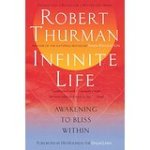
Infinite Life: Awakening to the Bliss Within

Robert Thurman

Background on Robert Thurman

What Does Realizing Selflessness Mean?

Early on some of the Western psychologists who were beginning to learn from the Buddhist tradition – members of the transpersonal and other movements – came up with the idea that the relationship between Buddhist and Western psychology is this: “Western psychology helps somebody who feels they are nobody become somebody, and Buddhist psychology helps somebody who feels they are somebody become nobody.” This idea is not even remotely correct.

Realizing your selflessness does not mean that you become a nobody, it means that you become the type of somebody who is a viable, useful somebody, not a rigid, fixated, I’m-the-center-of-the-universe, isolated-from-others somebody. You become the type of somebody who is over the idea of a conceptually fixated and self-created “self,” a pseudo-self that would actually be absolutely weak, because of being unrelated to the reality of your constantly changing nature. You become the type of somebody who is content never to be quite that sure of who you are – always free to be someone new, somebody more.

The Buddha was happy about not knowing who he was in the usual rigid, fixed sense. He called the failure to know who he was “enlightenment.” Why, because he realized that selflessness kindles the fire of compassion. When you become aware of your selflessness, you realize that any way you feel yourself to be at any time is just a relational, changing construction. When that happens, you have a huge inner release of compassion. Your inner creativity about your living self is energized, and your infinite life becomes your ongoing work of art.

Selflessness does not mean that you are disconnected. There is no way to become removed from yourself and from other beings. We are ultimately boundless – that is to say, our relative boundaries are permeable. But we are still totally interconnected no matter what we do. You can not disappear into your own blissful void, because you are part of everyone and they are part of you. If you have no ultimate self, that makes you free to be your relative self, along with other beings.
Infinite Life: Awakening to the Bliss Within
Robert Thurman



Robert Thurman
Robert Thurman
born 1941
.

. Wikipedia
. Robert Thurman

Robert Thurman is an American Buddhist writer and academic who has written, edited or translated several books on Tibetan Buddhism. He is the Je Tsongkhapa Professor of Indo-Tibetan Buddhist Studies at Columbia University, holding the first endowed chair in this field of study in the United States. Thurman was the first Western Tibetan Buddhist monk.

Thurman is the co-founder and president of the Tibet House New York.

Books written by Robert Thurman include:

Robert Thurman on YouTube: https://www.youtube.com/user/bobthurmanpodcast

Ignorance is the Root of Our Problems – Wisdom is the Solution

Ignorance is at the root of every problem we suffer. This is ignorance of the true nature of our misleading mind and our conception of self or identity. Because we are unaware of this, we make the emotional mistakes of aversion and attachment in response to the circumstances of life. Conversely, we “fix” these emotional disturbances by developing an accurate perception of how things really exist, of the relative nature of one’s self and everything else.

Any solution to any issue must be accompanied by informed awareness, a synonym for wisdom. Informed awareness is like a powerful flashlight and the disturbing emotions are like cockroaches – they run from the light of wisdom. Wisdom is what can transform blame into compassion and end suffering immediately and completely in the moment.

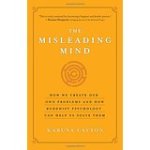
The Misleading Mind
The Misleading Mind: How We Create Our Own Problems and How Buddhist Psychology Can Help Us Solve Them

Karuna Cayton

Background on Karuna Cayton