What Thoughts Should We Concentrate On?

Thoughts to Live By

Think on These Things

  • What you can control – not what you cannot control.
  • The positive – not on the negative.
  • What you can do not on what you cannot do.
  • What you have – not on what you do not have.
  • The present – not on the past and future.
  • What you need – not on what you want.
  • What you can give not on what you can take.

Finding Strength

You have power over your mind – not outside events. Realize this, and you will  find strength.

…..Marcus Aurelius

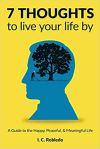
7 Thoughts To Live Your Life By
7 Thoughts to Live Your Life By: A Guide to the Happy, Peaceful, & Meaningful Life
I. C. Robledo

How Does Authenticity Help Us Embrace Who We Are?

Authenticity

Embracing Who We Are

Authenticity is the daily practice of letting go of who we think we’re supposed to be, and embracing who we are.

When we choose authenticity we:

  • Cultivate the courage to  be imperfect, to set boundaries, and to allow ourselves to be vulnerable.
  • Exercise the compassion that comes from knowing that we are made of strengths and struggles.
  • Nurture the connection and sense of belonging that can only happen when we believe that we are enough.

Wholehearted Living

Authenticity demands wholehearted living and loving – even when it’s hard, even when we’re wrestling with the shame and fear of not being good enough, and especially when the joy is so intense we’re afraid to let ourselves feel it.

Mindfully practicing authenticity during our most soul-searching struggles is how we invite grace, joy, and gratitude into our lives.

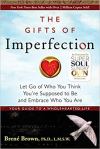
The Gifts of Imperfection
The Gifts of Imperfection: Let Go of Who You Think You’re Supposed to Be and Embrace Who You Are 

Brene Brown

The Virtue Of Tolerance

The peak of tolerance is most readily achieved by those who are not burdened with convictions.

…..Alexander Chase

Tolerance is a Virtue

Tolerance is a rare and important virtue. What underlies tolerance is the recognition that there is plenty of room in the world for alternatives to coexist, and that if one is offended by what others do, it is because one has let it get under one’s skin. We tolerate others best when we know how to tolerate ourselves – learning how to do so is one aim of the civilized life.

Tolerance vs Intolerance

Tolerance and its opposite, intolerance, are not or even invariably forms of acceptance or rejection respectively. One can tolerate a belief or a practice without accepting it oneself.

Meditations for the Humanist
Meditations for the Humanist: Ethics for a Secular Age

A.C. Grayling

How Does Cognition Relate To Perception?

Cognition

Cognition & Perception 

Cognition is the mental act or process of acquiring knowledge and understanding through thought, experience and the senses. Cognitive processes use existing knowledge and generate new knowledge. Cognitive processes are analyzed from different perspectives within different contexts, in a number of fields, including: neuroscience, psychiatry, psychology, education, philosophy, anthropology, biology, and computer science.

Perception is the organization, identification, and interpretation of sensory information in order to represent and understand the presented information, or the environment.

Nine Laws of Cognition

  1. There are no benefits without costs.
  2. Action molds perception.
  3. Feeling comes first.
  4. The mind can override perception.
  5. Cognition mirrors perception.
  6. Spatial thinking is the foundation of abstract thought.
  7. The mind fills in missing information.
  8. When thought overflows the mind, the mind puts it into the world.
  9. We organize the stuff in the world the way we organize the stuff in the mind.

Mind in Motion
Mind in Motion: How Action Shapes Thought

Barbara Tversky