How Will Practicing Virtue Transform Us?

Practicing Virtue Engenders Gentleness

The practice of virtues assures a connection between the ecstatic and the everyday. Virtue expresses itself in a particular style of life and in a relationship with others that consists of mildness or gentleness. The secret of gentleness is to be found in a transformation of one’s whole being, a practice of virtue and contemplation that makes one present to Spirit while not excluding presence to other people, the world, and even the body.

Some Important Virtues:
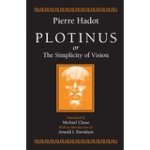
plotinus-or-the-simplicity-of-vision
Plotinus or the Simplicity of Vision

Pierre Hadot

This lively philosophical portrait of Plotinus remains the preeminent introduction to him and his thought.


plotinus
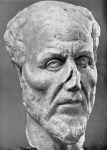
Plotinus
204-270 AD

. Wikipedia
. Internet Encyclopedia of Philosophy
. Stanford Encyclopedia of Philosophy

Plotinus was a major Greek-speaking philosopher of the ancient world, influential in Late Antiquity. He is one of the most influential philosophers in antiquity after Plato and Aristotle.

Born in Egypt, Plotinus later moved to Rome, where he lectured and wrote. He is regarded as the founder of Neoplatonism  (a term invented by historians of the 19th century ). In his philosophy there are three principles: the One, the Intellect, and the Soul.  Much of the biographical information about Plotinus comes from Porphyry, a student of Plotinus. In addition, Porphory edited the Enneadsthe complete treatises of Plotinus.

Plotinus’ metaphysical writings have inspired centuries of Pagan, Christian, Islamic and Gnostic metaphysicians and mystics.


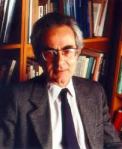
Pierre Hadot
Pierre Hadot
1922-2010

. Internet Encyclopedia of Philosophy
. Wikipedia

Pierre Hadot was a French philosopher and historian of philosophy specializing in ancient philosophy, particularly Neoplatonism. Hadot is best known for his conception of ancient philosophy as a bios (Greek), or way of life. His work has been widely influential in classical studies and on thinkers, including Michel Foucault.

Books written by Pierre Hadot include:

Was Ancient Greece the Ideal Society?

In ancient Greece, since each city was autonomous, the Greeks failed to develop a loyalty towards a union of the whole Greek world. They could not organize and act together, and their lives were spent in violent conflicts. Plato, it is true, dreamed of an ideal society, but it was conceived as a city state, not a common-wealth of mankind.

A Comparative History of Ideas
Hajime Nakamura


Hajime Nakamura
Hajime Nakamura
1911-1999

Professor Hajime Nakamura was one of the great authorities in Indian Philosophy and Buddhist Studies.

Nakamura was an expert on Sanskrit and Pali, and among his many writings are commentaries on Buddhist scriptures. He is most known in Japan as the first to translate the entire Pali Tripitaka into Japanese. This work is still considered as the definitive translation to date against which later translations are measured. The footnotes in his Pali translation often refer to other previous translations in German, English, French as well as the ancient Chinese translations of Sanskrit scriptures.

Because of his meticulous approach to translation he had a dominating and lasting influence in the study of Indic Philosophy in Japan at a time when it was establishing itself throughout the major Japanese universities.

He published more than 170 monographs, both in Japanese and in Western languages, and over a thousand articles.

Some Books by Hajime Nakamura:

What in the World was Going on During the Time of Buddha?

When the Buddha was young, Zarathustra was exhorting the Persians, and the Second Isaiah and Ezekiel the Jews; when he became a Buddha, Cyrus was establishing his vast empire, and Confucius was twenty-three; and when he was in his seventies, the Greeks defeated the Persians at Marathon and Greek tragedy was taking shape.

Aeschylus and Sophocles were Buddha’s younger contemporaries; Euripides was probably born a year before Buddha died; Herodotus, Thucydides, and Socrates a few years later. No other age in the history of our world has seen a comparable explosion of such originality in so many widely different regions.

Buddha (563 BC-483 BC) lived to age 80. He was born at the foot of the Himalayas, in what is now Nepal, and spent much of his life traveling in northern India. His birth name was Siddhartha Gautama.

Religions by Walter Kaufmann
Religions in Four Dimensions: Existential, Aesthetic, Historical, Comparative
Walter Kaufmann

Background on Walter Kaufmann


Finding Answers to Our Core Question: ‘What Does It All Mean?’

Prompted by our universal curiosity, we ask ourselves ‘What does it all mean?’ And, we routinely trek off in many directions, seeking possible answers.

Here’s a little book, What Does It All Mean?, that helps us plumb the depths of our questioning. Anyone who approaches the book with a ‘beginner’s mind’ will benefit greatly from its wisdom. The book is a lucid introduction to some of the key problems of philosophy, and it sets forth the central problems of philosophical inquiry in an easy to follow, conversational tone, coupled with a dose of humor.

A rich world of possibilities is available to us when we keep a ‘beginner’s mind’. It is when we are beginners that we are eager to learn, receptive, and open to possibilities. Even if we feel as though we’ve crossed the threshold and become advanced, with a ‘beginner’s mind’ we are still open to new insights, and to different, perhaps deeper, ways to appreciate even the basics.

Arguing that the best way to learn about philosophy is to think about its questions directly, nine core questions are posed: Is there really an external world? Are there other minds? How does the mind relate to the brain? Is there such a thing as free will? What is the nature of morality and justice? How do words manage to refer to things? How should one feel about death? What is the meaning of life? Following each question there is a short, engaging discussion.

True to the spirit of philosophical inquiry, answers to questions are left open-ended, allowing us to consider other solutions and encouraging us to think for ourselves.

What Does It All Mean?
What Does It All Mean?: A Very Short Introduction to Philosophy
Thomas Nagel

.

.


Thomas Nagel
Thomas Nagel
born 1937

. NYU Department of Philosophy
. Wikipedia

Thomas Nagel is Professor of Philosophy and Law at New York University, where he has taught since 1980.  His main areas of philosophical interest are philosophy of mind, political philosophy and ethics.

Nagel is well known for his critique of reductionist accounts of the mind, particularly in his essay “What Is it Like to Be a Bat?“, along with his contributions to deontological and liberal moral and political theory in The Possibility of Altruism (1970) and subsequent writings. Nagel continues his critique of reductionism in Mind and Cosmos (2012), in which he argues against a reductionist view, and specifically the neo-Darwinian view, of the emergence of consciousness.

Books by Thomas Nagel include:

Why Does the World Exist?: An Existential Detective Story

The World
.
Why Does the World Exist?
 — A Potentially Exhausting Subject Turned into a Page-Turner

Why Does the World Exist?: An Existential Detective Story is a detailed account of why there’s something rather nothing in our world. Author Jim Holt combines his saucy erudition with accounts of his travels to tap the minds of cosmologists, theologians, particle physicists, philosophers, mystics and others.

Holt lays bare the thinking of everyone from SocratesPlatoHeidegger, and Leibniz, to Stephen Hawking and Richard Dawkins. Along the way, he hashes through intriguing arguments about quantum physics and string theory. He walks away from most of his interviews muttering about the logical defect in this approach or that one.

In the course of Holt’s narrative, he spends time with his mother during her final days and witnesses her passing. He mentions his younger brother died a few years earlier, “at a party after taking too much cocaine.” As if this isn’t enough, Holt’s beloved dog suddenly becomes ill, and he sits and holds him for 10 days. The dog, too, expires. Holt doesn’t linger long over any of these events.

Holt’s intimacy with mortality lends heft and emotion to one of his fundamental questions: whether the universe, like life, is anything more than a short interlude between two vast nothings. Holt ventures guesses about this puzzle, but his propositions tend to be darkly humorous, in a Woody Allen sort of way.

Throughout his adventure, traveling from one geographical location across Europe and the US to another, Holt presents mouth-watering accounts of his meals, like this one: “At the table I ordered monkfish and heritage pork and heirloom beets, and I drank a delicious bottle of a locally produced Cabernet Franc.”

As the book draws to a close, one gets the distinct feeling that Holt seems to be enjoying himself on earth, and is in no rush to nail every mystery to the wall. “There is nothing I dislike more,” he says, “than premature intellectual closure.”

Why Does the World Exist?
Why Does the World Exist?: An Existential Detective Story
Jim Holt

. Amazon
. Wikipedia

The book was a New York Times Bestseller and a National Book Critics Award finalist for nonfiction in 2012.


Jim Holt
Jim Holt
born 1954

Jim Holt has contributed to The New York Times, The New York Times Magazine, The New York Review of Books, The New Yorker, The American Scholar, and Slate.

Holt hosted a weekly radio spot on BBC Wales called “Living in America, with Jim Holt” for ten years. He has appeared on William F. Buckley’s Firing Line, NBC News with Tom Brokaw, and CNN. In 1997, he was editor of The New Leader, a political magazine. He lives in Greenwich Village, NY.

Books by Jim Holt include: