What is the State of Highest Spiritual Concentration?

The state of the highest spiritual concentration, in which every external object has disappeared, is at the same time the state in which one knows the deepest reality.

It is then that “all is so completely present to life that nothing any longer differs from it; such a life is a whole life, the pure and perfect life… It is then that it is sufficient in itself and that it no longer seeks anything.” (Plotinus Enneads V. 3. 16)

The Philosophy of Plotinus
Émile Bréhier

Background on Plotinus


Émile Bréhier
Émile Bréhier
1886-1952

Émile Bréhier was a French philosopher. His interest was in classical philosophy, and the history of philosophy. He wrote a History of Philosophy, translated into English in seven volumes.

Bréhier studied at the University of Paris. In 1908 he received his doctorate at the Sorbonne with a dissertation about Philo of Alexandria. He was Henri Bergson‘s successor at the University of Paris in 1945
 

What Was the Essence of Ancient Philosophy?

The task of ancient philosophers was to contemplate the cosmic order and its beauty, to live in harmony with it, and to transcend the limitations imposed by sense experience and discursive reasoning. Both Plato and Aristotle traced the origin of philosophy (philosophia, “the love of wisdom”) to wonder.

It was through philosophy, understood as a kind of ascetic exercise or training, that the cultivation of the natural, ethical, civic, purificatory, theoretic, paradigmatic, and hieratic virtues were to be practiced. And, it was through this noetic vision (study of the mind and intellect) that the ancient philosophers tried to awaken the divine light within, and to touch the divine Intellect in the cosmos.

By “philosophizing” ancient philosophers meant both noetic activity and spiritual practice; and, this was attributed not only to various Hellenic philosophers who belonged to different haireseis (Greek term meaning schools or theoretically founded ways of life), but also to the Egyptian priests, Chaldeans, and Indian Gymnosophists.

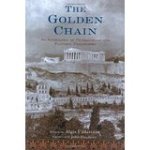
The Golden Chain
The Golden Chain: An Anthology of Pythagorean and Platonic Philosophy
Algis Uzdavinys


Algis Uzdavinys
Algis Uzdavinys
1962-2010

. Wikipedia


Algis Uždavinys was a prolific Lithuanian philosopher and scholar. His work pioneered the hermeneutical comparative study of Egyptian and Greek religions, especially their esoteric relations to Semitic religions, and in particular the inner aspect of Islam (Sufism). His books have been published in Lithuanian, Russian, English and French.

Uždavinys died in his sleep of an apparent heart attack on July 25, 2010 in his native village of Kabeliai, Lithuania.

Books written By Algis Uzdavinys include:

Where is Ultimate Reality to be Found?

The relation of the individual to the universal had always been a Greek philosophical problem. But Plotinus moved to show that the universal is present in its entirety in all things without losing its universality. He no longer sought rational knowledge of the universal, but a mystical union where individual consciousness disappears. This is a withdrawal from particular forms, and all ethical and intellectual aspects of the world, where the self is lost in contemplation. And it is generally this emphasis on contemplation as the ultimate reality that most conclusively connects Plotinus with the thought of India.

The Upanishads are fundamental to the philosophy of India. The seers of the Upanishads asked: what is the one reality multiplicity is reducible to, what is that which persists without change? This ultimate reality is called Brahman, which comes from the root brh, to grow, burst forth, and suggests a bubbling over, a ceaseless growth similar to the idea of overflowing power in the One, or the Good, the source of all things, of Plotinus’s philosophy.

With the coming of the Upanishads, Vedic hymns and rites were replaced by a search for the one reality behind all flux. This was also a movement from the external to the internal. Just as the key to the Plotinian One is found within the depths of the human self, for the Upanishads, liberation is an internal, not external experience. The goal of the liberated self is not the bliss of heaven or rebirth to a better world, but freedom from the objective, karma, and union with the Absolute, which is not in any “state.” Though Vedic knowledge can lead to Self-knowledge, knowing the Self transcends the entire range of human knowledge.

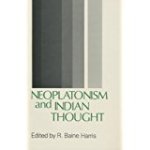
Neoplatonism and Indian Thought
Neoplatonism and Indian Thought (Studies in Neoplatonism: Ancient and Modern)
Edited by R. Baine Harris

Background on Plotinus


How Did Ancient Philosophy Change in the Christian Era?

With the advent of the Christian era and the eventual outlawing, in 529 C.E., of the ancient philosophical schools (by Roman Emperor Justinian), philosophy conceived of as a way of life largely disappeared from the West. Its spiritual practices were integrated into, and adapted by, forms of Christian monasticism.The philosophers’ dialectical techniques and metaphysical views were integrated into, and subordinated, first to revealed theology and then, later, to the modern natural sciences.

However, the conception of philosophy as a way of life has never completely disappeared from the West, resurfacing in Montaigne, Rousseau, Goethe, Thoreau, Nietzsche, and Schopenhauer, and even in the works of Descartes, Spinoza, Kant, and Heidegger.

.
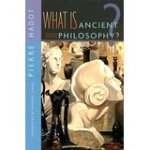
What is Ancient Philosophy?
Pierre Hadot

Background on Pierre Hadot


Was Ancient Philosophy a Spiritual Way of Life?

Twentieth- and twenty-first-century academic philosophy has largely lost sight of its ancient origin in a set of spiritual practices ranging from forms of dialogue, via meditative reflection, to theoretical contemplation.  These philosophical practices, as well as the philosophical discourses the different ancient schools developed in conjunction with them, aimed primarily to form, rather than only to inform, the philosophical student.The goal of the ancient philosophies was to cultivate a specific, constant attitude toward existence, by way of the rational comprehension of the nature of humanity and its place in the cosmos.

What is Ancient Philosophy?
Pierre Hadot

Background on Pierre Hadot