Modern Man is Transcultural

Modern Man, owing perhaps to the changes that have taken place in human geography and history, can no longer belong to a homogenous or isolated culture. He is bombarded by ideas, images, and sounds from all four corners of the world. He may have a superficial and even erroneous knowledge of other people, yet cultures mix, ideas intermingle, religions encounter one another, and languages interact and borrow from one another as perhaps never before in human history. The culture of modern Man may not be very stable; in fact he may even be threatened with the loss of all culture, but he is undoubtedly transculturally influenced — and this is true not only for minority groups but for the passive and suffering majority as well.
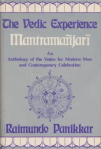
The Vedic Experience
Raimon Panikkar


The Vedic Experience collects the most crucial texts of the Indian Sacred Scriptures and shows how they manifest the universal rhythms of nature, history and man. Excerpts are taken from the Rig-veda, Brahmanas, Aranyakas, and Upanishads, which represent the mystical and philosophical culmination of the Vedas. This anthology offers the primary sources and an invitation to personal reflection.

Evolution and Consciousness

The appearance of animal consciousness is evidently the result of biological evolution, but this well-supported empirical fact is not yet an explanation — it does not provide understanding, or enable us to see why the result was to be expected or how it came about. In this case, unlike that of the appearance of the physical adaptations characteristic of life, an explanation by natural selection based on physical fitness to survive is not sufficient. Selection for physical reproductive fitness may have resulted in the appearance of organisms that are in fact conscious, and that have the observable variety of different specific kinds of consciousness, but there is no physical explanation of why this is so — nor any other kind of explanation that we know of.


Mind and Cosmos
Mind and Cosmos: Why the Materialist Neo-Darwin
Thomas Nagel

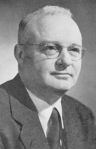
Thomas Midgely — Lead Gas Additive and CFC Developer

Consider the case of Thomas Midgely, who introduced the idea of adding lead to gasoline to stop engines from knocking. He later helped develop commercial chloroflourocarbon (CFC) for use in refrigeration. For many decades lead and CFC were used in cars and refrigerators. Both turned out to be among the worst pollutants the world has ever seen. But is Midgely himself guilty for having caused more pollution than anyone else in the twentieth century? I do not know if he could have foreseen the consequences of his inventions. The same action and outcome can lead to quite different assessment of moral responsibility, depending on your judgments about the person’s foresight, control, and intentions.

The Gap
The Gap

Thomas Suddendorf


Thomas Midgely
Thomas Midgely

1889-1944

Midgely was an American mechanical engineer and chemist. He was a key figure in a team of chemists that developed the lead additive to gasoline as well as chlorofluorocarbon (CFC). Midgley died three decades before the ozone-depleting effects of CFCs in the atmosphere became widely known. Another adverse effect of Midgley’s work was the release of large quantities of lead into the atmosphere as a result of the large-scale combustion of leaded gasoline all over the world.

We Prefer Win/Win Situations

Studies on hunter-gather societies suggest that people have a tendency to act for the greater good, rather than for their own immediate personal interests, as was long assumed. Moreover, experiments in economics have demonstrated that people often prefer win/win situations over outcomes in which they win and another loses. People often make generous offers when they could be selfish, reject “unfair” offers even if it means losing resources, share when they do not need to, and contribute to public goods even when they could get away with not giving anything. We believe in a better world — and we tell others about it. Every day millions of sermons are delivered about how we ought to act.

The Gap
The Gap
Thomas Suddendorf