Zen Practice and Enlightenment

Thinking that practice and enlightenment are not one is no more than a view that is outside the Way [that is, deluded]. In buddha-dharma, practice and enlightenment are one and the same. Because it is the practice of enlightenment, a beginner’s wholehearted practice of the Way is exactly the totality of original enlightenment. For this reason, in conveying the essential attitude for practice, it is taught not to wait for enlightenment outside practice. This must be so because [this practice] is the directly indicated original enlightenment. Since it is already the enlightenment of practice, enlightenment is endless; since it is the practice of enlightenment, practice is beginningless.

The Wholehearted Way

Eihei Dogen’s Bendowa

Yoga – A Worldwide Phenomenon

Yoga

Yoga has become a worldwide phenomenon. Historically, Yoga is a practice with direct links to the Hindu faith and scriptures. However, the motivation behind today’s obsession with Yoga is more commercial exploitation than its original purpose as a spiritual practice and ingredient for a healthy lifestyle.

An article on Wikipedia explains Yoga’s relationship with Hindu religion:

Yoga is an Indian physical, mental, and spiritual practice or discipline. There is a broad variety of schools, practices and goals in Hinduism, Buddhism (including Vajrayana and Tibetan Buddhism) and Jainism. The best-known are Hatha yoga and Raja yoga….

Yoga gurus from India introduced yoga to the west, following the success of Swami Vivekananda in the late 19th and early 20th century. In the 1980s, yoga became popular as a system of physical exercise across the Western world. Yoga in Indian traditions, however, is more than physical exercise; it has a meditative and spiritual core.

The origins of Yoga have been speculated to date several thousand years to pre-Vedic Indian traditions. But, most likely Yoga developed around the sixth and fifth centuries BCE, in ancient India’s ascetic circles.

For a detailed analysis of the current state of Yoga as a worldwide phenomenon, see Yoga, Hinduism and Market, written by Dr. Javed Jamil.


Ancient Mythology as Physics

With the progressive organization of early society into urban civilization the concept of a capricious interplay of forces behind the ever-shifting phantasmagoria changed into the idea of a systematized hierarchy of forces of nature; eventually “force” as such was personified into a spirit or god of overwhelming power. Such personification was characteristic of ancient mythology which, as the only body of systematized thought of those times, was not only the cosmology but also the “physics” of the prescientific stage.

Concepts of Force
Concepts of Force

Max Jammer


Max Jammer
Max Jammer
(1915 – 2010), was an Israeli physicist.  He researched the history and philosophy of science in the classical world, the Middle Ages and the modern era. He was especially interested in the history and philosophy of quantum mechanics. He was born in Berlin, Germany.

Jesus in Today’s World

What significance might Jesus have in today’s world?  Obviously there cannot be any single answer. What that question may signify for Chinese peasants would likely be of little interest to modern European university students, and vice versa; what may be important in that question for some African politicians would hardly be of pertinence to American soldiers in Iraq or Afghanistan, and vice versa. The conception of us humans as fundamentally historical beings has itself developed in a particular historical context — largely among intellectuals in the modern West. Like all other conceptions, it has its meaning, significance, and truth principally within that context, and the extent to which it will be taken seriously into account in other situations will depend very much on those situations themselves.

Jesus as Creativity
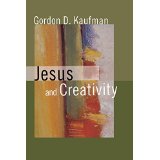
Jesus And Creativity
Gordon Kaufman

Religious Fundamentalism and the New Atheists

James Wood literary critic, exposed some of the main flaws of the new “militant atheism” including its relentless attacks on any kind of belief, its denying that there could ever be any value in personal religious practice, and its considering all Western religions abhorrent. Children, Wood remarked, are sometimes “stuck in a strict literalism, out of which they eventually grow.” However, he noted:

The New Atheism is locked into a similar kind of literalism. It parasitically lives off its enemy. Just as evangelical Christianity is characterized by scriptural literalism and an uncomplicated belief in a “personal God,” so the New Atheism often seems engaged only in doing battle with scriptural literalism. The God of the New Atheism and the God of religious fundamentalism turn out to be remarkably similar entities.

From a lecture entitled  The New Atheism given by James Wood at Oxford University.
Reprinted in the British newspaper The Guardian.

Hand of God


Scripture was never meant to be read literally. The original Hebrew text of the Old Testament and the Greek of the New Testament are elegantly poetic. But the aggressive New Atheists tend to take every work literally in ways that no rational reader would ever do…To be sure, the New Atheists were not the first to stick to uncompromisingly and unimaginative literalism. The Catholic Church, for one, historically adopted such literalism and unyieldingly defended it in the face of scientific discoveries and theories about the movement of the Earth, famously persecuting Galileo and many others for maintaining the nonbiblical heliocentric view. One would have hoped that the New Atheists, living in the twenty-first century, would know better.

Why Science Does Not Disprove God
Amir D. Aczel