What Does God Mean to Us?

Man cannot speak of “God” except from the perspective of a particular faith; there is no neutral knowledge of deity with which one’s faith can be compared… We must not absolutize anything relative, and this includes our religion and revelation. We should not try to defend our faith; we cannot prove its superiority to other faiths. And we can only say what revelation means for Christians, not what it ought to mean for all men. We cannot say that revelation has not also taken place in other communities. Accordingly, we cannot “prescribe what form religious life must take in all places at all times.”

The Meaning of Revelation

H. Richard Niebuhr


H. Richard Niebuhr
H. Richard Niebuhr
1894-1962

H. Richard Niebuhr is considered one of the most important Christian theological ethicists in 20th century America. He wrote many books, and is most known for The Meaning of RevelationChrist and Culture, and Radical Monotheism and Western Culture. The younger brother of theologian Reinhold Niebuhr, Richard Niebuhr taught for several decades at the Yale Divinity School. Both brothers were, in their day, important figures in the neo-orthodox theological school within American Protestantism. His theology has been one of the main sources of postliberal theology, sometimes called the “Yale school”.

Niebuhr illuminated from many perspectives the split between the oneness and absoluteness of God and the division and relativism in religion and culture. His way of mediating these polarities made him not only a prominent ecumenist, but also an ethicist of universality who recognized God as the value-center for every human being in the world. He promoted a theology of personal responsibility based on an existential faith in God.

The Horrors We Bless

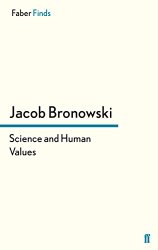
The scientist Jacob Bronowski faced a question on the ultimate fate of humanity one night in 1945 when he was driven in a Jeep through the ashy ruins of Nagasaki. In the dark, he had not sensed that they had moved from the open country to the “city.” The “city” was a dark and desolate ruin. The only sound he heard was that of an American military radio playing the popular tune “Is You Is or Is You Ain’t My Baby?” In the context the question was a piercing one.

What Bronkowski saw in this peak moment of truth was ‘civilization face to face with its own implications. The implications are both the industrial slum that Nagasaki was before it was bombed, and the ashy desolation that the bomb made of the slum. And civilization asks of both ruins, ‘Is You Is, or Is You Ain’t My Baby?’ [quoted from Bronowski in Science and Human Values]

The Horrors We Bless
The Horrors We Bless: Rethinking the Just-War Legacy

Daniel C. Maguire


.

Daniel Maguire
Daniel C. Maguire
1927-2013

Maguire was a professor at Marquette University. He specialized in religious ethics focusing upon issues of social justice and medical and ecological ethics.

.
Daniel Maguire’s books include:

He wrote over 200 articles in professional journals and magazines.


Science and Human Values
Jacob Bronowski


.

.
.

Jacob Bronkowski
Jacob Bronowski
1908-1974

Bronkowski was a Polish-Jewish British mathematician, biologist, historian of science, theatre author, poet and inventor.

He is best remembered as the presenter and writer of the 1973 BBC television documentary series, The Ascent of Man, and the accompanying book. For the BBC series,  Bronowski travelled around the world in order to trace the development of human society through its understanding of science.


Religion Standardizes Moral Rules

A key factor facilitating the standardization of moral rules within and across groups in human history has been religion. In most societies, fundamental cooperative rules are absolute and unquestionable by virtue of being preserved as divine commands. God, religions promise, will reward adherers and punish transgressors. In a sense this is the ultimate form of indirect reciprocity. Religion reduces the need for policing because believers are to some extent policing themselves through their conscience — to avoid divine, rather than secular, punishment. Of course, people can derive and follow a moral code without, or in spite of, these threats and promises. Nevertheless, the religious approach has proven immensely successful in keeping people in line (although exceptions may spring up). Followers of the same religion can assume that they share a basic code of conduct. If you have the same God, there is no hiding, and you will be judged by the same rules.

The Gap
The Gap

Thomas Suddendorf


It’s Time to Shift Our Understanding of the Divine Presence

It is time to take seriously what Christianity has always proclaimed: that this Mysterious Presence we call “God” is everywhere and it is beyond all our human concepts. It is time to make a significant shift in our understanding of “God.” It is time to shift from notions of a deity to an understanding and appreciation of the Divine Presence always here, always and everywhere active in an expanding universe and in the evolution of life on this planet.

It's Time
It’s Time: Challenges to the Doctrine of the Faith

Michael Morwood
.
;
;


Michael Morwood
Michael Morwood

Michael Morwood has over 40 years’ experience in retreat, education, parish and adult faith development ministries, and is well known in Progressive Christian movements in Australia and the USA.

Morwood advocates that Christianity, along with other major religions, has to make sense of its major beliefs in light of contemporary knowledge about the universe and our place in it. A major overhaul is needed in how we understand “God”, how we interpret Jesus as revealing the Divine Presence in human form, and what this means for worship and prayer. This contemporary “story” is radically different from the traditional Christian story about an elsewhere, heavenly God who is disconnected from humanity.


“Jesus Through a 21st Century Lens” by Michael Morwood
Part 1 of 3

.

Part 2 of 3

.

Part 3 of 3
https://www.youtube.com/watch?v=qGV3X2Oay80&feature=youtu.be

To Infinity and Beyond…

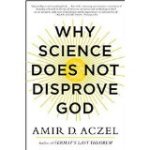
Set theory was derived and extended by a tormented German genius, the mathematician Georg Cantor, who died in a sanatorium in 1918. Cantor spent his life trying to understand infinity. He felt that his endeavor got him closer to God, who he believed held the key to the deep truths about infinity he was after.  Cantor derived some immensely important facts in pure mathematics: he discovered that there are various levels of infinity, and he even learned how to carry out arithmetical operations on infinite quantities.

It’s said Cantor had such a deeply perceptive mind that he could, in a sense, “see” infinity. He was the first mathematician in history to truly elucidate the deep properties of the infinite, all on his own, to a surprisingly great extent. He was able to demonstrate that not all infinite quantities are equally large. For example, the number of integers, though certainly infinite, is smaller than the number of all the numbers found on the real number line…It is the far more numerous irrational numbers that give the real number line its “substance” or density.

Cantor was often harassed by less gifted mathematicians who found his work too bizarre to believe. Their constant attacks on him contributed to his mental illness. He suffered from recurring bouts of depression, which sometimes landed him in a mental institution where he would spend months until he felt better and was released. This cycle of productive and frenzied work under adverse conditions, alternating with periods of hospitalization and rest, characterized much of his life.

Today we know that Cantor’s work was perfectly correct and extremely innovative, and it has opened up important new ways of thinking about the infinite.

Why Science Does Not Disprove God
Amir D. Aczel
mathetician and science writer


Georg Cantor
Georg Cantor
1845-1918

Georg Cantor was a German mathematician who revolutionized mathematics through his discovery and construction of a hierarchy of infinite mathematical sets. Although Cantor’s views were opposed by many of his contemporaries, he refused to bow down to their criticism and continued his research. To Cantor, his mathematical views were intrinsically linked to their philosophical and theological implications – he identified the Absolute Infinite with God, and he believed God communicated some of his mathematical discoveries to him. Cantor laid the foundation for Modern Mathematics. Most of his works have survived to date.