A philosopher can fight men’s fear “to understand things that clash with their own customs, privileges, or beliefs.” He can try to make men more sensitive to other points of view, and to show how an outlook that is widely slandered and misunderstood looks and feels from the inside. To that extent, his efforts may resemble literature. What distinguishes philosophy is the sustained attempt to explore ramifications, objections, and alternatives.
Conventionally, one may say that the mind creates the notion of a substantial, independent self and that this belief is sustained in memory. There is no harm in that as far as it goes. But the truth is that it is all simply present thoughts. And there is no separate thinker or ‘me’ to be found. Your actual identity is that space-like, utterly free awareness itself. All self-centered thoughts are baseless, as there is no one to whom they apply. See this clearly and there is really nothing else needed. It is the heart of the matter. Seeing this, suffering, doubt, seeking and personal problems vanish.
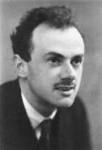
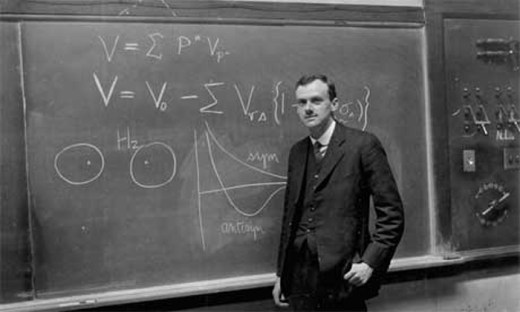
Although theoretical physicist Paul Dirac apparently showed his usual Trappist calm, he was jubilant. In a few squiggles of his pen, he had described the behavior of every single electron that had ever existed in the universe. The equation was ‘achingly beautiful’, as physicist Frank Wilczek later described it: like Einstein’s equations of general relativity, the Dirac equation was universal yet fundamentally simple; nothing in it could be changed without destroying its power.
Nearly seventy years later, stonemasons carved a succinct version of the Dirac equation on his commemorative stone in Westminister Abbey: iγ.∂ψ = mψ.
A wonderful, and thoroughly engaging biographical account of the life of one of the greatest scientific geniuses of the modern age. Based on previously undiscovered archives, The Strangest Man reveals the many facets of physicist Paul Dirac’s brilliantly original mind. Dirac is remembered as a unique individual who could conjure the laws of nature from pure thought. The Strangest Man is a gem in that it provides the benefit of having been written by an insider — Graham Farmelo is a physicist — but Graham’s detailed explanations of the intricacies of physics are easy to follow, and do not require a scientific background.
Among other discoveries, he formulated the Dirac equation, which describes the behaviour of fermions and predicted the existence of antimatter. Dirac shared Prize in Physics for 1933 with Erwin Schrödinger, “for the discovery of new productive forms of atomic theory“. At age 31, Dirac was the youngest theoretician ever to win the Nobel Prize in Physics. He also did work that forms the basis of modern attempts to reconcile general relativity with quantum mechanics.
Dirac was regarded by his friends and colleagues as unusual in character. He was an extraordinarily reserved loner, relentlessly literal-minded and seemingly devoid of empathy. Nevertheless, Dirac was an intensely loyal family man. His tastes in the arts ranged from Beethoven to Cher, and from Rembrandt to Mickey Mouse.
Albert Einstein said of Dirac, “This balancing on the dizzying path between genius and madness is awful”.Nevertheless, by virtue to his mathematical brilliance, Dirac earned the distinction of being one of the most significant physicists of the 20th century.
Dirac married Margit Wigner in 1937. He adopted Margit’s two children, Judith and Gabriel. Paul and Margit Dirac had two children together, both daughters, Mary Elizabeth and Florence Monica.
Asked to explain his discoveries in quantum mechanics, Dirac responded that they “cannot be explained in words at all”.
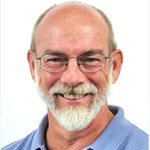
Graham Farmelo is best known form his work on science communication and is the author of The Strangest Man, a prize-winning biography of the theoretical physicist Paul Dirac.
Farmelo is a biographer and science writer, a By-Fellow at Churchill College, University of Cambridge, U.K., and an Adjunct Professor of Physics at Northeastern University, Boston, U.S.A. His research was in the field of particle physics (hadronic interactions) and chaos (scattering theory) Farmelo lives in London.
In process theology, God is constantly, in every moment and in every place, doing everything within God’s power to bring about the good. Divine power, however, is persuasive rather than coercive. God cannot force people or the world to obey God’s will. Instead, God works by sharing with us a vision of the better way, of the good and the beautiful. God’s power lies in patience and love, not force.
Our power is of the kind that arises from our existence in small, organic bodies with eyes, ears, hands and a nervous system. God has no body like ours. God’s power is the power that enables all of reality to continue its creative advance, that makes creatures free, that shares the experience of every creature and is experienced by every creature. God’s creative power sustains the universe. Yet, it is only through the creatures of the world that God has hands.






 Who Knows Anyhow?