How We See Things And The Value Of Prediction

What is striking is the huge amount of brain contributing to vision, giving immense added value to the images of the eye. Where does this extra richness for vision come from? By some authorities it is simply denied — they see perception as passive acceptance of what is out there, as a window facing the world. But this does not begin to explain how we see objects from the sketchy images of the eyes, even from sparse lines and crude dots to seemingly inadequate pictures.

Even in ideal conditions object perception is far richer than any possible images in the eyes. The added value must come from dynamic brain processes, employing knowledge stored from the past, to see the present and predict the immediate future. Prediction has immense survival value. It not only makes fast games possible in spite of the physiological signal delays from eye to brain, and brain to hand. Anticipating dangers and potential rewards is essential for survival — made possible by buying time from seeing objects distant in space.

Eye and Brain.
Eye and Brain: The Psychology of Seeing, Fifth Edition (Princeton Science Library)
Richard L. Gregory

Since first published in 1966, Eye and Brain has established itself worldwide as an essential introduction to the basic phenomena of visual perception. Richard L. Gregory offers clear explanations of how we see brightness, movement, color, and objects, and he explores the phenomena of visual illusions (optical illusions) to establish principles about how perception normally works and why it sometimes fails.

Illusion is a major theme in the book, and it provides a comprehensive classification system. There are also sections on what babies see and how they learn to see, on motion perception, the relationship between vision and consciousness, and on the impact of new brain imaging (neuroimaging) techniques.

Eye and Brain is lively and engaging, while scientifically sound and very informative.


Richard Gregory
Richard L. Gregory
1923-2010
.

. Wikipedia
. Professor Richard Gregory
. Obituary at The Guardian

Richard L. Gregory CBE FRS FRSE was a British psychologist and Emeritus Professor of Neuropsychology at the University of Bristol, England. Gregory was strongly involved with the Royal Institution (Ri) of Great Britain for over 40 years. His Ri Christmas Lectures in 1967, titled The Intelligent Eye, are noteworthy. Gregory was particularly enthused by the Ri’s role in igniting a curiosity about science and technology in young people.

Gregory received the Michael Faraday Prize, awarded by the Royal Society of London for “excellence in communicating science to UK audiences”, in 1992.

Richard L. Gregory’s high honors: CBE (Order of the British Empire), FRS (Fellow of the Royal Society of London), FRSE (Royal Society of Edinburgh, Scotland).

Some Books Written by Richard L. Gregory:


Love – From Romance To Intimacy – Challenges Of The Unknown

Mature love is expressed in a cognitive, behavioral, and emotional stance toward another. Gradually this beloved’s well-being becomes as important to us as our own. We are willing to sacrifice our own comfort, even our own safety, on this person’s behalf.

In love we stand ready to devote our time, our resources, and our ingenuity to supporting the one we love. Our relationship matures as the arousals of early attraction and romance expand to include a love that is a chosen and cultivated commitment.

The expression of unconditional love is central in the ethical systems of most of the world’s great religion traditions. Love draws energy from its arousals — of compassion, of altruistic concern. But love as caritas or agape is more than an emotional arousal. Love fuels unselfish actions that move beyond ourselves. Perhaps it is more accurate to say that love matures as it draws the energy of romance to nurture a wider range of responsiveness and responsibility.

Intimacy names the ability to commit ourselves to a particular person in a relationship that lasts over time. Intimacy moves us beyond idealized expectations to embrace real persons in their particular uniqueness (and peculiarity!). Intimacy strengthens the intellectual and emotional resources that enable us to pledge our future, based on what we know in the present.

From one perspective this might seem like a foolish endeavor; the future is unknown. How can we pledge ourselves to be constant when so much of the future remains hidden? Who will you be, who will I be, what practical circumstances will shape our life together? Yet without this capacity to pledge our future, we will remain alone — we will not thrive.

Nourishing the Spirit
Nourishing the Spirit: The Healing Emotions of Wonder, Joy, Compassion and Hope

James & Evelyn Whitehead

Background on James & Evelyn Whitehead


Our Brain’s Adaptive Capacity – How Does It Help Us With Emotional Relationships?

Those with whom we establish close emotional relationships throughout our life can both reinforce earlier emotional patterns and — when necessary — help new and more adaptable patterns to emerge. The plasticity of the human brain holds out this promise. In an adult relationship with a person who shows us attentive care and is comfortable with our feeling world, we can become more accurately in touch with our own feelings.

“The presence of a caring, trusted other person, one who is attuned to our internal world, is often the initial key.”

The Developing Mind: How Relationships and the Brain Interact to Shape Who We Are
Daniel Siegel

When we are supported by sensitive human presence — in friendship, in psychological counseling, in spiritual direction — the neural connections required for mature attachment will begin to emerge. Here the limbic brain’s adaptive capacity can be recruited for therapeutic healing.

Nourishing the Spirit
Nourishing the Spirit: The Healing Emotions of Wonder, Joy, Compassion and Hope
James & Evelyn Whitehead

Background on James & Evelyn Whitehead


The Developing Mind How Relationships and the Brain Interact to Shape Who We Are
The Developing Mind: How Relationships and the Brain Interact to Shape Who We Are
Daniel Siegel
.
.
.
.

Daniel Seigel
Daniel Siegel
born 1957
.
.

. Dr. Dan Siegel
. Mindsight Institute

Daniel J. Siegel, MD, is an internationally acclaimed author, award-winning educator, and renowned child psychiatrist. Siegel received his medical degree from Harvard University and completed his postgraduate medical education at UCLA with training in pediatrics and child, adolescent and adult psychiatry.

Siegel is Clinical Professor of Psychiatry at the School of Medicine, UCLA, where he serves as Co-Investigator at the Center for Culture, Brain, and Development, and Co-Director of the Mindful Awareness Research Center. He is also the Executive Director of the Mindsight Institute, an educational center devoted to promoting insight, compassion, and empathy in individuals, families, institutions, and communities.


Books written by Daniel Siegel include:

Scientific Truth – How Do We Know What’s Objective, What’s Subjective?

We would like to think science is immune to dogmatism; that the neutrality of data provides us with a fail-proof basis for judging the truth, independent of psychological biases. Yet we’ve known since Thomas S. Kuhn that, in fact, such an idealized picture of how science works is not at all true. The difficulty of interpreting statistical data compounds the problem. It’s not enough to observe an effect only once. After all, different kinds of unforeseen circumstances could potentially produce the effect by chance. So to tie the effect to a specific cause — or exclude a certain cause — one needs to observe it a sufficient number of times. This is where statistics come in.

If one’s statistical conclusions are in accordance with the reigning scientific paradigm, it is enough to demonstrate that the odds of a certain effect occurring against chance are very small. However, if the conclusions contradict the reigning paradigm, critics can always dismiss the evidence on the basis that, theoretically, any pattern can be found in the data if random effects can’t be completely ruled out.

This, obviously, is a double-standard that injects bias in what should be objective science. Yet, when odds are more than a trillion to one (Princeton, 2015), critics continue to dismiss results on the basis that any pattern can theoretically be found in random data. So, if double standards are stretched a little further, we can make the reigning paradigm virtually unfalsifiable.

As an activity carried out by people, science is as vulnerable to psychological biases as any other human endeavor. The tricky and even contradictory nature of chance and randomness renders scientific judgment vulnerable to bigotry and dogmatism, particularly when it comes to statistical evidence. Though scientists may fancy their art as something above human shortcomings, they themselves are still just humans. It is up to the rest of us to remain cognizant of this and maintain critical judgment of what we hear from the bastions of science.

Brief Peeks Beyond
Brief Peeks Beyond: Critical Essays on Metaphysics, Neuroscience, Freewill, Skepticism, and Culture

Bernardo Kastrup

Background on Bernardo Kastrup


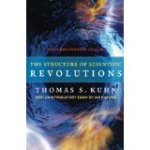
The Structure of Scientific Revolutiuons
The Structure of Scientific Revolutions, 3rd Edition
Thomas S. Kuhn

. Wikipedia
. Amazon


Thomas S. Kuhn
Thomas S. Kuhn
1922-1966

. Internet Encyclopedia of Philosophy
Stanford Encyclopedia of Philosophy
. Wikipedia

Thomas S. Kuhn is one of the most influential philosophers of science of the twentieth century, perhaps the most influential.

Although trained as a physicist at Harvard University, Kuhn became a historian and philosopher of science. His book The Structure of Scientific Revolutions (1962) is one of the most cited academic books of all time, and has been influential in both academic and popular circles, introducing the term paradigm shift, which has since become an English-language idiom.

The Structure of Scientific Revolutions helped inaugurate a revolution—the 1960s historiographic revolution—by providing a new image of science. For Kuhn, scientific revolutions involve paradigm shifts that punctuate periods of stasis or normal science. Towards the end of his career, Kuhn underwent a paradigm shift of his own—from a historical philosophy of science to an evolutionary one.

Kuhn made notable claims concerning the progress of scientific knowledge: that scientific fields undergo periodic “paradigm shifts“, rather than solely progressing in a linear and continuous way, and these paradigm shifts open up new approaches to understanding what scientists would never have considered valid before.

Kuhn’s new image of science also included the following:

  • scientific truth, at any given moment, cannot be established solely by objective criteria, but is defined by a consensus of a scientific community
  • competing paradigms are frequently incommensurable; that is, they are competing and irreconcilable accounts of reality
  • our comprehension of science can never rely wholly upon “objectivity” alone, but must also account for subjective perspectives
  • all objective scientific conclusions are ultimately founded upon the subjective conditioning/worldview of researchers and participants


How Do India’s Philosophies Help Us Understand Reality?

Demanding That Reality is Knowable Only by Perception & Inference is Too Restricting

If something “beyond” exists, there should be an approximate means of knowledge for it. This is the function of words as knowledge as postulated by many of the Indian philosophical systems.

The very statement that common experience exhausts reality implies, by placing a limit on it, that the mind has traveled beyond that limit.
…..Essentials of Indian Philosophy — M. Hiriyanna

India’s Philosophical Systems and Their Metaphysical Relation to Reality

  • Nyaya and Vaisesika schools posit a total correspondence between language and reality. Whatever is real, is knowable, and as well, describable in words.
  • Early Buddhists say that language distorts reality.
  • Grammarians hold that not only does language reveal reality but it is reality.
  • Carvaka goes to the extreme of saying that religious discourse is mere prattle, invented by deceptive priests to hoodwink and subjugate the masses.
  • Advaita Vedanta calls language a “methodological device” by which a seeker after truth will be assisted in unveiling the ever-present, immediate reality.

From Realism to Idealism, from Pluralism to Absolutism, and from Empiricism to Transcendentalism, most of the possible philosophic positions have been presented by the various Indian philosophic systems.


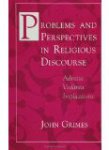
Problems and Perspectives in Religious Discourse
Problems and Perspectives in Religious Discourse: Advaita Vedanta Implications

John Grimes

.
.
.

John Grimes
John Grimes

. Amazon’s John Grimes Page
Spirituality makes him Indian (article from The Hindu)

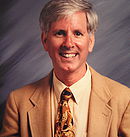
John Grimes received his BA in Religious Studies from UC Santa Barbara, and his MA and PhD in Indian Philosophy from the University of Madras.

Grimes has taught at Universities in the United States, Canada, Singapore and India. He spends his time writing and traveling between California and Chennai.

Books written by John Grimes include:


Essentials of Indian Philosphy
Essentials of Indian Philosophy
M. Hiriyanna
.
.
.
.

M. Nariyanna
M. Hiriyanna
1871-1950

Wikipedia
Indian Memory Project

Mysore Hiriyanna was one of the foremost writers of the 20th century on Indian philosophy. He was a professor of Sanskrit and Philosophy at Mysore University. His writings are known for their clarity, precision, and brevity.

Books written by M. Hiriyanna include: