I May Have Lost My Mind…

I had my gall bladder taken out last fall.

According to some ancients, with the surgical removal of my gall bladder, I may have lost my mind”


It has not always been obvious that brains are involved in thinking, memory, sensation, or perception. In the ancient world, including the great civilizations of Egypt and Mesopotamia, reaching back 5000 years, the brain was regarded as as unimportant organ, because in death it is bloodless and in life it is seldom felt by its owner. The mind was associated with the stomach, the liver or gall bladder, and especially with the heart which is clearly responsive to emotion and effort. Echoes linger from these ideas in modern speech, in words such as ‘phlematic‘, ‘gall‘, ‘choleric‘, as well as ‘heartless‘.
 .
.
.

Creativity – Turning Up What is Already There

Creativeness often consists of merely turning up what is already there. Did you know that right and left shoes were thought up only a little more than a century ago?
…..— Bernice Fitz-Gibbon


Bernice Fitz-Gibbon
Bernice Fitz-Gibbon
1894-1982

. AdvertisingAge
. Wikipedia
. Obiturary in The New York Times

Bernice Fitz-Gibbon was an American advertising executive and a pioneer in retail advertising, working at Marshall Field’s, Macy’s, Gimbels and Wanamaker’s. She was inducted into the Advertising Hall of Fame in 1982.

Fitz-Gibbon was the creator of the Macy’s slogan “It’s great to be thrifty” and “Nobody, but nobody, undersells Gimbels.” A former ad manager at Marshall Field’s, Macy’s, Gimbels and Wanamaker, she became retailing’s most important and highly paid advertising director.

She influenced department store and fashion advertising by introducing “events” — fashion shows, dance instruction, lectures, demonstrations, etc. — and chatty, informative eight-column newspaper ads. The award-winning agency she opened in 1954 jump-started copywriter careers for many women.

The Feast of Love – Relationship Stories from Charles Baxter

Relationships, all sorts of relationships, that’s what life’s really all about – whether it be marriage, getting a divorce, having an affair, or living as a single person, each of these situations is interrelated.  And, we endeavor to enter into our relationships with love being the driving force, though sometimes it seems fuzzy to us.

Keep love in your heart. A life without it is like a sunless garden when the flowers are dead.
     —  Oscar Wilde 

Here’s where Charles Baxter’s The Feast of Love comes in, it’s a wonderful, twisting, sensitive, and quirky-comical romp through a series of characters whose lives at first seem disparate, but then begin to intertwine as Baxter unfolds his superb story of love.  The characters are ordinary people – a man who runs a coffee shop, a just out of high school young punker-style boyfriend-girlfriend, an over-sexed female attorney having an affair with a married man, the list goes on  –  who experience the sort of hardships and trials we can all relate to.  Yet, with the deft hand of Baxter, we see beyond the surface of seemingly plain-looking events, and we sense the depth of emotions these people experience.

Since The Feast of Love is the first book I have read by Baxter, I wasn’t familiar with his style of writing.  As I set out to dive into his story, I found myself upset early on, thinking to myself: “What is this guy trying to do?”  I took offense at the liberties Baxter was taking with me, the reader.  First off, he would make rather abrupt narrative changes from one character to another, and that made me do some work to keep up.  Secondly, I became angry at the detail Baxter provided in describing the bedroom activities of those engaging in ongoing affairs.

At times, I was ready to give up and toss the book onto the pile for donation, but I am known to be stubborn, and I managed to stick it out.  It paid off big time, as I learned a lot during my endeavor.  I came away with an understanding of why it made sense for Baxter to unfold his story the way he did.  He was presenting a true-to-life snapshot of life as it really is , with all its rough edges.  And, now, even days after finishing the book, I find myself thinking about some of the characters, and wondering what they would be doing now.

The Feast of Love
The Feast of Love
Charles Baxter

The Feast of Love was a finalist for the 2000 National Book Award for Fiction.


Charles Baxter
Charles Baxter
born 1947

Charles Baxter
. Wikipedia

Charles Baxter was born in Minnesota.  He lives in Minneapolis and teaches at the University of Minnesota. He is the author of eight works of fiction. Although his body of work includes poetry and essays, he is best known for his fiction – brilliantly crafted, non-linear stories that twist and turn in unexpected directions before reaching surprising yet nearly always satisfying conclusions.


Hope – Transformative Power to Heal the Past and Anticipate the Future

Hope is a transformative power. It carries the potential to change our present, to heal our past and to foresee and craft a future we had previously not anticipated. Hope allows us to see through the present, the binding force of the status quo and the received wisdom that the current arrangement of society and self is the way things have to be.

Present circumstances and prevailing structures — in world politics, in the national economy or in our own families — can exercise a tyranny and lock us into socially prescribed behaviors. The passion of hope “loosens the hold that routines or character exercise over the imagination.

Hope can likewise alter the past. Each of us has learned that the past is over and finished; we cannot undo the “spilled milk” of our mistakes. Our culture encourages us, whatever our failings or regrets, to put it behind us and move on. If we are fortunate we may later learn that the past is not over because it is not finished with us. It survives in unhealed wounds, inherited fears and unquenched desires for revenge. Hope rallies us against this fatalism, giving us “the ability to downgrade the influence of the past and present structure and compulsions.”

The transformative power of hope is especially addressed to the future. Through the gift and grace of hope we can imagine that the future is not simply “more of the same.” We are now able to picture our own future in more generous ways. Just as hope challenges the finality of the past, so it questions the fatalism of the future. Hope says that it need not be so. This ennobling passion awakens in us extravagant dreams, visions of a society and self that do not yet exist.

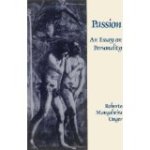
Passion: An Essay on Personality
Roberto Mangabeira Unger


image.jpg
Roberto Mangabeira Unger

Roberto Mangabeira Unger is a philosopher and politician. 

Unger was educated in Brazil and the United States. He studied law at the Federal University of Rio de Janeiro and was awarded a research doctorate by Harvard after he had already been teaching there for several years.

His work offers a vision of humanity and a program for society aimed at empowering individuals and changing institutions. Unger has developed his views and positions across many fields, including social, political, and economic theory. 

In legal theory, Unger is best known by his work in the 1970s/80s as part of the Critical Legal Studies movement, which helped disrupt the methodological consensus in American law schools. His political activity helped bring about democracy in Brazil, and culminated with his appointment as the Brazilian Minister of Strategic Affairs in 2007 and again in 2015.

Unger views humanity as greater than the contexts in which it is placed. He sees each individual possessed of the capability to rise to a greater life. At the root of his social thought is the conviction that the world is made and imagined. His work begins from the premise that no natural social, political, or economic arrangements underlie individual or social activity. Property rights, liberal democracy, wage labor — for Unger, these are all historical artifacts that have no necessary relation to the goals of free and prosperous human activity.

For Unger, the market, the state, and human social organization should not be set in predetermined institutional arrangements, but need to be left open to experimentation and revision according to what works for the project of the empowerment of humanity. Doing so, he holds, will enable the realization of the full extent of human potential and, as he puts it, “make us more god-like”.

Unger has long been active in Brazilian opposition politics. He was one of the founding members of the Brazilian Democratic Movement Party and drafted its manifesto. He directed the presidential campaigns of Leonel Brizola and Ciro Gomes, ran for the Chamber of Deputies, and twice launched exploratory bids for the Brazilian presidency. He served as the Minister of Strategic Affairs in the second Luiz Inácio Lula da Silvaadministration and the beginning of the second Dilma administration.

Unger’s website, The Works of Roberto Mangabeira Unger, is exhaustive and loaded with detailed writings.

Books by Roberto Mangabeira Unger include:


A Vision of Hinduism for Today – Religious Pluralism

A Vision of Hinduism: Beyond Hindu Nationalism challenges the widespread notion, prevalent among both Hindus and non-Hindus, that Hindu equals Indian. It also advocates and re-articulates, the Hindu vision of religious pluralism that was embodied in the lives and teachings of Sri Ramakrishna and Mahatma Gandhi.

According to Jeffery D. Long, the broader hope is:

“…to redefine Hinduism as a world religion in the true sense of the term, by which I mean a tradition with a universal message available, at least in principle, to all who wish to accept it, rather than a national or parochial tradition, open to only a few.”

 .

A Vision Beyond Hinduism
A Vision for Hinduism: Beyond Hindu Nationalism
Jeffery D. Long

A powerful vision of Hinduism is presented — a vision of a tradition capable of pointing the way towards a future in which all the world’s religions manifest complementary visions of a larger reality. And, in which all the traditions, in various ways, participate. This radical religious agenda puts a new and exciting perspective on Hindu and South Asian studies alike.


Jeffery D. Long


Jeffery D. Long
born 1969

. Wikipedia
. Elizabethtown College articles
. Google Scholar articles

.
Jeffery D. Long is Professor of Religion and Asian Studies at Elizabethtown College, in Pennsylvania. His graduate degrees are from the University of Chicago Divinity School and his undergraduate degree is from the University of Notre Dame. He also studied for two years at Jawaharlal Nehru University in New Delhi, India.

Long is the author of three books and a wide array of articles on Hinduism, Indian philosophy, and religious pluralism (available on the Elizabethtown website). He is also a Consulting Editor for Sutra Journal. He is associated with the Vedanta Society, DĀNAM (the Dharma Academy of North America) and the Hindu American Foundation.

A major theme of Long’s work is religious pluralism, a topic he approaches from a perspective informed by the process philosophy of Alfred North Whitehead and which he refers to as a “Hindu process theology.”

Book by Jeffery D. Long include: