Houdini’s Magic – The Irresistible Spectacle of Concealment and Deception

Houdini’s fear of being imitated – his need to be unique, unprecedented, unthinkable – was matched by his desire not to imitate himself too much. He was a tireless inventor of things that might defeat him, of traps that could kill him. And all these stunts, as he called them – the word itself meaning a performance, a feat, an event – had that kind of uncanny symbolic resonance that made him an irresistible spectacle, a unique draw in a newly emerging and ever more powerful entertainment industry (Houdini would eventually start his own Film Development Corporation).

Houdini was determinedly and calculatingly a spirit of the age, but by using a vocabulary of familiar cultural objects – chests, trunks, beds, locks, ice (for freezing and preserving food) – he seemed to speak the strange language they seemed to encode, as though the drama of the age was claustrophobia, of the confinement created by new kinds of freedom.

The magic was to escape without damaging the locks, without even chipping the ice. It could all be done without violence, everything would seem the same. The grand illusion was that nothing had changed – neither Houdini nor his box – but everything was different. It was literally a revolution – a radical and irreversible reordering, and a repetition of the same thing unmodified, without apparent struggle. It was magic, an art form in which success was the concealment of difficulty, and the difficulty was deception.

Houdini's Box: The Art of Escape
Houdini’s Box: The Art of Escape
Adam Phillips

Background on Adam Phillips


Harry Houdini
1874-1926

Harry Houdini (born Erik Weisz, later Ehrich Weiss or Harry Weiss) was a Hungarian born American illusionist and stunt performer, noted for his sensational escape acts. He first attracted notice in vaudeville in the US and then as “Harry Handcuff Houdini” on a tour of Europe, where he challenged police forces to keep him locked up. Soon he extended his repertoire to include chains, ropes slung from skyscrapers, straitjackets under water, and having to escape from and hold his breath inside a sealed milk can with water in it.

Houdini died, at age 52, of peritonitis, secondary to a ruptured appendix.

What Does ‘The Blind Men and The Elephant Story’ Tell Us About Reality?

Jainism – Ancient Indian Religion

Jainism, an ancient religion in India, prescribes a path of non-violence towards all living beings. The word Jainism comes from a Sanskrit verb meaning ‘to conquer’. It refers to the battle Jains wage against their own nature to reach the enlightenment that brings salvation.

Jains respected the different ways humans saw and experienced reality, while recognizing that no one ever saw the whole of it. They called this doctrine of respect anekantavada. And to illustrate it they told a story about blind men and an elephant.


The Blind Men and The Elephant Story

Six blind men were invited to describe an elephant by feeling different parts of its body. The man who felt the leg said that the elephant was like a pillar. The man who felt the tail said it was like a rope. The one who felt the trunk said the elephant was like the branch of a tree. The man who explored the ear said the elephant was like a hand fan. The one who moved his hands over the belly said it was like a wall. And the one who felt the tusk said the elephant was like a solid pipe. Their teacher told them they were all correct in their descriptions of the elephant, yet each had grasped only a part and not the whole.

The moral of the story was that humans were all limited in their grasp of reality. They may not be entirely blind to it, but they can only see it from a single angle. That was OK as long as they didn’t claim their view was the whole picture and force others to see things from the same way.

The Blind Men and the Elephant Story tells us that because of their limited vision, humans are incapable of achieving perfect knowledge of ultimate reality, so they should be modest about the religious claims they make.

In spite of the warning, the prophets and sages of religion are rarely in doubt about their beliefs, because they have ‘seen’ and ‘heard’ what lies behind the veil that hangs between humans and ultimate reality. We have to decide for ourselves how to respond to the claims they made about their experiences – because they all saw different things or saw the same things differently.

A Little History of Religion

Richard Holloway

Background on Richard Holloway

Where is Ultimate Reality to be Found?

The relation of the individual to the universal had always been a Greek philosophical problem. But Plotinus moved to show that the universal is present in its entirety in all things without losing its universality. He no longer sought rational knowledge of the universal, but a mystical union where individual consciousness disappears. This is a withdrawal from particular forms, and all ethical and intellectual aspects of the world, where the self is lost in contemplation. And it is generally this emphasis on contemplation as the ultimate reality that most conclusively connects Plotinus with the thought of India.

The Upanishads are fundamental to the philosophy of India. The seers of the Upanishads asked: what is the one reality multiplicity is reducible to, what is that which persists without change? This ultimate reality is called Brahman, which comes from the root brh, to grow, burst forth, and suggests a bubbling over, a ceaseless growth similar to the idea of overflowing power in the One, or the Good, the source of all things, of Plotinus’s philosophy.

With the coming of the Upanishads, Vedic hymns and rites were replaced by a search for the one reality behind all flux. This was also a movement from the external to the internal. Just as the key to the Plotinian One is found within the depths of the human self, for the Upanishads, liberation is an internal, not external experience. The goal of the liberated self is not the bliss of heaven or rebirth to a better world, but freedom from the objective, karma, and union with the Absolute, which is not in any “state.” Though Vedic knowledge can lead to Self-knowledge, knowing the Self transcends the entire range of human knowledge.

Neoplatonism and Indian Thought
Neoplatonism and Indian Thought (Studies in Neoplatonism: Ancient and Modern)
Edited by R. Baine Harris

Background on Plotinus


Zoroaster – One of the Most Influential Religious Figures in History

Parsees, who came originally from Persia, have been in India for many centuries. Persia was the name the Greeks gave to Iran, a land to the  north-west of India. The Parsees follow a religion called Zoroastrianism that originated in Iran about the time of Israel’s exile in Babylon in the sixth century BC.

Other than the Parsees in India, there aren’t many Zoroastrians left in the world, but their religion has had a profound effect on other faiths, including Judaism. And since Judaism gave birth to Christianity and Islam, two of the world’s most populous religions, Zoroaster, the founder of Zoroastrianism, could be described as one of history’s most influential religious figures.

A Little History of Religion
Richard Holloway

Background on Richard Holloway


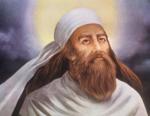
Zoroaster
Zoroaster
Persian Prophet
c. 628BC – c. 551BC

.

.. Ancient History Encyclopedia
. Encyclopaedia Brittanica
. Wikipedia

Zoroaster (Greek), also known as Zarathustra, was a Persian (Iranian) religious reformer and prophet, traditionally regarded as the founder of Zoroastrianism.

A major figure in the history of world religions, Zoroaster has been the object of much scholarly attention, in large part due to: 1) his apparent monotheism (his concept of one god, whom he referred to as Ahura Mazda or the “Wise Lord”); 2) his purported dualism (evident in the stark distinction he drew between the forces of good and the forces of evil); and, 3) the influence of his teachings on emerging Middle Eastern religions, including Judaism.

Zoroaster is said to have received a vision from Ahura Mazda who appointed him to preach the truth. Zoroaster began preaching his message of cosmic strife between Ahura Mazda, the God of Light, and Ahriman, the principle of evil. According to Zoroaster, man had been given the power to choose between good and evil. The end of the world would come when the forces of light would triumph and the saved souls rejoice in its victory.

This dualism was part of an evolution towards monotheism in the Middle East. Zoroaster’s teaching became the guiding light of Persian civilization.

After Alexander the Great conquered Persia, Zoroastrianism began to die out in Persia, but it survived in India where it became the basis of the Parsi religion.


How Did Ancient Philosophy Change in the Christian Era?

With the advent of the Christian era and the eventual outlawing, in 529 C.E., of the ancient philosophical schools (by Roman Emperor Justinian), philosophy conceived of as a way of life largely disappeared from the West. Its spiritual practices were integrated into, and adapted by, forms of Christian monasticism.The philosophers’ dialectical techniques and metaphysical views were integrated into, and subordinated, first to revealed theology and then, later, to the modern natural sciences.

However, the conception of philosophy as a way of life has never completely disappeared from the West, resurfacing in Montaigne, Rousseau, Goethe, Thoreau, Nietzsche, and Schopenhauer, and even in the works of Descartes, Spinoza, Kant, and Heidegger.

.
What is Ancient Philosophy?
Pierre Hadot

Background on Pierre Hadot