Happiness in the Here and Now

It is quite impossible to unite happiness with a yearning for what we don’t have. Happiness has all that it wants, and resembling the well-fed, there shouldn’t be hunger or thirst.

…..EpictetusDiscourses

It’s easy to set conditions for happiness, to tell ourselves: I’ll be happy when’ – tying our happiness to a time down the road when such and such might happen, and thus ruining our chances for happiness here and now.

Instead of yearning for more, better, or someday, we can shine a light on the present – the only place where we can actually experience happiness.

The Daily Stoic
The Daily Stoic: 366 Meditations on Wisdom, Perseverance, and the Art of Living
Ryan Holiday

Background on Epictetus

What is the Way of Mysticism?

Mysticism

The Liberation of Mysticism

Mysticism aims to deconstruct the classical metaphysical contrasts (the finite and the infinite, the temporal and the eternal, the sensual and the purely spiritual, and so on) and bring realism to an end, with an effect that is as if God and the self have been melted together.

The result is usually described as a dissolving of the soul, with an extraordinary effect of religious liberation and happiness, a kind of intellectual orgasm described by some as “union with God” or the “spiritual marriage” but which others describe as “atheism” and wish to see punished.

Mysticism Dismantles Doctrines of God 

Mystical figures such as Spinoza among the Jews, al-Hallaj among the Muslims, and Meister Eckhart among the Christians, have accordingly been punished by their co-religionists. Punished because mysticism gives the game away – it dismantles God for God’s sake.

The mystics, those few who truly wish to attain religious happiness, will continue to discover that the way to it is by dismantling, dissolving away the realistic doctrines of both God and the self, so that the two can be melted together. Admittedly the spiritual marriage is a deadly heresy, but it is also eternal happiness.

Union Through Dissolution 

In the end everything we most deeply longed for coincides with, and turns out to be the same as, everything we most feared. All the great distinctions and oppositions out of which we built our ideas of God, the world, and the self are undone. The dissolution of God, and our attainment of perfect union with God, are one and the same thing.

After God: The Future of Religion


After God: The Future Of Religion
Don Cupitt

Background on Don Cupitt

Hit The Restart Button – Refresh Your Thinking

Restart Life Button

Your principles can’t be extinguished unless you snuff out the thoughts that feed them, for it’s continually in your power to reignite new ones…

It’s possible to start living again! See things anew as you once did – that is how to restart your life!

…..Marcus Aurelius, from Meditations

Marcus Aurelius reminds us that no matter what happens, no matter how disappointing our behavior has been in the past, our principles themselves remain unchanged. We can return and embrace them at any moment. What happened yesterday – what happened five minutes ago – is the past. We can reignite and restart whenever we like.


The Daily Stoic

The Daily Stoic: 366 Meditations on Wisdom, Perseverance, and the Art of Living
Ryan Holiday

Background on Marcus Aurelius

Seeing Life As It Is

Accepting Life

Trying to make a perfect life
is a path of great sorrow.
The perfect life cannot be built
by seeking to fulfill desires
no matter how many years are spent,
or how much effort is applied.
Desires are insatiable and endless.

If instead we see
the imperfect events,
and the ordinary people,
as the movements of the Tao,
life becomes perfect as it is.

The time comes when we realize
that the ducks will never be in a row.
It is the nature of ducks to fly about.
The house will never be perfectly clean.
It is the nature of a house to accommodate clutter.
The project will never be done just right.
It is the nature of projects to evolve
into other
projects.
The future will never be perfectly secure.
It is the nature of life to be unpredictable.

Sit and watch for a moment.
Perfection will be built
from all that is imperfect.

(pages 70 & 71)

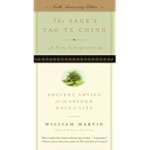
The Sage's Tao Te Ching
The Sage’s Tao Te Ching: Ancient Advice for the Second Half of Life
William Martin


William Martin
William Martin

. Taoist Living
. William Martin (Spirituality & Practice site)
. William C. Martin (his website)

William Martin has been a teacher of Taoism for more than 40 years. He is the author of innovative translations of the Tao Te Ching for specific audiences including parents and couples, as well as books on the Tao and such themes as forgiveness and caring for one another. He continues to think through and write about Taoism, life, and the natural world as well as paint in the Taoist tradition.

Books William Martin has written include:


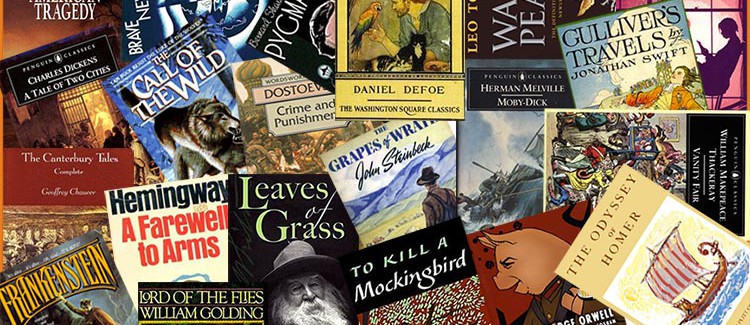
Literature – The Gift That Keeps On Giving

Literature

Value of Literature

We learn a lot of things at home, at school, from friends, and from listening to various people wiser and cleverer than ourselves. But many of the most valuable things we know come from the literature we have read. Just as stories help explain the world to us, they also connect us to other lives. If we read well, we find ourselves in a conversational relationship with the most creative minds of our own time and of the past. Time spent reading literature is always time well spent.

Understanding Ourselves Better Through Literature

Every work of literature, however humble, is at some level asking: “What’s it all about? Why are we here?” Philosophers, spiritual folks, and scientists answer those questions in their own ways. In literature it is imagination that grapples with those basic questions.

Literature can transport us to a greater awareness of who, what, and where we are. It helps us make sense of the infinitely perplexing situations in which we find ourselves as human beings. As an added bonus, literature does so in ways that please us and make us want to read more.

Literature Helps Us Handle Complexity

At its basic level, literature is a collection of unique combinations of 26 small back marks on a white surface – letters in other words, since the word literature means things made of letters. Those combinations are more magical than anything a conjurer can pull out of his top hat. Yet a better answer would be that literature is the human mind at the very height of its ability to express and interpret the world around us.

Literature, at its best, does not simplify, but it enlarges our minds and sensibilities to the point where we can better handle complexity – even if, as is often the case, we don’t entirely agree with what we are reading. Literature enriches our lives in ways nothing else quite can, and makes us more human – and the better we learn to read, the better it will do that.

Inexhaustible Nature of Literature

The great works of literature are inexhaustible – that is one of the things that makes them great. A great work of literature continues giving at whatever point in life you read it. And, re-reading is one of the greatest pleasures that literature offers us. However often you go back to literary works, they will always have something new to offer.

We live in a golden age when, thanks to modern translation services, not just “literature” but “world literature” is available to us to read. There is hugely more literature than any of us will read in a lifetime. At best we can put together an intelligent sample, and the most important decision to make is how to assemble our selection.
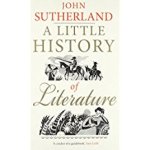
A Little History of Literature

John Sutherland
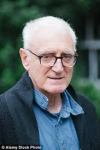


John Sutherland
John Sutherland
born 1938

. Professor John Sutherland (British Council Literature)
. Wikipedia

John Sutherland is a British academic, newspaper columnist and author. Sutherland is an Lord Northcliffe Professor Emeritus of Modern English Literature at University College London. He has taught students at every level and is the author or editor of more than 20 books.

Sutherland specialises in Victorian fiction, 20th century literature, and the history of publishing. Among his works of scholarship is the Longman Companion to Victorian Fiction (known in the US as Stanford Companion, 1989), a comprehensive encyclopedia of Victorian fiction. A second edition was published in 2009 with 900 biographical entries, synopses of over 600 novels, and extensive background material on publishers, reviewers and readers.

Books John Sutherland has written include: