How Did The Ancient Games Shine A Spotlight On The Roman World?

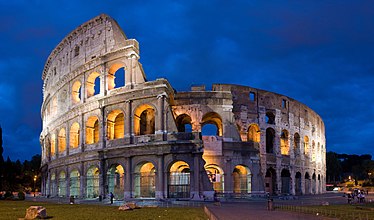
Colesseum

Diversity of the Games

The Roman games were a religious festival held in honor of Jupiter. The sheer diversity of the games amounted to a celebration of the immensity of the Roman world. They consolidated the ancient bond between the plebs (Roman citizens) and the Senate. Nobility turned out in force to attend the games.

The games were more than a grand parade of the nobility – they were a time of wonder for all. Huge stocks of gold evaporated in a week so the amphitheater could be turned into a place of miracles. For a blessed moment, the rules of normal life were held in suspense.

The diversity of the games included tightrope walkers, ballet dancers, amphitheaters filled up with water for naval spectacles, and fountains with perfumed water. But, above all, the animal world poured into the city – from all over, all to Rome.

Animals Imported for the Games

  • Crocodiles from the Nile.
  • Irish wolfhounds from Britain.
  • Lions from north Africa.
  • Antelopes & gazelles from the Sahara.

What the Animals Represented 

  • Like the empire itself, their capture and eventual slaughter represented a triumph of human order over a savage world.
  • Most beasts were lethal – they were destined to be slaughtered, by skilled huntsmen, armed with pikes, who were the matadors of the classical world.
  • Beasts were slaughtered in a solemn mood.

What happened in the amphitheater was more than a blood sport – it was a fortifying lesson in the triumph of civilization. The activities celebrated the victory of human energy, human skill, and human courage over the wild. For this reason, “human animals” also made their appearance – and, like the rest of the animals, they were destined for slaughter.

Gladiators 

Saxon prisoners of war were sent to Rome to serve as gladiators, condemned to fight to the death in front of the Roman people. The deaths of such prisoners, rounded up from the coasts of the English Channel, were intended to make plain, in the middle of Rome, the most magical of all energies – the eternal victory of empire along the frontiers of the North.

Christian Nobility and the Games

The bronze tokens issued on the occasion of the Roman games show that representatives of Christian noble families presided at the Circus Maximus and the Colosseum over spectacles that were as thrilling, as cruel, and as calculated to cause the raw, pre-Christian adrenaline of worship for the city and the empire to flow in their veins just as any pagan family.

Through the Eye of a Needle
Through the Eye of a Needle: Wealth, the Fall of Rome, and the Making of Christianity in the West, 350-550 AD
Peter Brown

Background on Peter Brown

How Do Stories Shape And Give Meaning To Our Lives?

Stories & Meaning

Our Need for Stories

We humans have a compelling need for stories that order our memories and hopes, and give shape and meaning to our individual and collective lives. A society with a belief in something that goes beyond itself, a narrative that goes beyond the immediate and beyond the self, seems better equipped to confront threats to its existence, to survive and to flourish.

Societies Exists Through Stories

At the beginning of the 20th century, the French sociologist Emile Durkheim argued that without such overarching stories there can in fact be no society. Those stories, the ideals they illustrate and the ceremonies in which they are enacted constitute for Durkheim the essential elements of any society of communal belief – and, in a sense, the stories are the society. If, for whatever reason, we lose or forget them, in a very real way we, collectively, no longer exist.

Systems of Belief – Narratives of Meaning

Systems of belief almost always contain a narrative of how the physical world was created, how the people came to be in it, and how they and all living things should inhabit it. But the stories and associated rituals usually go far beyond that. They tell members of the group how they ought to behave to one another, and crucially they also address the future – those aspects of the society that will endure as succeeding generations come and go. They embrace the living, the dead and those still to be born, in one continuing story of belonging.

Stories Become Embedded in Everyday Life

The most powerful and most sustaining of any society’s stories are the work of generations. They are repeated, adapted and transmitted, absorbed into everyday life, ritualized and internalized to such a degree that we are often hardly aware that we are still surrounded by the tales of distant ancestors. They give us our particular place in a pattern which can be observed but not fully understood – and they do it almost without our knowing it.

Cover art
Living With the Gods: On Beliefs and Peoples
Neil MacGregor


Neil MacGregor


Neil MacGregor

Born 1946

. Wikipedia

Robert Neil MacGregor, OMAOFSA, is a British art historian and former museum director. He was the editor of the Burlington Magazine from 1981 to 1987, then Director of the National Gallery, London, from 1987 to 2002, Director of the British Museum from 2002 to 2015, and is currently the founding director of the Humboldt Forum in Berlin.

MacGregor has made many programs for British television and radio. In the year 2000, he presented on television Seeing Salvation, about how Jesus had been depicted in famous paintings. More recently, he has made important contributions on BBC Radio Four, including A History of the World in 100 Objects and, in 2012, a series of fifteen-minute programs after The World at One called Shakespeare’s Restless World, discussing themes in the plays of William Shakespeare.

Books Neil MacGregor has written include:


How Can Understanding Our Mind Transform Us?

Mind

Accept Yourself

As soon as you accept yourself as you are, you begin to transform.

Examine Your Mind

When negativity in your mind arises, instead of being afraid of it or pushing it away, you should examine it more closely. Meditation helps you understand the mind and put it in order.

The mind is very powerful. Therefore, it requires firm guidance. But be reasonable with yourself – and don’t ever think it’s too late.

Pilot Your Mind with Wisdom

Just as a powerful jet plane needs a good pilot, the pilot of your mind should be the wisdom that understands its nature.

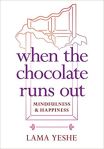
When the Chocolate Runs Out: Mindfulness & Happiness

Lama Thubten Yeshe


Lama Thubten Yeshe
Lama Thubten Yeshe
1935-1984

. Lama Yeshe Wisdom Archive
. Wikipedia

Thubten Yeshe was a Tibetan lama who, while exiled in Nepal, co-founded Kopan Monastery (1969) and the Foundation for the Preservation of the Mahayana Tradition (1975). He followed the Gelug tradition, and was considered unconventional in his teaching style. He wrote several books.

Lama Yeshe was born near the Tibetan town of Tolung Dechen, but was sent to Sera Monastery in Lhasa at the age of six. He received full ordination at the age of 28 from Kyabje Ling Rinpoche.

Books Written By Lama Thubten Yeshe Include:


How Do Love & Compassion Manifest In Helping Others?

Love and Compassion

Compassion is a verb.
…..Thich Nhat Hanh

Love and compassion appear as selfless service. Yet in love we do not serve the other, we serve “us.”

Love’s communion brings us together in a whole. Compassion does not see the world’s pain and sorrow as other – it is shared, it is ours.

When we allow our shared vulnerability and humanness, love and compassion are as natural as our breath, and without hesitation we act to help.

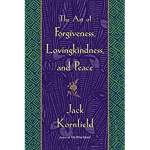
The Art of Forgiveness, Lovingkindness, and Peace


The Art of Forgiveness, Lovingkindness, and Peace
Jack Kornfield

Background on Jack Kornfield

The Anxiety of Growing Old In A World of Impermanence

Impermanence

Our Desire for Certainty, Meaning, and Permanence

All of us have an inborn desire for certainty, meaning, and structure. Yet, how does this square with the fact that we live in a world where impermanence is the nature of reality? We get sick, we get old, and we eventually die.

All of our attempts to find a permanent ground to stand on will eventually fail. This is one of the sources of our fundamental existential anxiety.

Our Resistance to Accepting Impermanence

It’s not just the fact of impermanence that causes us to have anxiety and suffer – it’s our resistance to accepting impermanence as an inevitable aspect of life. The inevitability of aging pushes us to confront the clash between what we want – security and comfort – and the reality of what is.

Trying to avoid the unwanted seems to be deeply ingrained in the  human psyche, and if we forcefully continue our evasions, our suffering increases.

Growing Older and Wanting Security

The existential predicament starts with the fact that as humans we want a sense of secure ground. However, somewhere along the way we may come to the frightening realization that uncertainty and groundlessness can’t be avoided.

We may experience that when we hit a personal crisis, such as a serious relationship breakup, a financial reversal, or a troubling diagnosis. It may become clear to us that what we want is a sense of certainty and meaning – yet we live in a world that may not offer neither. This is one of the fundamental predicaments that all of us must eventually face, and particularly so as we get older.

The Fact of Our Aloneness

The existential predicament continues with the fact of our basic aloneness. At bottom, this is the tension we feel that comes when we recognize our absolute isolation – the fact that we are born alone and that we will die alone. We may not recognize this very often, but it is in sharp contrast with our deep desire for connection, protection, and our wish to be part of a larger whole.

Accepting We Will One Day Die

Perhaps the most daunting part of our existential predicament is the fact that we will surely die. This is in direct conflict with our deeply ingrained desire to continue to live. There’s no getting around this conflict – wanting to exist and knowing that someday we will no longer be. We may posit an afterlife or take comfort in the legacy of our children or our life accomplishments, but this comfort may not be enough to prevent the anxiety from seeping through.

The solution has to come from our acceptance of the fact that we will surely die, and from our ability to surrender to this part of the natural order of things.


Aging for Beginners
Ezra Bayda with Elizabeth Hamilton

Ezra Bayda and his wife Elizabeth Hamilton have each been practicing meditation for over 40 years and teaching since 1995, including retreats in the US and abroad. They currently co-teach at the Zen Center San Diego. Ezra has written 7 books. Elizabeth is also a writer, and has led numerous workshops at hospices.

Ezra Bayda – Wikipedia / Zen Center San Diego

Elizabeth Hamiltion
– 
Explore Faith / Zen Center San Diego


Ezra Bayda

Born 1944

Ezra Bayda is an American figure in Zen. He is at the “forefront of the movement…to present the essential truths of Buddhism free of traditional trappings or terminology.” He is an author and Zen teacher.

Bayda is a teacher at Zen Center San Diego, in Pacific Beach, San Diego, California, and with the Santa Rosa Zen Group in Santa Rosa, California. He has conducted meditation workshops and retreats in Europe, Australia, and North America.

Bayda is a member of the White Plum Asanga and the Ordinary Mind Zen SchoolHe is also the author of several books, best known for his teachings on working with difficulties and fear in everyday life.

Books Ezra Bayda Has Written Include: