How Much Stuff Is Enough?

Buy More Stuff

Role of Consumption

In the last few hundred years, the acquisition, flow and use of things – in short, consumption – has become a defining feature of our lives. In the rich world (and increasingly in the developing world) identities, politics, economies, and the environment are crucially shaped by what and how we consume.

Advanced economies live or die by their ability to stimulate and maintain high levels of spending – with the help of advertising, branding, and consumer credit. Taste, appearance, and lifestyle define who we are (or want to be) and how others see us.


Our Relation to Things

Possessions in a pre-modern village of an indigenous tribe pale when placed next to the growing mountain of things in advanced societies. This change in accumulation involved an historic shift in humans’ relations with things.

In contrast to the pre-modern village, where most goods were passed on as gifts or part of a wedding collection, things in modern societies are mainly bought in the marketplace, and, they pass through our lives more quickly.


Stuff & More Stuff

  • A typical German owns 10,000 objects.
  • In Los Angeles, a middle-class garage often no longer houses a car, but hundreds of boxes of stuff.
  • In 2013, the United Kingdom was home to 6 billion items of clothing, roughly a hundred per adult – a quarter of these items never leave the wardrobe.
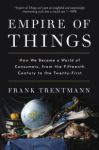
Empire of Things
Empire of Things: How We Became a World of Consumers, from the Fifteenth Century to the Twenty-First

Frank Trentmann
 

Zen & Written Language

Zen

Origin of Zen

Zen Buddhism originated in Japan in the 12th century as an indigenous version of the Chan school, which originated in 7th century China. The founding myth of Zen is that the Buddha silently held up a flower, twirled it and winked. Zen is the only major religious or philosophical tradition that didn’t begin with an utterance of some kind.

Use of Language

In Zen, language adds to reality in that it creates an extra layer on top of it, and this in turn subtracts from reality by obscuring its fullness. One of the purposes of some paradoxical koans – such as “What color is the wind?” or “When you can do nothing, what can you do?” – is to draw our attention to the inadequacy of words and how apparently perfectly well-formed sentences can be meaningless.

Written Records 

Despite their disavowal of language, Zen teachers have left a lot of written words. Many see this paradox as an imperfect compromise, explaining that if nothing was ever written down, then the ways of guiding people would be lost. Thus the Zen school has resigned itself to publishing the records of the ancients, though this is not what they would have wanted.

How the World Thinks
How the World Thinks: A Global History of Philosophy

Julian Baggini

What Is Our Ultimate Concern?

True Nature

Reality In Our Daily Lives

We look upon reality in our daily lives through the historical dimension, but we can also look upon the same reality in the ultimate dimension. We have our daily and historical concerns, but each of us also has our ultimate concerns.

Our Ultimate Concern

When we look for God or nirvana or the deepest kind of peace, we are concerned about the ultimate. We are not only concerned with the facts of daily life – our position in society, our projects, etc. – but we are also concerned about our true nature. To meditate deeply is to begin to fulfill our ultimate concern.

No Death, No Fear
No Death, No Fear: Comforting Wisdom for Life

Thich Nhat Hanh

How Did Ancient Religions Honor Life Cycles?

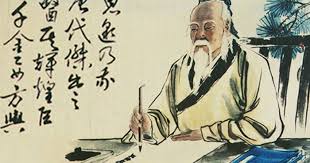
Lao Tzu
Lao Tzu (6th century BCE)


Ancient Religions and Natural Cycles

Ancient religions have always taught reverence for life and respect for the natural cycles: the ebb and flow, winter and spring, yin and yang that comprise all existence.

Examples of Natural Cycles

  • Egyptian mystery cults equated cycles of life with the myth of Isis and Osiris and the annual fluctuations of the Nile.
  • Druids celebrated the changing seasons, lighting bonfires in the darkness of winter, and affirming the return of spring with the fires of Beltane (May Day Celebration).
  • Native Americans had ritual celebrations of the seasons and held hunting grounds sacred, offering prayers before taking any animal life.

Tao Te Ching and Nature

The Tao Te Ching (6th century BCE) teaches that all life is process. Like all living systems, we and our world are continuously evolving. Lao Tzu’s essential lesson is that we can gain greater power, peace, joy, and inspiration by following the principles of nature. 


The Tao of Inner Peace

Diane Dreher

How Big Is A Neutron Star?

Neutron Star

Size of a Neutron Star

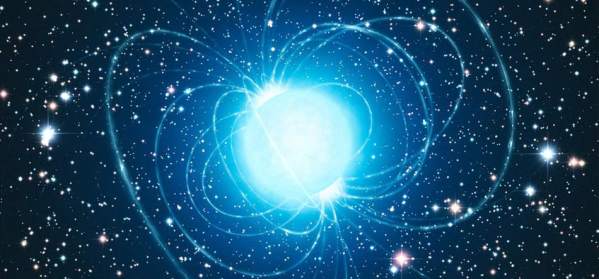
One of the wonders of the cosmos is the neutron star, a star in which the atoms have collapsed. In a single cubic centimeter of neutron star material – a chunk little more than the size of a sugar cube – there are are around 100 million tons of matter. An entire neutron star occupies a sphere that is roughly the size across the island of Manhattan (about 14 miles).

Formation of a Neutron Star

A neutron star is the collapsed core of a giant star. Neutron stars are the smallest and densest stars, not counting black holesquark stars and strange stars.

Neutron stars result from the supernova explosion of a massive star, combined with gravitational collapse, that compresses the core past white dwarf star density to that of atomic nuclei. Once formed, they no longer actively generate heat, and cool over time.

There are thought to be around 100 million neutron stars in the Milky Way, a figure obtained by estimating the number of stars that have undergone supernova explosions.

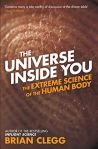
The Universe Inside You
The Universe Inside You: The Extreme Science of the Human Body

Brian Clegg

Background on Brian Clegg