Healing Our Pain Through Transcendence

Transcendence

Life is Painful

There is a lot of pain in human life. Sometimes our pain is caused by an outside tragedy, such as difficult circumstances we go through. Sometimes events shake our world to its core. Other times we feel internal and emotional pain – which we are all very vulnerable to.

The Pain of Separation

The sense of being human, of being a person, is also painful because we feel a separation between ourselves and others, a separation between ourselves and the world. As long as this sense of fundamental separation continues in our consciousness, there is always going to be pain, pain that we cannot really describe – it is an existential pain. This pain also causes loneliness that can be deeper than just longing for companionship.

Healing Through Transcendence

The pain of this loneliness won’t go away by trying to fill our inner vacuum through acquiring external comforts. It can, however, be healed through what might be called true transcendence, which is the goal of many spiritual traditions, even many that don’t accept each other’s doctrines. True transcendence is the experience that we are no longer trapped in the narrow realm of the ego.

There is a part of us that longs to experience transcendence. Transcendence gives us the sense that all of our problems are gone. It is the sense that somehow we are one with everything. We don’t have to be spiritual to have this longing for transcendence. It is a universal longing.

Choosing Compassion
Choosing Compassion: How to Be of Benefit in a World That Needs Our Love

Anam Thubten

Background on Anam Thubten
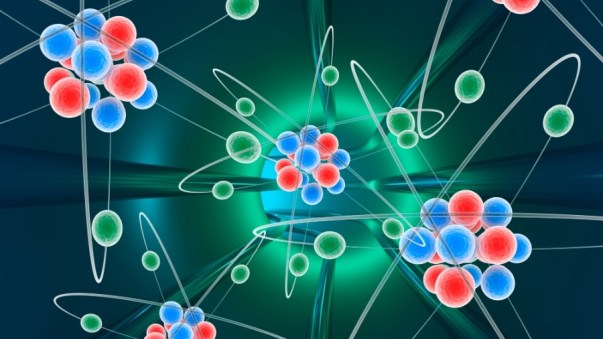
Atoms – Ancient Beliefs & Modern Science

Atoms

Ancient Beliefs

Belief in atoms as the building blocks of matter has an ancient history. Some Buddhist thinkers in India, during the 6th century BCE, believed all matter to be made up of atoms, which they regarded as a form of energy. In addition, Greek pre-atomists such as Empedocles and Anaxagoras also conceived of invisibly tiny particles of matter. These early philosopher-scientists arrived at their view through a process of deductive thought alone.

Modern Science

Although atomism fell out of favor for many centuries, it was, in the end the model that would prevail, later supported by experimentation and observation. But the early atomists weren’t quite right. Their belief that atoms are the smallest, indivisible particles of matter proved to be incorrect, because atoms are made up of subatomic particles. And, as scientists have probed inside the atom, it’s proven to be a bizarre and unpredictable place.

How the World Works: Physics
How the World Works: Physics: From Natural Philosophy to the Enigma of Dark Matter
Anne Rooney

Background on Anne Rooney

Myths, Legends & Folktales

Myths, Legends, Folktales

Prose Narratives

Myths, legends, and folktales are narratives in prose – referred to as prose narratives. This distinguishes them from proverbs, riddles, ballads, poems, and other verbal forms.


Myths 

Myths are prose narratives which, in the society in which they are told, are considered to be truthful accounts of what happened in the remote past.

Characteristics of Myths

  • Accepted on faith, taught to be believed, and can be cited as authority in answer to ignorance, doubt, or disbelief.
  • Embodiment of dogma, usually sacred, and often associated with theology and ritual.
  • Main characters are usually not humans, but they often have human attributes – they are animals, deities, or cultural heroes, whose actions are set in an earlier world, when the earth was different than it is today.
  • Account for the origin of the world, of mankind, of death, or for characteristics of birds, geographic features, and phenomena of nature.
  • Recount the activities of deities – including their love affairs, family relationships, their friendships and enemies, their victories and defeats.

Legends

Legends are prose narratives which, like myths, are regarded as true by the narrator and his audience, but they are set in a period considered less remote, when the world was much as it is today.

Characteristics of Legends

  • More often secular than sacred.
  • Principal characters are human.
  • Tell of migrations, wars and victories, deeds of past heroes, chiefs, and kings, and succession in ruling dynasties.
  • Include local tales of buried treasure, ghosts, fairies, and saints.

Folktales

Folktales are prose narratives which are regarded as fiction.

Characteristics of Folktales

  • Not considered as dogma or history, may or may not have happened, and are not to be taken seriously.
  • Though they are often told only for amusement, they may present moral truths.
  • May be set in any time and any place, and in this sense they are almost timeless and placeless.
  • Fairies, ogres, and even deities may appear, but folktales usually recount the adventures of animal or human characters.
  • Have been called “nursery tales” or “fairy tales.”

Sacred Narrative: Readings in the Theory of Myth

Edited by Alan Dundes

How Can We Change Our Habits?

Change

The secret of change is to focus all of your energy, not on fighting the old, but on building the new.

…..Socrates

Don’t fight against your old habits by thinking about what you’re missing. When you feel deprived, you’re focusing on the wrong thoughts. You’re making your journey unpleasant and more difficult.

Instead, focus on how the changes will bring you the success you desire – that’s when you’ll build your new life instead of fighting your old one.

Mindset Re-Minder
Mindset Re-Minder

Beth Bianca

What Is Pantheism?

Pantheism

Meaning of Pantheism

The word Pantheism derives from the Greek words pan (all) and theos (God). Literally, Pantheism means All is God. In essence, Pantheism holds that the Universe as a whole is worthy of the deepest reverence, and that only the Universe and Nature are worthy of that degree of reverence.

Nature and Unity

The statement “Nature is my god” is perhaps the simplest way of summarizing the core pantheist belief, with the word “god” meaning not a supernatural being, but the object of deepest reverence.

Pantheism is a spiritual path that reveres and cares for nature – a spiritual path that accepts this life as our only life, and this earth as our only paradise. Pantheism revels in the beauty of nature and the night sky, and is full of wonder at their mystery and power.

Pantheism believes that all things are linked in a profound unity. All  have a common origin and destiny. All things are interconnected and interdependent. In life and death, humans are an inseparable part of this unity, and in realizing this we can find our joy and peace.

History of Pantheism

Pantheism is among the oldest religious beliefs. It can be dated back to at least the 6th or 7th centuries BC, when the Hindu Upanishads were written, and the Greek philosopher Hericlitus lived. Pantheism, of one kind or another, came to dominate the ancient world, East and West.

The spread of Christianity and Islam forced Pantheism underground for around 1200 years, but by the 19th century it was beginning to regain some of its old prominence. It was the dominant belief of many philosophers and poets, including Wordsworth, Goethe, Hegel, and Walt Whitman.

The wars and ideologies of the 20th century pushed Pantheism to the background again, but today Pantheism is having a renaissance in Scientific Pantheism, nature-oriented Paganism, Deep Ecology, philosophical Taoism, Zen Buddhism, and forms of Humanism that are open to spirituality.

Elements of Pantheism
Elements of Pantheism: A Spirituality of Nature and the Universe