What Is Pantheism?

Pantheism

Meaning of Pantheism

The word Pantheism derives from the Greek words pan (all) and theos (God). Literally, Pantheism means All is God. In essence, Pantheism holds that the Universe as a whole is worthy of the deepest reverence, and that only the Universe and Nature are worthy of that degree of reverence.

Nature and Unity

The statement “Nature is my god” is perhaps the simplest way of summarizing the core pantheist belief, with the word “god” meaning not a supernatural being, but the object of deepest reverence.

Pantheism is a spiritual path that reveres and cares for nature – a spiritual path that accepts this life as our only life, and this earth as our only paradise. Pantheism revels in the beauty of nature and the night sky, and is full of wonder at their mystery and power.

Pantheism believes that all things are linked in a profound unity. All  have a common origin and destiny. All things are interconnected and interdependent. In life and death, humans are an inseparable part of this unity, and in realizing this we can find our joy and peace.

History of Pantheism

Pantheism is among the oldest religious beliefs. It can be dated back to at least the 6th or 7th centuries BC, when the Hindu Upanishads were written, and the Greek philosopher Hericlitus lived. Pantheism, of one kind or another, came to dominate the ancient world, East and West.

The spread of Christianity and Islam forced Pantheism underground for around 1200 years, but by the 19th century it was beginning to regain some of its old prominence. It was the dominant belief of many philosophers and poets, including Wordsworth, Goethe, Hegel, and Walt Whitman.

The wars and ideologies of the 20th century pushed Pantheism to the background again, but today Pantheism is having a renaissance in Scientific Pantheism, nature-oriented Paganism, Deep Ecology, philosophical Taoism, Zen Buddhism, and forms of Humanism that are open to spirituality.

Elements of Pantheism
Elements of Pantheism: A Spirituality of Nature and the Universe

How Do Thoughts Create Our Life?

Thoughts Create

As you think, so you are; as you continue to think, so you remain.

…..James Allen

Your thoughts are the beginning of the life you create. When you continue to think the same way, you’ll continue to see the same results. To change your life, you must change how you think.

Mindset Re-Minder
Mindset Re-Minder

Beth Bianca

“In The Beginning” – The Story Of Myth

Myth

Sacred Narrative

“In the beginning” is how many myths start their story. And, simply put, a myth is a sacred narrative explaining how the world and man came to be in their present form. That myths are sacred means that all forms of religion incorporate myths of some kind. There is nothing disparaging about the term myth. The term mythos means word or story. It is only the modern usage of the word myth as “error” that has led to the notion of myth as something negative.

Metaphorical Guise

In common parlance, the term myth is often used as a mere synonym for error or fallacy. “That’s just a myth!” one may exclaim to label a statement or assertion as untrue. But untrue statements are not myths in the formal sense – nor are myths necessarily untrue statements. For myth may constitute the highest form of truth, albeit in metaphorical guise. If one keeps in mind that a myth must refer minimally to a narrative, then one can easily eliminate most of the books and articles employing myth in their titles.

Study of Myth

The study of myth is an international and an interdisciplinary venture. Scholars from around the world have contributed to the analysis of myth, and this includes scholars of anthropology, classics, comparative religion, folklore, psychology, and theology, among others areas of specialization.

Sacred Narrative: Readings in the Theory of Myth

Edited by Alan Dundes

What Is Our True Inheritance?

Inheritance

We contain all the beautiful qualities and actions of our ancestors, and also the painful qualities. Knowing this, we can try our best to continue what is good and beautiful in our ancestors, and we will practice to transform the violence and pain passed down to us from so many generations. We know that we practice peace not for ourselves, but for the benefit of all our ancestors and all our descendants.

…..Thich Nhat Hanh

Your True Home
Your True Home: Everyday Wisdom

Thich Nhat Hanh

Early Philosophy Around The World

World Philosophies

Beginning of Philosophy

Philosophy’s birth, between the 8th and 3rd centuries BCE, is described by the German philosopher Karl Jaspers as the Axial Age (in the sense of a “pivotal age”). It was a period of gradual transition from understanding the world in terms of myth to the more rational understanding of the world we have today. Rational understanding didn’t supplant early folk beliefs and myths so much as grow out of their values and tenets.

Early Philosophy Around the World 

  • The early Upanishads – the foundational texts of Indian philosophy, of unknown authorship – were written between the 8th and 6th centuries BCE.
  • China’s first great philosopher, Confucius, was born in 551 BCE.
  • In Greece the first notable pre-Socratic philosopher, Thales of Miletus, was born around 624 BCE.
  • The Buddha’s traditional birth date places him in the 6th century BCE (although scholars now believe he probably wasn’t born until around 480 BCE, about the same time as Socrates).

Development of Distinct Cultures

These early philosophies have had a profound impact on the development of distinctive cultures across the world. Their values and tenants have shaped the different ways people worship, live and think about the big questions that concern us all.

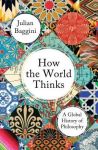
How the World Thinks
How the World Thinks: A Global History of Philosophy

Julian Baggini