What is the Power of Compassion?

Compassion
Compassion Leads to Reconciliation

I have just three things to teach: simplicity, patience, compassion.
These are your greatest treasures.

Compassionate toward yourself, you reconcile all beings in the world.

    Lao-Tzu

Book of Awakening
Book of Awakening: Having the Life You Want by Being Present to the Life You Have
Mark Nepo

Background on Mark Nepo


Lao-Tzu
Lao-Tzu
6th or 4th century BC


Lao-Tzu (also Laozi, Li Er or Lao-Tze) was an ancient Chinese philosopher and writer. He is the reputed author of the Tao Te Ching, the founder of philosophical Taoism, and a deity in religious Taoism and traditional Chinese religions.

semi-legendary figure, Lao-Tzu was usually portrayed as a 6th-century BC contemporary of Confucius, but some modern historians consider him to have lived during the 4th century BC. A central figure in Chinese culture, Lao-Tzu is claimed by both the emperors of the Tang dynasty and modern people of the Li surname as a founder of their lineage. 


Does People-Pleasing Bring Us Happiness?

People-Pleasing

Assumptions About People-Pleasing

Most of us wrongly assume that people-pleasing behavior proves we’re generous. But when you think about it, always trying to please people isn’t a selfless act. It’s actually quite self-centered. It assumes that everyone cares about your every move. It also assumes you have the power to control how other people feel.

If you’re constantly doing things to make others happy and you don’t think they are appreciative of your efforts, you’ll soon experience resentment. Thoughts such as I do so much for you, but you don’t do anything for me will creep in and ultimately hurt your relationships.

Truths About People-Pleasing

  • Worrying about trying to please everyone is a waste of time.
  • People-pleasers are easily manipulated.
  • It’s okay for other people to feel angry or disappointed.
  • You can’t please everyone.

When Someone Asks You To Do Something, Ask Yourself These Questions Before Responding

  • Is this something I want to do?
  • What will I have to give up by doing this?
  • What will I gain by doing this?
  • How will I feel if I do it?

Live True To Yourself

Dying people often say they wished they had live a more authentic life. Instead of dressing, acting, and speaking in a manner that was pleasing to others, they wished they’d been more true to themselves.

13 Things Mentally Strong People Don't Do
13 Things Mentally Strong People Don’t Do: Take Back Your Power, Embrace Change, Face Your Fears, and Train Your Brain for Happiness and Success
Amy Morin


Amy Morin
Amy Morin
. Amy Morin, LCSW
. Forbes Blog
. Psychology Today

Amy Morin is a psychotherapist, mental strength trainer, and international bestselling author. She’s a highly sought after keynote speaker who gave one of the most popular TEDx talks of all time.

Morin’s books, 13 Things Mentally Strong People Don’t Do and 13 Things Mentally Strong Parents Don’t Do, have been translated into more than 30 languages. She’s a columnist for Inc., Forbes, and Psychology Today and her articles on mental strength reach more than 2 million readers each month.

Books written by Amy Morin include:


The Secret of Becoming Mentally Strong – Amy Morin

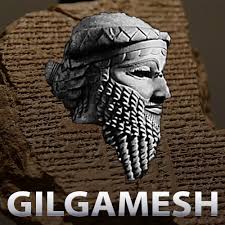
Gilgamesh & The Secret of Life

Gilgemesh

Ancient Sumerian Tale of Gilgamesh

The stubborn, hard king Gilgamesh sought to ask the Immortal One the secret of life. He was told that there would be stones on his path to guide him.

But in his urgency and and pride, Gilgamesh was annoyed to find his path blocked, and so smashed the very stones that would have helped him. In his blindness of heart, he broke everything he needed to discover his way.

We too, in the same confusion, break what we need, push away those we love, and isolate ourselves when we need to be held most.

Book of Awakening
Book of Awakening: Having the Life You Want by Being Present to the Life You Have

Mark Nepo

.
.


Mark Nepo
Mark Nepo
born 1951

. Mark Nepo website
. Wikipedia

Mark Nepo is a poet and spiritual adviser who has taught in the fields of poetry and spirituality for over 35 years. He is a cancer survivor. In his 30s he was diagnosed with a rare form of lymphoma, a struggle which helped to form his philosophy of experiencing life fully while staying in relationship to an unknowable future.

Nepo has a doctorate in English. He taught for 18 years at the State University of New York in Albany, New York.

Nepo is best known for his New York Times #1 bestseller, The Book of Awakening.

Books written by Mark Nepo include:


On the One Life We’re Given – Mark Nepo

Where Can We Find The Deepest Human Life?

Deepest Human Life

The Deepest Human Life is Everywhere 

Plato helps us realize that within each of us the very depths of being human are present – we see that each human life reflects something important about who we are.

The difference between regular folks and someone like Kant, pertains to our differing abilities to articulate the shape of a philosophical constellation – it has nothing to do with our inner substance. The pursuit of wisdom involves a confrontation with our ignorance, most famously embodied in the “I know I know nothing” of Socrates.

Regardless how challenging things may be, we take solace in the fact that even a profound confusion is a profound confusion. Whatever holiness can be found in Socrates and Confucius is within our reach.

Exploring Life Through Philosophy

Philosophy, as Plato shows, involves confronting the fact that our most stubborn attempts to think clearly come up short, but we nonetheless have to live as if we had answers to the stubborn mysteries. Philosophy is everything that humanly follows from a real confrontation with our strange predicament.

At it’s best it’s a way of life. The division between the wise and the foolish is not between those with all the answers and those who are confused. The great dividing line is between our usual folly and an enlightened folly, by which one understands life itself and has found a way of happily living in an impossible relationship.

Can Beliefs & Wisdom Coexist?

Thomas Aquinas, the master of the theologians, is said to have come down from his vision of God and declared his thousands of learned pages so much straw. Yet, as Socrates and other great ones teach us, we can’t do without beliefs. They’re a necessary part of being human.

Wisdom is compatible with any number of traditions, religious or otherwise. For wisdom is not so much the possession of right beliefs (though it involves dodging the worst of them) as finding a way to relate to our beliefs in such a way that the good parts of us are liberated. Wisdom isn’t a doctrine: it’s a style.

The Deepest Human Life
The Deepest Human Life: An Introduction to Philosophy for Everyone

Scott Samuelson

Background on Scott Samuelson