
“Healthy love” is the warm cherishing of another person without expectation and without clinging. This love “accepts” all aspects of another person and “requires” nothing from them. This love is something we create in our own heart and give as our gift, freely, willingly.
We create this contentment in order to share it; we don’t depend on the other person in order to feel it. This “unselfish” love doesn’t need the other person’s happiness in order to exist, but it knows that when we increase someone else’s happiness, everyone’s happiness, satisfaction, and contentment multiply exponentially. Love is an essential part of life. It is the expression of inner happiness and contentment.
We do experience authentic happiness in the presence of another, but then we almost immediately cling to the feeling and believe we “need” the other to feel it. We don’t want to lose the feeling. We desire authentic, healthy love, and in our confusion, pursue it wrong-headedly. Authentic, “unselfish” love changes the moment we try to cling to it and possess it. The moment of experiencing authentic love quickly gets replaced by self-centered thoughts.
We need to become familiar with how the mind works. When we experience authentic love, we feel so good we want to freeze the moment. Clinging takes over. This dynamic is the same as with any other desire or pleasure. If any previously loving and fulfilling relationship comes to feel harmful, toxic, unhealthy, or simply unsatisfying, then we benefit the relationship, ourselves, and the other person by examining our attitudes and becoming aware of our desires, our wants, our needs, and our demands.
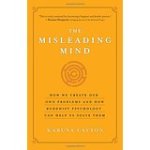
The Misleading Mind: How We Create Our Own Problems and How Buddhist Psychology Can Help Us Solve Them
Karuna Cayton
.
.
The whole mission of this book, one could say my own life mission, is to be able to communicate the profound and useful ideas of Buddhist thought for any person in any walk of life. This mission is rooted in the idea that Buddhism is a system of thought and ideas rather than a religion or dogma.
— Karuna Cayton

Karuna Cayton
.
.
. Brief Bio
. Q & A with Karuna from Spirituality & Practice
. The Karuna Group
. Lama Yeshe Wisdom Archive
Karuna Cayton is a therapist and has been a student of Buddhist psychology and philosophy for over 40 years.
A long time student of Lama Yeshe and Lama Zopa Rinpoche, Karuna worked for the lamas at Kopan Monastery from 1975-1988. During that time he created and taught the secular studies program for the resident Tibetan and Nepali monks. He also assisted in running the Buddhist programs for foreign visitors and was the co-founder and director of the city center in Kathmandu, Himalayan Yogic Institute.
Karuna teaches workshops and classes in the integration of western and Buddhist psychology.
The Misleading Mind – Karuna Cayton

 Who Knows Anyhow?