Learning to dance the cosmic dance — this is why we are here on this earth, living the life we are living. This is a way of expressing the heart’s conviction concerning the need to recognize and move with the divinity manifested in the primordial rhythms of the day to day life we are living.
At a significant point in the religious evolution of the ancient Near East, God gained an enemy in the Devil. A major value of the concept of the Devil is its ability to explain evil in the world.
Persians Conquer Babylon
During the Exile, when Babylon which had once again conquered the Israelites and exiled the upper classes to Mesopotamia, the Persians conquered Babylon. The Persians were a thoroughly foreign, Indo-European culture that brought a wholly new understanding of the divine to the Semitic Israelites.
Zoroastrianism
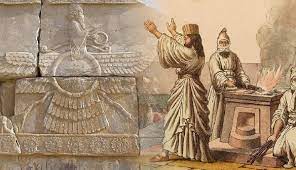
Zoroastrians had been present in Persian culture hundreds of years before Persia expanded into Mesopotamia. The basic position of Zoroastrianism was that God was opposed by a near equal but opposite being, the Devil. One early form of that theological dualism claimed that at the beginning there was but the One, the single God alone who contained all there is — all opposites, all things good and evil. This one God then emanated two roots, the Holy Spirit and the Devil, who were destined to fight each other for a predetermined number of ages until the battle was won.
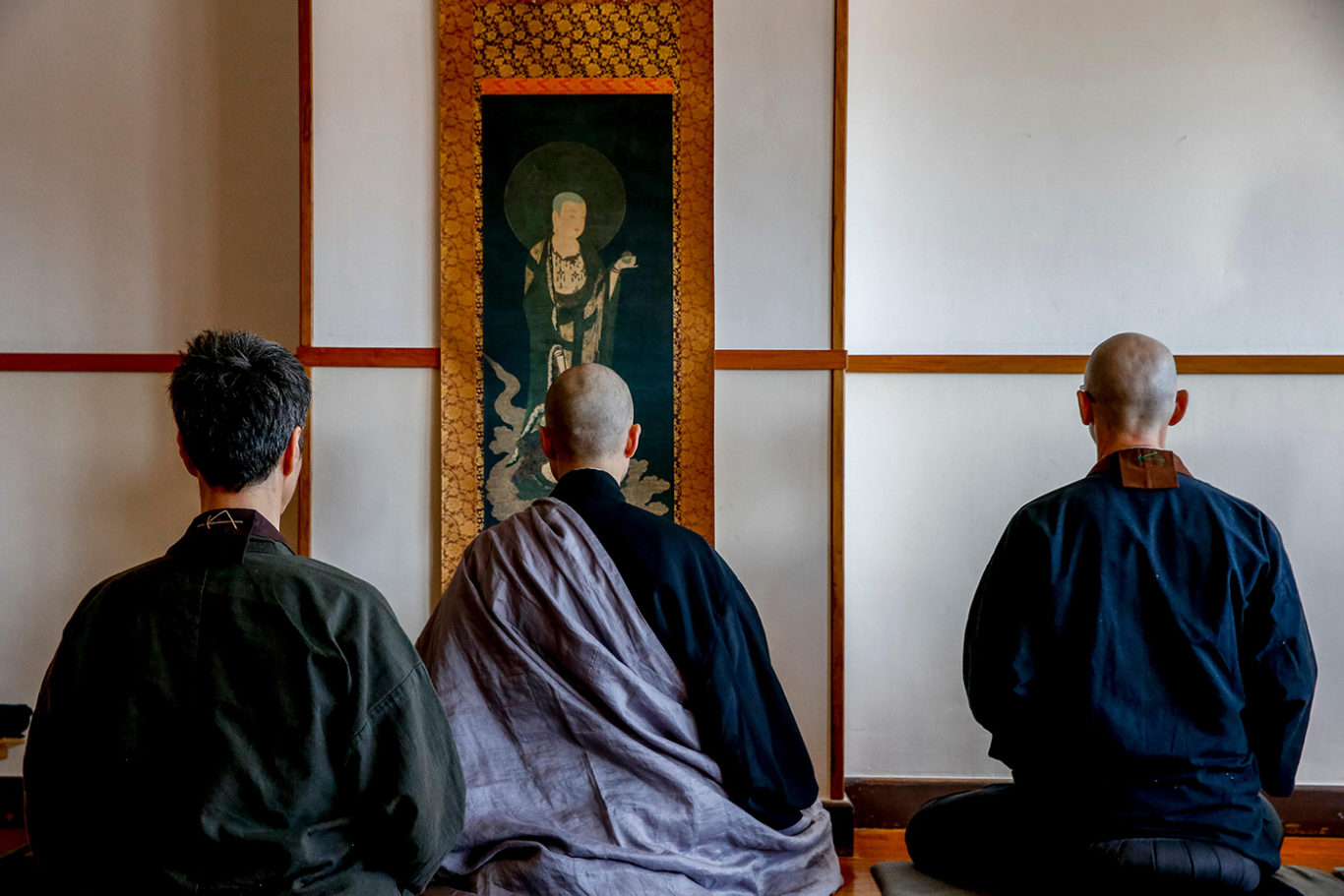
There is no absolute truth in Zen, including Buddha’s own words. Buddha said that we should see his teachings as a raft used to cross the river. Therefore, when a student finishes Zen training, there should be no trace of Zen in him. Zen Buddhism must take leave of Zen Buddhism to enter the field of blessing, which is life itself. In other words, Zen doesn’t cling to its own teachings or to its own authority — it allows itself to be transformed by the reality of life.
The mystic experience of God’s presence often times occurs unintentionally in what we might call liminal space. Being in a state of liminality (from the Latin, meaning “threshold”) is the experience of being on a threshold or in a state between different existential planes. Our experience of liminality may occur when our old understanding breaks down and for a time our experience of the world may be without explanation. With most of our experiences, the understanding passed on to us by our culture and language community is sufficient to explain those experiences.
At times, however, something comes into our lives that causes that understanding to break down. It could be the death of a loved one or some other traumatic event that our understanding is unable to process or interpret. At such moments without a sufficient understanding, we are no longer in our heads but are present in a way that we seldom are when our understanding is intact.
Experience Without Interpretation
When our understanding is intact, we experience life as a routine without much consciousness of what is actually before us. Because our understanding makes life routine and predictable, we are free to be somewhere else in our minds. We are free to think about the past or the future rather than being present.
When some traumatic event enters our lives, it disrupts our understanding and all of our consciousness focuses on the here and now. One circumstance has all of our attention. and we are in the liminal space of pure experience. The traumatic nature of the experience makes it impossible for our understanding to filter out the experience, but it is an experience without interpretation because the filters that normally mold and make sense of out experience are inadequate.
A monastic heart is evocative of the essence of monasticism, which is a heart centered on love of creation. The monastic heart is an ember burning brightly that illuminates the seeker — focusing one on the sacred.
Common to All
We all have a monastic heart, an illuminated heart centered on the love of the divine in all things. We are born with it, and are also constituted by it. This isn’t an achievement of our being — it’s that by which we are made: a heart illuminated, longing for its source.





 Who Knows Anyhow?