
War of the Worldviews – The Battle Between Science and Spirituality

War of Worldviews
War of the Worldviews: Science Vs. Spirituality

Deepak Chopra & Leonard Mlodinow 


According to Physicist Leonard Mlodninow, Science says…

Science can answer the seemingly intractable question of how the universe came into being, and there is reason to believe that science will eventually be able to explain the origins of consciousness, too. Science is an ever-advancing process, and the end is not in sight. If at some future date we are able to explain the mind in terms of the activity of neurons, if all our mental processes do prove to have their source in the flow of charged ions within nerve cells, that would not mean that science denies the worth of “love, trust, faith, beauty, awe, wonder, compassion, truth, the arts, morality, and the mind itself.”

To explain something is not to diminish or deny its worth. It is also important to recognize that even if we consider a scientific explanation of our thought processes (or anything else) aesthetically or spiritually unsatisfying or unpalatable, that does not make it false. Our explanations must be guided by truth; truth cannot be adjusted to conform to what we want to hear.

According to Metaphysics Teacher Deepak Chopra, Spirituality says…

The curious thing is that physics, in proposing a universe where consciousness has no place for 13 billion years, undercuts its own foundation. The most advanced aspects of physics, quantum theory, tells us that a subatomic field holds reality together. But then physicists place this field outside ourselves; in other words, human consciousness knows itself, but the field isn’t permitted to do the same. This exclusion forces science into some tortuous claims.

The weakest link in the current argument from science is randomness. The factory’s assembly line produces beautifully made machines, intricate and efficient, each design displaying invention and creativity. Yet when you go around to the back of the plant and look closely, you find a cloud of iron atoms, silica, and plastic polymers swirling mindlessly as they are sucked into the factory. Is it really credible that this cloud of matter and energy, plus an indeterminate amount of time, was enough to lead to a car, all on its own? That is science’s current story about how the Big Bang led to the human brain. Incredibly, when asked if perhaps the Big Bang contained the potential for creativity and intelligence embedded in it, science’s conventional answer is a resounding no. Chaos can produce those things, we are told, given enough time and trillions of random interactions.


Deepak Chopra
Deepak Chopra (Deepak Chopra website, Wikipedia bio)
born 1947

Deepak Chopra is an Indian-born, American author and public speaker. He combines principles from Ayurveda (Hindu traditional medicine) and mainstream medicine. He believes in the primacy of consciousness over matter – that “consciousness creates reality.” Chopra is an alternative medicine advocate and a promoter of popular forms of spirituality. He is a licensed medical doctor, and specialized in endocrinology for many years.
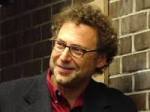
Leonard Mlodinow
Leonard Mlodinow (Wikipedia bio)
born 1954

Leonard Mlodinow is an American physicist, author and screenwriter. Apart from his research and books on popular science, he also co-wrote the screenplay for the 2009 film Beyond the Horizon and has been a screenwriter for television series, including Star Trek: The Next Generation and MacGyver. He co-authored a children’s chapter book series entitled The Kids of Einstein Elementary. Between 2008 and 2010, Mlodinow worked on a book with Stephen Hawking, entitled The Grand Designwhich explores both the question of the existence of the universe and the issue of why the laws of physics are what they are.




Just Be Yourself — Enlightened As You Are

To exert yourselves in religious practice, trying to produce enlightenment by doing religious practices and zazen [sitting meditation], is all wrong, too. There’s no difference between the mind of all the buddhas and the Buddha Mind of each one of you. But by wanting to realize enlightenment, you create a duality between the one who realizes enlightenment and what it is that’s being realized. When you cherish even the smallest desire to realize enlightenment, right away you leave behind the realm of the Unborn and go against the Buddha Mind. This Buddha Mind you have from your parents innately is one alone — not two, not three!

Bankei Zen
Bankei Zen: Translations from the Record of Bankei

translated by Peter Haskel

.

.


Bankei
Bankei Yōtaku

1622-1693

Bankei was a Japanese Rinzai Zen master and abbot. He was an immensely popular and influential teacher who spoke directly, avoiding sutras (scriptures) and ceremony. He adhered to no particular school and his teaching was remarkably individual and raw — the essence of Zen. His concern was with the truth as an immediate experience, not with a systematic approach to a far off goal.

Bankei preached what he had discovered in his own experience — “the unborn” or “the birthless Buddha-mind” — and he spoke in plain language that anyone could understand. He is best known for his talks on the Unborn as he called it. According to D. T. Suzuki, Bankei, together with Dogen (1200-1253) and Hakuin (1686 – 1768), is one of the most important Japanese Zen masters, and his Unborn Zen is one of the most original developments in the entire history of Zen thought.

Inside the Life of Jesus

The Christian can accept Jesus as God’s revelation without denying those nonreligious pictures of him as a finite, conditioned individual, describable in terms of the same type of cause-and-effect relationships applicable to all men. For these external accounts only give the outer, externally perceivable events and do not penetrate to the other aspect of Jesus, his inner self. This aspect can only be known by another approach, by participating in the historical community emanating from Jesus’ personal impact upon his contemporaries. Hence the “two-aspect theory of history” is said to allow belief in revelation without any warfare between faith and reason.

A Process Theology
A Process Christology

David Ray Griffin

Does Humanity Have a Fallen Nature?

Much of the greatest writing done by Christian theologians, such as Augustine [4th century], Kierkegaard [1800’s], and Reinhold Niebuhr [20th century], has been motivated by the desire to analyze man’s “original” sin, to show how all his other spiritual problems arise out of this “originating” sin. But what of modern man’s difficulty in honestly believing there is a divine reality, and, hence, any ultimate meaning of life? These problems can, of course, be interpreted as flowing from some underlying perversity common to man, defined as self-centeredness, or pride. But such interpretations seem more ingenious than illuminating.

A Process Theology
A Process Christology
David Ray Griffin

What Does God Mean to Us?

Man cannot speak of “God” except from the perspective of a particular faith; there is no neutral knowledge of deity with which one’s faith can be compared… We must not absolutize anything relative, and this includes our religion and revelation. We should not try to defend our faith; we cannot prove its superiority to other faiths. And we can only say what revelation means for Christians, not what it ought to mean for all men. We cannot say that revelation has not also taken place in other communities. Accordingly, we cannot “prescribe what form religious life must take in all places at all times.”

The Meaning of Revelation

H. Richard Niebuhr


H. Richard Niebuhr
H. Richard Niebuhr
1894-1962

H. Richard Niebuhr is considered one of the most important Christian theological ethicists in 20th century America. He wrote many books, and is most known for The Meaning of RevelationChrist and Culture, and Radical Monotheism and Western Culture. The younger brother of theologian Reinhold Niebuhr, Richard Niebuhr taught for several decades at the Yale Divinity School. Both brothers were, in their day, important figures in the neo-orthodox theological school within American Protestantism. His theology has been one of the main sources of postliberal theology, sometimes called the “Yale school”.

Niebuhr illuminated from many perspectives the split between the oneness and absoluteness of God and the division and relativism in religion and culture. His way of mediating these polarities made him not only a prominent ecumenist, but also an ethicist of universality who recognized God as the value-center for every human being in the world. He promoted a theology of personal responsibility based on an existential faith in God.