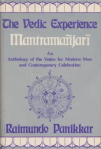
Becoming Aware of the Mystery of Life

The Vedic Revelation is not a historical record or a document concerning something that took place a long while or even a short while ago. It conveys a transtemporal message, if we are permitted to use this word with reference to the present, in order to make us more aware of the mystery of existence and of life. Dawn, Human Birth, and Faith from this perspective, belong together.

The Vedic Experience
Raimon Panikkar


Can We Know God, Or Is God An Illusion?

War of Worldviews
War of the Worldviews: Science Vs. Spirituality

Deepak ChopraLeonard Mlodinow 


Can We Know God, Or Is God An Illusion?

According to Metaphysics Teacher Deepak Chopra, Spirituality says…

One of the greatest failings of religion is the claim that it has a patented way to God. In the West we sorely lack a religious model for becoming illuminated, but we’re getting there. Ironically, we can thank science for forcing us to drop preconceived notions and rely on hard evidence. Reason tells us that the Buddha, Saint Paul, Bernadette of Lourdes, and Sri Ramakrishna underwent a common experience, and like scientists sorting out how an apple and a rose are linked to the same genus, we can fit unique examples of spiritual awakening into the same template.

Your life and your mind sit somewhere on the continuum of awakening, even if we have turned our backs on religion en masse. The conscious process of coming to terms with higher reality is personal, spontaneous, and never on schedule. Countless people have revised their view of material life and decided to walk the spiritual path — but then they stop. Sadly, as long as divinity means the God of organized religion, the spiritual path has little chance of going mainstream. Faiths promote their own agendas. They want followers who pose no doubts. They insist their dogmas were handed down by God, even when history reveals they were devised by powerful clerics.


According to Physicist Leonard Mlodninow,
Science says…

We might have good objective reasons for the views we hold so dearly, and we might not, but either way it is best to be able to asses how convincing the evidence is. This is not always easy. If you ask a friend why she believes in God, or in a higher presence, she probably won’t say she came to that belief through a series of controlled experiments. More likely, she’ll say she feels it, or she just knows. Is God merely an illusion perceived by those who are looking for a divine presence? Science is the best method we know for discovering truth about the material universe, but the powers of science are not without limit. Science does not address the meaning of life, nor can it, for now, explain consciousness. And science will never be able to explain why the universe follows laws. So while science often casts doubts on spiritual beliefs and doctrine insofar as they make representations about the physical world, science does not — and cannot — conclude that God is an illusion.

The Great Divorce — After Life, Then What?

The Great Divorce
The Great Divorce

C. S. Lewis


The Great Divorce — interesting title, but what’s the book about?

In the Preface, C.S. Lewis says “[William] Blake wrote of the Marriage of Heaven and Hell. I have written of their Divorce…The attempt is based on the belief that reality never presents us with an absolutely unavoidable ‘either-or’…that refinement will somehow turn evil into good without our being called on for a final or total rejection of anything we should like to retain.”

C.S. Lewis referred to The Great Divorce as a fantasy with a moral, an imaginative journey into the world of the after-life. Throughout the book we repeatedly find Spirits asking Ghosts to forgive them of some past transgression, but the Ghosts hang onto their past experiences, unable to forgive either themselves or others. Spirits also ask Ghosts to try to believe in God, or at least believe in themselves, but again the Ghosts are unable to follow-through. The Ghosts make excuses that they are being tricked, or that the Spirits don’t understand the depths of what they’ve been through.

The Great Divorce, a mere 147 pages, quickly draws you in and is a fast read. In C.S. Lewis style, the book ends with an interesting, unexpected twist, which I won’t elaborate on here.


Excerpt from The Great Divorce:

The Ghost made a sound something between a sob and a snarl. ‘I wish I’d never been born,’ it said. ‘What are we born for?’ ‘For infinite happiness,’ said the Spirit. ‘You can step out into it at any moment…’ Suddenly the Ghost cried out, ‘No, I can’t. I tell you I can’t…And it’s not fair. They ought to have warned us. I’d never have come. And now — please go away!’

‘Friend,’ said the Spirit. ‘Could you, only for a moment, fix your mind on something not yourself?’ ‘I’ve already given you my full answer,’ said the Ghost, coldly but still tearful.

But, beyond all these, I saw other grotesque phantoms in which hardly a trace of the human form remained; monsters who had faced the journey to the bus stop — perhaps for them it was thousands of miles — and come up to the country of the Shadow of Life and limped far into it over the torturing grass, only to Spit and gibber out in one ecstasy of hatred their envy and (what is harder to understand) their contempt, of joy…

‘How do they come to be here at all?’ I asked my Teacher.

‘I’ve seen that kind converted,’ said he. ‘Those that hate goodness are sometimes nearer than those that know nothing at all about it and think they have it already.’


C.S. Lewis
C.S. Lewis
1898-1963

Born in Belfast, Ireland, C.S. Lewis was a man of many talents. He was a novelist, poet, academic, medievalist, literary critic, essayist, lay theologian, broadcaster, lecturer, and Christian apologist. He held academic positions at both Oxford University, 1925–54, and Cambridge University, 1954–63. Lewis and fellow novelist J. R. R. Tolkien were close friends. They both served on the English faculty at Oxford University, and were active in the informal Oxford literary group known as the Inklings.

Internet resources include The Official Website of C.S. Lewis and the C.S. Lewis Foundation.

C.S. Lewis is known for both his fictional and nonfiction works.

His fictional works include:

His non-fiction Christian apologetics include:


What’s the Process Way of Understanding God?

A process doctrine of Jesus’ significance cannot say that it is first through Christian faith that God works savingly in man, aiding him to find wholeness in life. For God as Holy Spirit is always influencing man toward that end which will bring him the greatest fulfillment consonant with the good of the rest of creation. Neither could a process view say that God’s attitude is different toward Christians and non-Christians. God loves all men equally, feeling their joys and sorrows alike, and willing each man his maximal fulfillment.

The process conceptualization of the Christian vision of reality implies an extension to the scope of the Christian’s concern beyond what is generally suggested by the term “social gospel.” Although man is objectively of much greater value than the other creatures, there is nevertheless no absolute distinction between him and the lower forms of life. Accordingly, the “social gospel” emphasis of Christianity must become an “ecological gospel” emphasis, since the “society” for which God is concerned includes the totality of beings, especially the totality of living beings.

God has led men from very primitive, tribalistic, self-serving notions of deity to the idea that their God is the creator of all men, who loves all his children equally. This has entailed the recognition that special knowledge of God does not increase God’s love for man, but increases man’s responsibility before God. The knowledge that God has achieved all this, in spite of the unviolated freedom and the natural egoism of the creatures, is an adequate ground for hope.

A Process Theology
A Process Christology
David Ray Griffin

.
Originally published in 1973, A Process Christology was the first full-scale Christology based upon process thought. Griffin contends throughout the book that Alfred North Whitehead’s process philosophy provides a basis for clarifying how Jesus of Nazareth is God’s decisive self-revelation. Process philosophy is shown to provide a way to speak of God’s self-revelation in a manner that is consistent with both modern thought and Christian faith.

A Process Christology brings together three dimensions of recent theology:

  • the new quest for the historical Jesus
  • the new-orthodox emphasis on God’s self-revealing activity in history
  • the theology based primarily on the process philosophy of Alfred North Whitehead and Charles Hartshorne

David Ray Griffin 75
David Ray Griffin
born 1939

Professor Emeritus of Philosophy of Religion and Theology at the Claremont School of Theology.

Along with John B. Cobb, Jr., he founded the Center for Process Studies in 1973, a research center of Claremont School of Theology which seeks to promote the common good by means of the relational approach found in process thought.

David Ray Griffin’s books include:


The One Mind of the Universe

You should understand that in buddha-dharma, what is called the dharma gate of the vast total aspect of mind essence includes the whole vast dharma without separating essence and appearance and without speaking of arising and ceasing. [From life to death] and up to and including bodhi and nirvana, there is nothing that is not mind essence. Without exception, all the myriad phenomena in the entire universe are nothing other than this one mind, with everything included and interconnected. These various dharma gateways are all equally one mind. Saying there is no difference at all [between essence ans appearance] is exactly how buddhists understand mind essence.

The Wholehearted Way

Eihei Dogen’s Bendowa


Some key terms from the above quote:

  • bodhi — Sanskrit word meaning enlightenment or awakening
  • buddha-dharma — teaching of the Buddha; another name for Buddhism
  • dharma gate — opens one’s heart to the truth of the dharma
  • nirvana — state of bliss or peace; means “to extinguish,” such as extinguishing the flame of a candle, but it is not understood to mean annihilation, rather, it is thought of as passing into another kind of existence