I May Have Lost My Mind…

I had my gall bladder taken out last fall.

According to some ancients, with the surgical removal of my gall bladder, I may have lost my mind”


It has not always been obvious that brains are involved in thinking, memory, sensation, or perception. In the ancient world, including the great civilizations of Egypt and Mesopotamia, reaching back 5000 years, the brain was regarded as as unimportant organ, because in death it is bloodless and in life it is seldom felt by its owner. The mind was associated with the stomach, the liver or gall bladder, and especially with the heart which is clearly responsive to emotion and effort. Echoes linger from these ideas in modern speech, in words such as ‘phlematic‘, ‘gall‘, ‘choleric‘, as well as ‘heartless‘.
 .
.
.

How We See Things And The Value Of Prediction

What is striking is the huge amount of brain contributing to vision, giving immense added value to the images of the eye. Where does this extra richness for vision come from? By some authorities it is simply denied — they see perception as passive acceptance of what is out there, as a window facing the world. But this does not begin to explain how we see objects from the sketchy images of the eyes, even from sparse lines and crude dots to seemingly inadequate pictures.

Even in ideal conditions object perception is far richer than any possible images in the eyes. The added value must come from dynamic brain processes, employing knowledge stored from the past, to see the present and predict the immediate future. Prediction has immense survival value. It not only makes fast games possible in spite of the physiological signal delays from eye to brain, and brain to hand. Anticipating dangers and potential rewards is essential for survival — made possible by buying time from seeing objects distant in space.

Eye and Brain.
Eye and Brain: The Psychology of Seeing, Fifth Edition (Princeton Science Library)
Richard L. Gregory

Since first published in 1966, Eye and Brain has established itself worldwide as an essential introduction to the basic phenomena of visual perception. Richard L. Gregory offers clear explanations of how we see brightness, movement, color, and objects, and he explores the phenomena of visual illusions (optical illusions) to establish principles about how perception normally works and why it sometimes fails.

Illusion is a major theme in the book, and it provides a comprehensive classification system. There are also sections on what babies see and how they learn to see, on motion perception, the relationship between vision and consciousness, and on the impact of new brain imaging (neuroimaging) techniques.

Eye and Brain is lively and engaging, while scientifically sound and very informative.


Richard Gregory
Richard L. Gregory
1923-2010
.

. Wikipedia
. Professor Richard Gregory
. Obituary at The Guardian

Richard L. Gregory CBE FRS FRSE was a British psychologist and Emeritus Professor of Neuropsychology at the University of Bristol, England. Gregory was strongly involved with the Royal Institution (Ri) of Great Britain for over 40 years. His Ri Christmas Lectures in 1967, titled The Intelligent Eye, are noteworthy. Gregory was particularly enthused by the Ri’s role in igniting a curiosity about science and technology in young people.

Gregory received the Michael Faraday Prize, awarded by the Royal Society of London for “excellence in communicating science to UK audiences”, in 1992.

Richard L. Gregory’s high honors: CBE (Order of the British Empire), FRS (Fellow of the Royal Society of London), FRSE (Royal Society of Edinburgh, Scotland).

Some Books Written by Richard L. Gregory:


Scientific Truth – How Do We Know What’s Objective, What’s Subjective?

We would like to think science is immune to dogmatism; that the neutrality of data provides us with a fail-proof basis for judging the truth, independent of psychological biases. Yet we’ve known since Thomas S. Kuhn that, in fact, such an idealized picture of how science works is not at all true. The difficulty of interpreting statistical data compounds the problem. It’s not enough to observe an effect only once. After all, different kinds of unforeseen circumstances could potentially produce the effect by chance. So to tie the effect to a specific cause — or exclude a certain cause — one needs to observe it a sufficient number of times. This is where statistics come in.

If one’s statistical conclusions are in accordance with the reigning scientific paradigm, it is enough to demonstrate that the odds of a certain effect occurring against chance are very small. However, if the conclusions contradict the reigning paradigm, critics can always dismiss the evidence on the basis that, theoretically, any pattern can be found in the data if random effects can’t be completely ruled out.

This, obviously, is a double-standard that injects bias in what should be objective science. Yet, when odds are more than a trillion to one (Princeton, 2015), critics continue to dismiss results on the basis that any pattern can theoretically be found in random data. So, if double standards are stretched a little further, we can make the reigning paradigm virtually unfalsifiable.

As an activity carried out by people, science is as vulnerable to psychological biases as any other human endeavor. The tricky and even contradictory nature of chance and randomness renders scientific judgment vulnerable to bigotry and dogmatism, particularly when it comes to statistical evidence. Though scientists may fancy their art as something above human shortcomings, they themselves are still just humans. It is up to the rest of us to remain cognizant of this and maintain critical judgment of what we hear from the bastions of science.

Brief Peeks Beyond
Brief Peeks Beyond: Critical Essays on Metaphysics, Neuroscience, Freewill, Skepticism, and Culture

Bernardo Kastrup

Background on Bernardo Kastrup
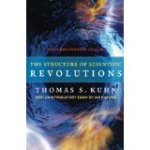


The Structure of Scientific Revolutiuons
The Structure of Scientific Revolutions, 3rd Edition
Thomas S. Kuhn

. Wikipedia
. Amazon


Thomas S. Kuhn
Thomas S. Kuhn
1922-1966

. Internet Encyclopedia of Philosophy
Stanford Encyclopedia of Philosophy
. Wikipedia

Thomas S. Kuhn is one of the most influential philosophers of science of the twentieth century, perhaps the most influential.

Although trained as a physicist at Harvard University, Kuhn became a historian and philosopher of science. His book The Structure of Scientific Revolutions (1962) is one of the most cited academic books of all time, and has been influential in both academic and popular circles, introducing the term paradigm shift, which has since become an English-language idiom.

The Structure of Scientific Revolutions helped inaugurate a revolution—the 1960s historiographic revolution—by providing a new image of science. For Kuhn, scientific revolutions involve paradigm shifts that punctuate periods of stasis or normal science. Towards the end of his career, Kuhn underwent a paradigm shift of his own—from a historical philosophy of science to an evolutionary one.

Kuhn made notable claims concerning the progress of scientific knowledge: that scientific fields undergo periodic “paradigm shifts“, rather than solely progressing in a linear and continuous way, and these paradigm shifts open up new approaches to understanding what scientists would never have considered valid before.

Kuhn’s new image of science also included the following:

  • scientific truth, at any given moment, cannot be established solely by objective criteria, but is defined by a consensus of a scientific community
  • competing paradigms are frequently incommensurable; that is, they are competing and irreconcilable accounts of reality
  • our comprehension of science can never rely wholly upon “objectivity” alone, but must also account for subjective perspectives
  • all objective scientific conclusions are ultimately founded upon the subjective conditioning/worldview of researchers and participants


Where Are Our Memories Located? Brain, Body, Or Both…

One could argue that, if memories are indeed associated with the body as a whole, amputation of an organ or general tissue loss should noticeably impair recall, which doesn’t seem to be the case. The problem is: it isn’t the case with the brain  either. Memory lapses in Alzheimer’s patients only become noticeable after 40% to 50% of brain cells are already dead.

Illnesses that affect only the brain, such as Alzheimer’s, as well as localized physical trauma to the brain alone, can significantly impair recall even when the rest of the body remains intact. This doesn’t imply, however, that memories are all in the brain. It suggests only that brain illness and trauma can impair our ability to amplify otherwise obfuscated experiences, wherever these experiences may reside.

We know that the reverberation process that amplifies mental contents happens only in the brain, taking up relatively small amounts of neurons in specific areas. It’s thus no surprise that, if damage to key brain pathways prevents the flow of information into these specific areas, lucid awareness of the corresponding experiences becomes impossible. The memories will still be there in the body, but the patient will report an inability to remember — that is, to become lucidly aware of — certain things.

Brief Peeks Beyond
Brief Peeks Beyond: Critical Essays on Metaphysics, Neuroscience, Freewill, Skepticism, and Culture

Bernardo Kastrup

Background on Bernardo Kastrup

Want Meaning And Purpose? What Theology And Natural Sciences Offer Us

Theology is an attempt to see past the ‘brain scan’ and infer how it ‘feels to feel’ love in a direct way; it is an attempt to see past the footprints and understand where the hiker wants to go, as well as why he wants to go there. In this sense, theology and the natural sciences are entirely complimentary.

Both nature itself and religious texts are expressions of a mysterious divine perspective and, as such, valid sources of concrete data for theological study. Theology has a clear, concrete subject, as well as a clear and concrete challenge: to decode the divine mystery behind the images — both ‘unconscious’ and empirical — that we experience during life.

While the natural sciences attempt to model and predict patterns and regularities of nature, theology attempts to interpret those patterns and regularities so to make some sense of their first-person perspective; that is, God’s perspective. Theology also attempts to interpret the symbols and allegories in religious literature so to reveal the ‘unconscious’ psychic processes behind them, which betray something about the inner-workings of God’s mind. In both cases, theology represents an attempt to provide a hermeneutics of texts and nature. This is essential, because a life worth living isn’t only about practical applications; it is about meaning and purpose.

Brief Peeks Beyond
Brief Peeks Beyond: Critical Essays on Metaphysics, Neuroscience, Freewill, Skepticism, and Culture

Bernardo Kastrup

Background on Bernardo Kastrup