How Was Stonehenge Built?

Stonehenge

Located in England

Stonehenge is a monument located near Salisbury in southern England. It is nearly as old as the pyramids, though on a smaller scale. It was built with a sophisticated understanding of geometry and the movement of the sun.

Layout

Stonehenge is a vast arrangement of concentric circles of stone and holes that were perhaps intended to hold posts or other stones. The remains of Stonehenge, which was built in three phases over a period of about 1,000 years between 3000-2000 BC, consists of huge standing stones, some surmounted by stone lintels (horizontal blocks).
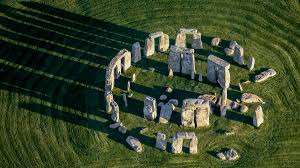
Stonehenge
(overhead view)

The arrangement of the stones shows an ability to work with circles in space, and the curved lintel stones demonstrate an understanding of arcs of a circle – when all were in place, the lintel stones would have formed a true circle, not a series of straight lines.

Summer Solstice

The only tools available to the builders were picks made of deer antlers and stone hammers, yet they were able to calculate and measure portions of a circle and distances. The northeast axis aligns with the position of the rising sun at the summer solstice (longest day of the year), suggesting that some form of calendar had been developed.

Mathematics: How the World Works
How the World Works: Mathematics: From Creating the Pyramids to Exploring Infinity
Anne Rooney

Background on Anne Rooney

How Does Cognition Relate To Perception?

Cognition

Cognition & Perception 

Cognition is the mental act or process of acquiring knowledge and understanding through thought, experience and the senses. Cognitive processes use existing knowledge and generate new knowledge. Cognitive processes are analyzed from different perspectives within different contexts, in a number of fields, including: neuroscience, psychiatry, psychology, education, philosophy, anthropology, biology, and computer science.

Perception is the organization, identification, and interpretation of sensory information in order to represent and understand the presented information, or the environment.

Nine Laws of Cognition

  1. There are no benefits without costs.
  2. Action molds perception.
  3. Feeling comes first.
  4. The mind can override perception.
  5. Cognition mirrors perception.
  6. Spatial thinking is the foundation of abstract thought.
  7. The mind fills in missing information.
  8. When thought overflows the mind, the mind puts it into the world.
  9. We organize the stuff in the world the way we organize the stuff in the mind.

Mind in Motion
Mind in Motion: How Action Shapes Thought

Barbara Tversky

How Does Action Shape Thought?

First Comes Movement

A creature didn’t think in order to move; it just moved, and by moving it discovered the world that then formed the content of its thoughts.

…..Larissa MacFarquhar, “The mind-expanding ideas of Andy Clark,” The New Yorker

Action Shapes Thought

How do we think? The natural answer is: with words. Everything from ancient philosophy to the theory of evolution is assembled and transmitted through language. But our ancestors did not speak, and neither do infants – yet they still think. So, if we can think before we have language, then what are our thoughts made of?

In Mind in Motion, psychologist Barbara Tversky makes the case that movement and our interactions in space, not language, are the true foundation of thought.

Spatial Thinking

Spatial thinking enables us to draw meaning from: our bodies and their actions in the world; shape, size, and relation; and transformation, trajectory, and speed. Actions on thought are like actions on objects.

Spatial thinking underlies our ability to create and use maps, assemble furniture, devise football strategies, design buildings, create art, and understand the flow of people, traffic, water, and ideas. Spatial thinking even underlies the structure and meaning of language: why we say we push ideas forward or tear them apart, and why we’re feeling up or have grown distant.

Science, art, literature, and the great ideas of the world – these originated not just in our brains, but in our entire bodies.

Mind in Motion
Mind in Motion: How Action Shapes Thought

Barbara Tversky


Atoms – Ancient Beliefs & Modern Science

Atoms

Ancient Beliefs

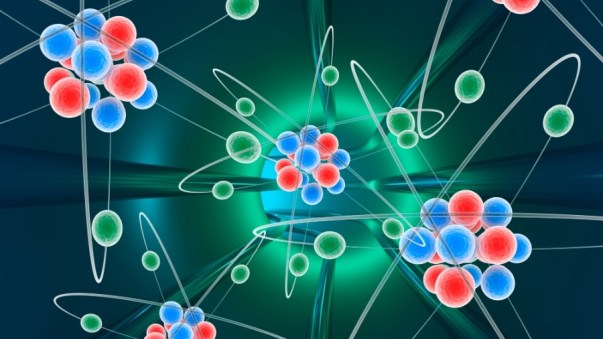
Belief in atoms as the building blocks of matter has an ancient history. Some Buddhist thinkers in India, during the 6th century BCE, believed all matter to be made up of atoms, which they regarded as a form of energy. In addition, Greek pre-atomists such as Empedocles and Anaxagoras also conceived of invisibly tiny particles of matter. These early philosopher-scientists arrived at their view through a process of deductive thought alone.

Modern Science

Although atomism fell out of favor for many centuries, it was, in the end the model that would prevail, later supported by experimentation and observation. But the early atomists weren’t quite right. Their belief that atoms are the smallest, indivisible particles of matter proved to be incorrect, because atoms are made up of subatomic particles. And, as scientists have probed inside the atom, it’s proven to be a bizarre and unpredictable place.

How the World Works: Physics
How the World Works: Physics: From Natural Philosophy to the Enigma of Dark Matter
Anne Rooney

Background on Anne Rooney

How Big Is A Neutron Star?

Neutron Star

Size of a Neutron Star

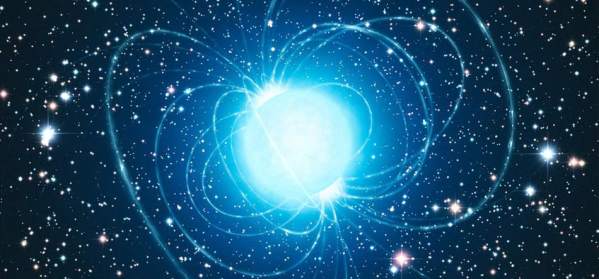
One of the wonders of the cosmos is the neutron star, a star in which the atoms have collapsed. In a single cubic centimeter of neutron star material – a chunk little more than the size of a sugar cube – there are are around 100 million tons of matter. An entire neutron star occupies a sphere that is roughly the size across the island of Manhattan (about 14 miles).

Formation of a Neutron Star

A neutron star is the collapsed core of a giant star. Neutron stars are the smallest and densest stars, not counting black holesquark stars and strange stars.

Neutron stars result from the supernova explosion of a massive star, combined with gravitational collapse, that compresses the core past white dwarf star density to that of atomic nuclei. Once formed, they no longer actively generate heat, and cool over time.

There are thought to be around 100 million neutron stars in the Milky Way, a figure obtained by estimating the number of stars that have undergone supernova explosions.

The Universe Inside You
The Universe Inside You: The Extreme Science of the Human Body

Brian Clegg

Background on Brian Clegg