Can We Know God, Or Is God An Illusion?

War of Worldviews
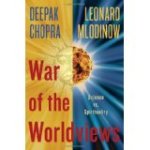
War of the Worldviews: Science Vs. Spirituality

Deepak ChopraLeonard Mlodinow 


Can We Know God, Or Is God An Illusion?

According to Metaphysics Teacher Deepak Chopra, Spirituality says…

One of the greatest failings of religion is the claim that it has a patented way to God. In the West we sorely lack a religious model for becoming illuminated, but we’re getting there. Ironically, we can thank science for forcing us to drop preconceived notions and rely on hard evidence. Reason tells us that the Buddha, Saint Paul, Bernadette of Lourdes, and Sri Ramakrishna underwent a common experience, and like scientists sorting out how an apple and a rose are linked to the same genus, we can fit unique examples of spiritual awakening into the same template.

Your life and your mind sit somewhere on the continuum of awakening, even if we have turned our backs on religion en masse. The conscious process of coming to terms with higher reality is personal, spontaneous, and never on schedule. Countless people have revised their view of material life and decided to walk the spiritual path — but then they stop. Sadly, as long as divinity means the God of organized religion, the spiritual path has little chance of going mainstream. Faiths promote their own agendas. They want followers who pose no doubts. They insist their dogmas were handed down by God, even when history reveals they were devised by powerful clerics.


According to Physicist Leonard Mlodninow,
Science says…

We might have good objective reasons for the views we hold so dearly, and we might not, but either way it is best to be able to asses how convincing the evidence is. This is not always easy. If you ask a friend why she believes in God, or in a higher presence, she probably won’t say she came to that belief through a series of controlled experiments. More likely, she’ll say she feels it, or she just knows. Is God merely an illusion perceived by those who are looking for a divine presence? Science is the best method we know for discovering truth about the material universe, but the powers of science are not without limit. Science does not address the meaning of life, nor can it, for now, explain consciousness. And science will never be able to explain why the universe follows laws. So while science often casts doubts on spiritual beliefs and doctrine insofar as they make representations about the physical world, science does not — and cannot — conclude that God is an illusion.

War of the Worldviews – The Battle Between Science and Spirituality

War of Worldviews
War of the Worldviews: Science Vs. Spirituality

Deepak Chopra & Leonard Mlodinow 


According to Physicist Leonard Mlodninow, Science says…

Science can answer the seemingly intractable question of how the universe came into being, and there is reason to believe that science will eventually be able to explain the origins of consciousness, too. Science is an ever-advancing process, and the end is not in sight. If at some future date we are able to explain the mind in terms of the activity of neurons, if all our mental processes do prove to have their source in the flow of charged ions within nerve cells, that would not mean that science denies the worth of “love, trust, faith, beauty, awe, wonder, compassion, truth, the arts, morality, and the mind itself.”

To explain something is not to diminish or deny its worth. It is also important to recognize that even if we consider a scientific explanation of our thought processes (or anything else) aesthetically or spiritually unsatisfying or unpalatable, that does not make it false. Our explanations must be guided by truth; truth cannot be adjusted to conform to what we want to hear.

According to Metaphysics Teacher Deepak Chopra, Spirituality says…

The curious thing is that physics, in proposing a universe where consciousness has no place for 13 billion years, undercuts its own foundation. The most advanced aspects of physics, quantum theory, tells us that a subatomic field holds reality together. But then physicists place this field outside ourselves; in other words, human consciousness knows itself, but the field isn’t permitted to do the same. This exclusion forces science into some tortuous claims.

The weakest link in the current argument from science is randomness. The factory’s assembly line produces beautifully made machines, intricate and efficient, each design displaying invention and creativity. Yet when you go around to the back of the plant and look closely, you find a cloud of iron atoms, silica, and plastic polymers swirling mindlessly as they are sucked into the factory. Is it really credible that this cloud of matter and energy, plus an indeterminate amount of time, was enough to lead to a car, all on its own? That is science’s current story about how the Big Bang led to the human brain. Incredibly, when asked if perhaps the Big Bang contained the potential for creativity and intelligence embedded in it, science’s conventional answer is a resounding no. Chaos can produce those things, we are told, given enough time and trillions of random interactions.


Deepak Chopra
Deepak Chopra (Deepak Chopra website, Wikipedia bio)
born 1947

Deepak Chopra is an Indian-born, American author and public speaker. He combines principles from Ayurveda (Hindu traditional medicine) and mainstream medicine. He believes in the primacy of consciousness over matter – that “consciousness creates reality.” Chopra is an alternative medicine advocate and a promoter of popular forms of spirituality. He is a licensed medical doctor, and specialized in endocrinology for many years.

Leonard Mlodinow
Leonard Mlodinow (Wikipedia bio)
born 1954

Leonard Mlodinow is an American physicist, author and screenwriter. Apart from his research and books on popular science, he also co-wrote the screenplay for the 2009 film Beyond the Horizon and has been a screenwriter for television series, including Star Trek: The Next Generation and MacGyver. He co-authored a children’s chapter book series entitled The Kids of Einstein Elementary. Between 2008 and 2010, Mlodinow worked on a book with Stephen Hawking, entitled The Grand Designwhich explores both the question of the existence of the universe and the issue of why the laws of physics are what they are.


What Universe Do You Live In?

The word “universe” comes from the Latin unus, meaning “one,” combined with versus, which is the past particle of vertere, meaning “to turn.” Thus the original and literal meaning of “universe” was “everything turned into one.” In the last couple centuries, the word has been taken to mean the totality of physical reality. There is a possibility that there may exist multiple universes, multiple space-time continuums. But even if there is only a single “universe,” there are many universes within our one universe, some visible, some not. Certainly there are many different vantage points.

The Accidental Universe

Alan Lightman


In The Accidental Universe, theoretical physicist Alan Lightman presents seven intriguing essays exploring possibilities of the universe we live in. The essays are clearly written and engaging, presenting technical subject matter in an accessible way for a general audience.

Here’s a list of the possibilities of the universe set forth in The Accidental Universe:

  1. The  Accidental Universe
  2. The Temporary Universe
  3. The Spiritual Universe
  4. The Symmetrical Universe
  5. The Gargantuan Universe
  6. The Lawful Universe
  7. The Disembodied Universe

Alan Lightman
Alan Lightman

born 1948

Alan Lightman is an American physicist, writer, and social entrepreneur (draws upon business techniques to find solutions to social problems). He is a professor of humanities at MIT Massachusetts Institute of Technology, and author of the international bestseller Einstein ‘s Dreams. He was the first professor at MIT to receive a joint appointment in the sciences and the humanities.

Stephen Hawking – Origin of the Universe

The odds against a universe like ours emerging out of something like the Big Bang are enormous, I think there are clearly religious implications whenever you start to discuss the origins of the universe. [from a discussion with Stephen Hawking]

Beyond the Black Hole


Stephen Hawking’s Universe: Beyond the Black Hole
John Boslough
1943-2010

John Boslough was a reporter who covered stories from China and the former Soviet Union and wrote five books, including Stephen Hawking’s Universe, a biography of theoretical physicist Stephen Hawking.
.


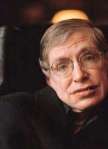
Stephen Hawking
Stephen Hawking

born 1942

Stephen Hawking is perhaps the greatest scientist of our day. He is a theoretical physicist, cosmologist, author, and Director of Research at the Centre for Theoretical Cosmology within the University of Cambridge.

Stephen Hawking was born in Oxford, England. At an early age, he showed a passion for science and study of the sky. At age 21, while studying cosmology at the University of Cambridge, he was diagnosed with amyotrophic lateral sclerosis (commonly called Lou Gehrig’s disease).

Despite his debilitating illness, Hawking has done groundbreaking work in physics and cosmology, and his several books have helped to make science accessible to everyone.

Stephen Hawking’s life story was the subject of the 2014 Academy Award-winning film The Theory of Everything.

Stephen Hawking is the author of these popular books:

The Horrors We Bless

The scientist Jacob Bronowski faced a question on the ultimate fate of humanity one night in 1945 when he was driven in a Jeep through the ashy ruins of Nagasaki. In the dark, he had not sensed that they had moved from the open country to the “city.” The “city” was a dark and desolate ruin. The only sound he heard was that of an American military radio playing the popular tune “Is You Is or Is You Ain’t My Baby?” In the context the question was a piercing one.

What Bronkowski saw in this peak moment of truth was ‘civilization face to face with its own implications. The implications are both the industrial slum that Nagasaki was before it was bombed, and the ashy desolation that the bomb made of the slum. And civilization asks of both ruins, ‘Is You Is, or Is You Ain’t My Baby?’ [quoted from Bronowski in Science and Human Values]

The Horrors We Bless
The Horrors We Bless: Rethinking the Just-War Legacy

Daniel C. Maguire


.

Daniel Maguire
Daniel C. Maguire
1927-2013

Maguire was a professor at Marquette University. He specialized in religious ethics focusing upon issues of social justice and medical and ecological ethics.

.
Daniel Maguire’s books include:

He wrote over 200 articles in professional journals and magazines.


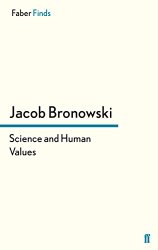
Science and Human Values
Jacob Bronowski


.

.
.

Jacob Bronkowski
Jacob Bronowski
1908-1974

Bronkowski was a Polish-Jewish British mathematician, biologist, historian of science, theatre author, poet and inventor.

He is best remembered as the presenter and writer of the 1973 BBC television documentary series, The Ascent of Man, and the accompanying book. For the BBC series,  Bronowski travelled around the world in order to trace the development of human society through its understanding of science.