Just Be Yourself — Enlightened As You Are

To exert yourselves in religious practice, trying to produce enlightenment by doing religious practices and zazen [sitting meditation], is all wrong, too. There’s no difference between the mind of all the buddhas and the Buddha Mind of each one of you. But by wanting to realize enlightenment, you create a duality between the one who realizes enlightenment and what it is that’s being realized. When you cherish even the smallest desire to realize enlightenment, right away you leave behind the realm of the Unborn and go against the Buddha Mind. This Buddha Mind you have from your parents innately is one alone — not two, not three!
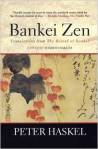
Bankei Zen
Bankei Zen: Translations from the Record of Bankei

translated by Peter Haskel

.

.
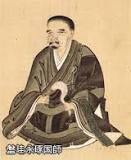

Bankei
Bankei Yōtaku

1622-1693

Bankei was a Japanese Rinzai Zen master and abbot. He was an immensely popular and influential teacher who spoke directly, avoiding sutras (scriptures) and ceremony. He adhered to no particular school and his teaching was remarkably individual and raw — the essence of Zen. His concern was with the truth as an immediate experience, not with a systematic approach to a far off goal.

Bankei preached what he had discovered in his own experience — “the unborn” or “the birthless Buddha-mind” — and he spoke in plain language that anyone could understand. He is best known for his talks on the Unborn as he called it. According to D. T. Suzuki, Bankei, together with Dogen (1200-1253) and Hakuin (1686 – 1768), is one of the most important Japanese Zen masters, and his Unborn Zen is one of the most original developments in the entire history of Zen thought.

Inside the Life of Jesus

The Christian can accept Jesus as God’s revelation without denying those nonreligious pictures of him as a finite, conditioned individual, describable in terms of the same type of cause-and-effect relationships applicable to all men. For these external accounts only give the outer, externally perceivable events and do not penetrate to the other aspect of Jesus, his inner self. This aspect can only be known by another approach, by participating in the historical community emanating from Jesus’ personal impact upon his contemporaries. Hence the “two-aspect theory of history” is said to allow belief in revelation without any warfare between faith and reason.

A Process Theology
A Process Christology

David Ray Griffin

Does Humanity Have a Fallen Nature?

Much of the greatest writing done by Christian theologians, such as Augustine [4th century], Kierkegaard [1800’s], and Reinhold Niebuhr [20th century], has been motivated by the desire to analyze man’s “original” sin, to show how all his other spiritual problems arise out of this “originating” sin. But what of modern man’s difficulty in honestly believing there is a divine reality, and, hence, any ultimate meaning of life? These problems can, of course, be interpreted as flowing from some underlying perversity common to man, defined as self-centeredness, or pride. But such interpretations seem more ingenious than illuminating.

A Process Theology
A Process Christology
David Ray Griffin

What Universe Do You Live In?

The word “universe” comes from the Latin unus, meaning “one,” combined with versus, which is the past particle of vertere, meaning “to turn.” Thus the original and literal meaning of “universe” was “everything turned into one.” In the last couple centuries, the word has been taken to mean the totality of physical reality. There is a possibility that there may exist multiple universes, multiple space-time continuums. But even if there is only a single “universe,” there are many universes within our one universe, some visible, some not. Certainly there are many different vantage points.

The Accidental Universe

Alan Lightman


In The Accidental Universe, theoretical physicist Alan Lightman presents seven intriguing essays exploring possibilities of the universe we live in. The essays are clearly written and engaging, presenting technical subject matter in an accessible way for a general audience.

Here’s a list of the possibilities of the universe set forth in The Accidental Universe:

  1. The  Accidental Universe
  2. The Temporary Universe
  3. The Spiritual Universe
  4. The Symmetrical Universe
  5. The Gargantuan Universe
  6. The Lawful Universe
  7. The Disembodied Universe

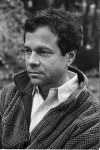
Alan Lightman
Alan Lightman

born 1948

Alan Lightman is an American physicist, writer, and social entrepreneur (draws upon business techniques to find solutions to social problems). He is a professor of humanities at MIT Massachusetts Institute of Technology, and author of the international bestseller Einstein ‘s Dreams. He was the first professor at MIT to receive a joint appointment in the sciences and the humanities.

Stephen Hawking – Origin of the Universe

The odds against a universe like ours emerging out of something like the Big Bang are enormous, I think there are clearly religious implications whenever you start to discuss the origins of the universe. [from a discussion with Stephen Hawking]

Beyond the Black Hole


Stephen Hawking’s Universe: Beyond the Black Hole
John Boslough
1943-2010

John Boslough was a reporter who covered stories from China and the former Soviet Union and wrote five books, including Stephen Hawking’s Universe, a biography of theoretical physicist Stephen Hawking.
.


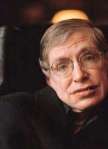
Stephen Hawking
Stephen Hawking

born 1942

Stephen Hawking is perhaps the greatest scientist of our day. He is a theoretical physicist, cosmologist, author, and Director of Research at the Centre for Theoretical Cosmology within the University of Cambridge.

Stephen Hawking was born in Oxford, England. At an early age, he showed a passion for science and study of the sky. At age 21, while studying cosmology at the University of Cambridge, he was diagnosed with amyotrophic lateral sclerosis (commonly called Lou Gehrig’s disease).

Despite his debilitating illness, Hawking has done groundbreaking work in physics and cosmology, and his several books have helped to make science accessible to everyone.

Stephen Hawking’s life story was the subject of the 2014 Academy Award-winning film The Theory of Everything.

Stephen Hawking is the author of these popular books: