Fifth Principle of Biocentrism – The Universe is Fine-tuned for Life

The Universe is Fine-tuned for Life

You either have an astonishingly improbable coincidence revolving around the indisputable fact that the cosmos could have any properties but happens to have exactly the right ones for life or else you have exactly what must be seen if indeed the cosmos is biocentric. Either way, the notion of a random billiard-ball cosmos that could have had any forces that boast any range of values, but instead has the weirdly specific ones needed for life, looks impossible enough to seem downright silly.

And if any of this seems too preposterous, just consider the alternative, which is what contemporary science asks us to believe: that the entire universe, exquisitely tailored for our existence, popped into existence out of nothingness. Who in their right mind would accept such a thing? Has anyone offered any credible suggestion for how, some 14 billion years ago, we suddenly got a hundred trillion times more than a trillion trillion trillion tons of matter from — zilch? Has anyone explained how dumb carbon, hydrogen, and oxygen molecules could have, by combining accidentally, become sentient — aware! — and then utilized this sentience to acquire a taste for hot dogs and the blues? How any possible natural random process could mix those molecules in a blender for a few billion years so that out would pop woodpeckers and George Clooney? Can anyone conceive of the edge of the cosmos? Infinity? Or how particles still spring out of nothingness? Or conceive of any of the many proposed extra dimensions that must exist everywhere in order for the cosmos to consist fundamentally of interlocking strings and loops? Or explain how ordinary elements can ever rearrange themselves so that they continue to acquire self-awareness and loathing for macaroni salad? Or, again, how every one of dozens of forces and constants are precisely fine-tuned for the existence of life?

Is it not obvious that science only pretends to explain the cosmos on its fundamental level?


There are 7 Principles of Biocentrism, all of which are built on established science, and all of which demand a rethinking of the physical universe.

Fifth Principle of Biocentrism: The very structure of the universe is explainable only through biocentrism. The universe is fine-tuned for life, which makes perfect sense as life creates the universe, not the other way around. The universe is simply the complete spatio-temporal logic of the self.

Biocentrism
Biocentrism: How Life and Consciousness are the Keys to Understanding the True Nature of the Universe

Robert Lanza, MD
with Bob Berman

Fourth Principle of Biocentrism – Consciousness

Measurement in Quantum Physics Requires Consciousness

Physicists have analyzed and revised their equations in a vain attempt to arrive at a statement of natural laws that in no way depends on the circumstances of the observer. Indeed, Eugene Wigner (1902-1995), one of the twentieth century’s greatest physicists, and recipient of the Nobel Prize in Physics in 1963, stated that it is not possible to formulate the laws of physics in a fully consistent way without reference to the consciousness of the observer. Wigner made quantum physics even more subjective than had John von Neumann or even Erwin Schrödinger with his famous Cat Paradox. Wigner claimed that a quantum measurement requires the mind of a conscious observer, without which wave functions never collapse and nothing ever happens in the universe.

So when quantum theory implies that consciousness must exist, it tacitly shows that the content of the mind is the ultimate reality, and that only an act of observation can confer shape and form to reality — from a dandelion in a meadow to sun, wind, and rain.


There are 7 Principles of Biocentrism, all of which are built on established science, and all of which demand a rethinking of the physical universe.

Fourth Principle of Biocentrism: Without consciousness, “matter” dwells in an undetermined state of probability. Any universe that could have preceded consciousness only existed in a probability state.

Biocentrism
Biocentrism: How Life and Consciousness are the Keys to Understanding the True Nature of the Universe

Robert Lanza, MD
with Bob Berman

How Do We See Our World?

We have learned that we do not see directly, but mediately, and that we have no means of correcting these colored and distorting lenses which we are, or of computing the amount of their errors. Perhaps these sense-lenses have a creative power; perhaps there are no objects.

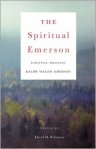
The Spiritual Emerson
Experience (1844)
Essay from The Works of Ralph Waldo Emerson

see also The Spiritual Emerson: Essential Writings by Ralph Waldo Emerson


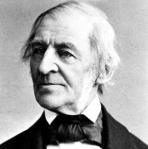
Ralph Waldo Emerson
Ralph Waldo Emerson
1803-1882

Ralph Waldo Emerson was an American essayist, lecturer, and poet who led the Transcendentalist movement of the mid-19th century. He was seen as a champion of individualism and a discerning critic of the countervailing pressures of society. Emerson formulated the philosophy of Transcendentalism in his 1836 essay, Nature. Centered in New England during the 19th century, Transcendentalism was a reaction against scientific rationalism. Emerson disseminated his thoughts through dozens of published essays and more than 1,500 public lectures across the United States.

Internet resources for Ralph Waldo Emerson:

Third Principle of Biocentrism – The Observer

Nothing is Real Unless It’s Perceived

Quantum physics says that before a measurement is made, a subatomic particle doesn’t really exist in a definite place or have an actual motion. Instead, it dwells in a strange nether realm, without actually being anywhere in particular. This blurry indeterminate existence ends only when it is observed — in other words, nothing is real unless it’s perceived.


There are 7 Principles of Biocentrism, all of which are built on established science, and all of which demand a rethinking of the physical universe.

Third Principle of Biocentrism: The behavior of subatomic particles — indeed all particles and objects — is inextricably linked to the presence of an observer. Without the presence of a conscious observer, they at best exist in an undetermined state of probability waves.

Biocentrism
Biocentrism: How Life and Consciousness are the Keys to Understanding the True Nature of the Universe

Robert Lanza, MD
with Bob Berman

Second Principle of Biocentrism – Perception

Cognition is Awareness or Consciousness

Modern knowledge of the brain shows that what appears “out there” is actually occurring within our own minds, with visual and tactile experiences located not in some external disconnected location that we have grown accustomed to regarding as being distant from ourselves. We can refer to all cognition as awareness or consciousness.


There are 7 Principles of Biocentrism, all of which are built on established science, and all of which demand a rethinking of the physical universe.

Second Principle of Biocentrism: Our external and internal perceptions are inextricably intertwined. They are different sides of the same coin and cannot be divorced from one another.

Biocentrism
Biocentrism: How Life and Consciousness are the Keys to Understanding the True Nature of the Universe

Robert Lanza, MD
with Bob Berman