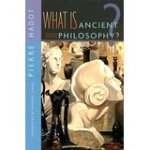
Was Ancient Philosophy a Spiritual Way of Life?

Twentieth- and twenty-first-century academic philosophy has largely lost sight of its ancient origin in a set of spiritual practices ranging from forms of dialogue, via meditative reflection, to theoretical contemplation.  These philosophical practices, as well as the philosophical discourses the different ancient schools developed in conjunction with them, aimed primarily to form, rather than only to inform, the philosophical student.The goal of the ancient philosophies was to cultivate a specific, constant attitude toward existence, by way of the rational comprehension of the nature of humanity and its place in the cosmos.

What is Ancient Philosophy?
Pierre Hadot

Background on Pierre Hadot


How Will Practicing Virtue Transform Us?

Practicing Virtue Engenders Gentleness

The practice of virtues assures a connection between the ecstatic and the everyday. Virtue expresses itself in a particular style of life and in a relationship with others that consists of mildness or gentleness. The secret of gentleness is to be found in a transformation of one’s whole being, a practice of virtue and contemplation that makes one present to Spirit while not excluding presence to other people, the world, and even the body.

Some Important Virtues:
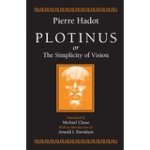
plotinus-or-the-simplicity-of-vision
Plotinus or the Simplicity of Vision

Pierre Hadot

This lively philosophical portrait of Plotinus remains the preeminent introduction to him and his thought.
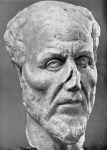


plotinus
Plotinus
204-270 AD

. Wikipedia
. Internet Encyclopedia of Philosophy
. Stanford Encyclopedia of Philosophy

Plotinus was a major Greek-speaking philosopher of the ancient world, influential in Late Antiquity. He is one of the most influential philosophers in antiquity after Plato and Aristotle.

Born in Egypt, Plotinus later moved to Rome, where he lectured and wrote. He is regarded as the founder of Neoplatonism  (a term invented by historians of the 19th century ). In his philosophy there are three principles: the One, the Intellect, and the Soul.  Much of the biographical information about Plotinus comes from Porphyry, a student of Plotinus. In addition, Porphory edited the Enneadsthe complete treatises of Plotinus.

Plotinus’ metaphysical writings have inspired centuries of Pagan, Christian, Islamic and Gnostic metaphysicians and mystics.
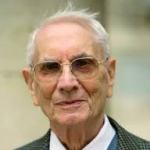

Pierre Hadot
Pierre Hadot
1922-2010

. Internet Encyclopedia of Philosophy
. Wikipedia

Pierre Hadot was a French philosopher and historian of philosophy specializing in ancient philosophy, particularly Neoplatonism. Hadot is best known for his conception of ancient philosophy as a bios (Greek), or way of life. His work has been widely influential in classical studies and on thinkers, including Michel Foucault.

Books written by Pierre Hadot include:

What Is Religion? And Where Does It Come From?

Is Anybody Out There?

What is religion? And where does it come from? Religion comes from the mind of the human animal, so it comes from us. The other animals on earth don’t seem to need religion. And as far as we can tell they haven’t developed any. That’s because they are more at one with their lives than we are. They act instinctively. They go with the flow of existence without thinking about it all the time. The human animal has lost the ability to do that. Our brains have developed in a different way that makes us self-conscious. We are interested in ourselves. We can’t help wondering about things. We can’t help thinking.

And the biggest thing we think about is the universe itself and where it came from. Is there anybody out there who made it? The shorthand word we use for this possible somebody or something is God. Someone who thinks there is a god out there is called a theist. Someone who thinks there’s nobody out there and we’re on our own in the universe is called an atheist. And the study of the god and what it wants from us is called theology.

A Little History of Religion

Richard Holloway

Background on Richard Holloway


Trust in the Unfathomable Mystery of Life

Fearless trust in the unfathomable mystery of life is something all human beings share. This universal human primeval faith is expressed in various traditions in quite different ways, and is formulated in very different terms. But common to all us humans is trust in life, and trust in one another. Faith is ultimately what can join us all together in our innermost being.

Faith Beyond Reason
Faith Beyond Reason: Spirituality for Our Times

David Steindl-Rast & Anselm Grün
.
.
.
.

Links to the Authors:


How Can We Experience the Mystery of Ultimate Reality?

Mystics of all traditions agree that Ultimate Reality, what some call God, is a mystery beyond conceptuality.  They agree because they speak out of experience and intuition, which takes time and meditation.

But even very busy people receive this gift, this experience, again and again. For instance, a mother who cares for her children all day long has no time for meditation. She looks at her child with love, and the child looks at its mother – that is already an encounter and experience out of which bursts this deeper ground beyond all naming. That is a touch of the Unutterable.

Faith Beyond Reason
Faith Beyond Reason: Spirituality for Our Times
David Steindl-Rast & Anselm Grün
.

.
.

Links to the Authors: