How Many Atoms Are In The Human Body?

Inside Human Body

Looking Into a Mirror

Standing in front of a full-length mirror, you can look at your whole body, viewing it as a single remarkable object – a living creature. But you can also dig into details, exploring the ways your body interacts with the world around it, or how it makes use of the energy in the food you eat to get you moving.

Number of Cells in a Body

Zoom in further and you will find somewhere between 10-100 trillion cells. Each cell is a sophisticated package of life, yet taken alone, a cell certainly isn’t you. Go further still and you will find complex chemistry abounding – you have a copy of the largest known molecule in most of your body’s cells: the DNA  in chromosome 1.

Number of Atoms in a Body

Continue to look in even greater detail and eventually you will reach the atoms that make up all matter. Here traditional numbers become clumsy – a typical adult is made up of around 7, 000, 000, 000, 000, 000, 000, 000, 000, 000 atoms. It’s much easier to use scientific notation to denote the number of atoms in a human body: 7 x 10 27 atoms, meaning 7 with 27 zeroes after it.
The Universe Inside You
The Universe Inside You: The Extreme Science of the Human Body

Brian Clegg



Brian Clegg
Brian Clegg
born 1955

. Brian Clegg website
. Wikipedia

Brian Clegg is an English science writer. Clegg is the author of popular science books on topics including light, infinity, quantum entanglement, and surviving the impact of climate change.

Books Brian Clegg has written include:

Meditation – Being Present & Aware

Meditation

Settling Down

Sitting in meditation is one of the best ways to allow the mind and body to settle down.

The intention, when sitting in stillness and silence, is to be as fully present as possible with whatever we are experiencing. The point is not to feel calm, although this certainly might happen as the mind and body settle. The point is to be aware, and to cultivate the ability to reside in what is.

Being Present

The path of meditation implores us to do the simplest yet most difficult thing – to sit still and just be present, to reflect without thinking. There is no action involved, only stillness and observation.

Watching What Comes Up

In meditation we let whatever comes up, come up. We invite it in. We welcome all of it, including the resistance, boredom, the judgments, and the endless mental spinning. We let it come up and then we watch it. We don’t think, we don’t analyze, we don’t judge –  we simply watch and experience.

When things come up that we don’t like, we try to remember that thoughts and feelings are our teachers – we can learn from them. They’re not an enemy to conquer or get away from. So, we don’t try to change our experience, we just remain in a state of awareness.

Acknowledging Who We Are 

We watch with curiosity as our experience unfolds, without trying to make ourselves different. Doing this means we’ll no longer have to live out of our cherished self-images, such as being a calm, or “together” person. In other words, we don’t have to hang onto looking “spiritual.” Instead, we can just acknowledge who we are – including all our shortcomings. We can give up our ideals of perfection.


Beyond Happiness: The Zen Way to True Contentment

Ezra Bayda

Background on Ezra Bayda

How Can We Develop Mental Strength?

Mentally Strong

13 Things Mentally Strong People Don’t Do

  1. Don’t waste time feeling sorry for yourself.
  2. Don’t give away your power.
  3. Don’t shy away from change.
  4. Don’t focus on things you can’t control.
  5. Don’t worry about pleasing everyone.
  6. Don’t fear taking calculated risks.
  7. Don’t dwell on the past.
  8. Don’t make the same mistakes over and over.
  9. Don’t resent other people’s success.
  10. Don’t give up after the first failure.
  11. Don’t fear alone time.
  12. Don’t feel the world owes you anything.
  13. Don’t expect immediate results.

Getting rid of these 13 habits will help us develop mental strength, which is essential to dealing with all of life’s problems – big or small.

No matter what our goals are, we’ll be better equipped to reach our full potential when we’re feeling mentally strong.

13 Things Mentally Strong People Don't Do
13 Things Mentally Strong People Don’t Do: Take Back Your Power, Embrace Change, Face Your Fears, and Train Your Brain for Happiness and Success
Amy Morin

Background on Amy Morin

Suffering And The Feeling Of Not Being Whole

Suffering Alone
Source of Suffering

The root of suffering – the real root of all our problems – is in the mind. That means the place we can address our problems is also in the mind.

Feeling of Not Being Whole

So many of our problems arise because we feel cut off from something we need. We do not feel whole and therefore turn expectantly toward other people for the qualities we imagine missing in ourselves. All of the problems of the world, from one person’s anxiety to warfare between nations, can be traced to this feeling of not being whole.

The Truly Rich Person

The truly rich person is the one who has a satisfied mind. The affluence of satisfaction comes from wisdom, not from external things. If you are truly free from the mind of attachment, you’ll see that nothing really belongs to you in the first place.

When the Chocolate Runs Out: Mindfulness & Happiness

Lama Thubten Yeshe

Background on Lama Thubten Yeshe

How Did The Ancient Games Shine A Spotlight On The Roman World?

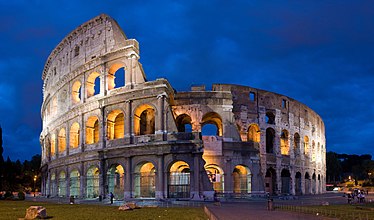
Colesseum

Diversity of the Games

The Roman games were a religious festival held in honor of Jupiter. The sheer diversity of the games amounted to a celebration of the immensity of the Roman world. They consolidated the ancient bond between the plebs (Roman citizens) and the Senate. Nobility turned out in force to attend the games.

The games were more than a grand parade of the nobility – they were a time of wonder for all. Huge stocks of gold evaporated in a week so the amphitheater could be turned into a place of miracles. For a blessed moment, the rules of normal life were held in suspense.

The diversity of the games included tightrope walkers, ballet dancers, amphitheaters filled up with water for naval spectacles, and fountains with perfumed water. But, above all, the animal world poured into the city – from all over, all to Rome.

Animals Imported for the Games

  • Crocodiles from the Nile.
  • Irish wolfhounds from Britain.
  • Lions from north Africa.
  • Antelopes & gazelles from the Sahara.

What the Animals Represented 

  • Like the empire itself, their capture and eventual slaughter represented a triumph of human order over a savage world.
  • Most beasts were lethal – they were destined to be slaughtered, by skilled huntsmen, armed with pikes, who were the matadors of the classical world.
  • Beasts were slaughtered in a solemn mood.

What happened in the amphitheater was more than a blood sport – it was a fortifying lesson in the triumph of civilization. The activities celebrated the victory of human energy, human skill, and human courage over the wild. For this reason, “human animals” also made their appearance – and, like the rest of the animals, they were destined for slaughter.

Gladiators 

Saxon prisoners of war were sent to Rome to serve as gladiators, condemned to fight to the death in front of the Roman people. The deaths of such prisoners, rounded up from the coasts of the English Channel, were intended to make plain, in the middle of Rome, the most magical of all energies – the eternal victory of empire along the frontiers of the North.

Christian Nobility and the Games

The bronze tokens issued on the occasion of the Roman games show that representatives of Christian noble families presided at the Circus Maximus and the Colosseum over spectacles that were as thrilling, as cruel, and as calculated to cause the raw, pre-Christian adrenaline of worship for the city and the empire to flow in their veins just as any pagan family.

Through the Eye of a Needle
Through the Eye of a Needle: Wealth, the Fall of Rome, and the Making of Christianity in the West, 350-550 AD
Peter Brown

Background on Peter Brown