Self or No Self? – Early Buddhist Teachings on the Question

Buddha’s Teaching

When the wanderer Vacchagotta asked whether there is a self, Buddha (480-400 BCE) remained silent. After Vacchagotta had gone away, Buddha explained to his disciple Ananda that to have affirmed or denied the existence of self would have led to a metaphysical dead end (from Samyutta Nikaya).

Buddha made and acted on decisions that made a profound difference in his life. Had he not believed this was possible for others, too, there would have been little point to spending forty-five years encouraging people to pursue a path of moral responsibility, contemplative practice, and philosophical reflection. The self may not be an aloof, independent “ruler” of the body and mind, but neither is it an illusory product of impersonal physical and mental forces. Buddha is interested in what people can do, not with what they are. The task he proposes entails distinguishing between what is to be accepted as the natural condition of life (the unfolding of experience) and what is to be let go of (reactivity).

Nagarjuna’s Teaching

The ambiguity and elusiveness of self is captured in a verse from Nagarjuna (150-250 CE) :

If the self were the bundles,
It would be something that arises and passes away;
If it were other than the bundles,
It would not bear their characteristics.

…..Mulamadhyamaka-karika

Were I reducible to my body, feelings, perceptions, inclinations, and consciousness, then, since they are constantly changing, I would be constantly changing. But, that is clearly not the case. Nagarjuna takes it for granted that to be a self means to have a perspective on experience that remains constant while the feelings, perceptions, and inclinations that make up one’s experience arise and pass away. At the same time he recognizes the absurdity of thinking of the self as something different from what makes up its experience. Why? Because the only way “I” or “you” can be known is through our features: our name, our physical appearance, our moods, our thoughts, our acts. Remove these features, and the self to whom they belong vanishes as well.
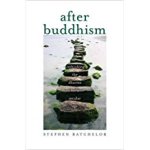
After Buddhism: Rethinking the Dharma for a Secular Age
Stephen Batchelor

Background on Stephen Batchelor


How Does Our Ability to Feel Another Person’s Pain Work?

To empathize with another person is to literally feel their pain. You run a compelling simulation of what it would be like if you were in that situation. Our capacity for this is why stories – like movies and novels – are so absorbing and so pervasive across human culture. Whether it’s about total strangers or made-up characters, you experience their agony and their ecstasy. You fluidly become them, live their lives, and stand in their vantage points. When you see another person suffer, you can try to tell yourself that it’s their issue, not yours – but neurons deep in your brain can’t tell the difference.

This built-in factory to feel another person’s pain is part of what makes us so good at stepping out of our shoes and into their shoes, neurally speaking. But why do we have this facility in the first place? From an evolutionary standpoint of view, empathy is a useful skill: by gaining a better prediction about what they’ll do next. However, the accuracy of empathy is limited, and in many cases we simply project ourselves onto others.

The Brain: The Story of You

David Eagleman

Background on David Eagleman


Does Penetrating A Mystery Make It Any Less Mysterious?

A problem once solved ceases to be a problem; but the penetration of a mystery does not make it any less mysterious. The more intimate one is with a mystery, the greater shines the aura of its secret. The intensification of the mystery leads not to frustration (as does the increasing of a problem) but to release.

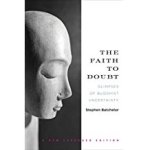
The Faith to Doubt: Glimpses of Buddhist Uncertainty
The Faith of Doubt: Glimpses of Buddhist Uncertainty
Stephen Batchelor


Stephen Batchelor
Stephen Batchelor

born 1953

. Wikipedia
Martine & Stephen Batchelor

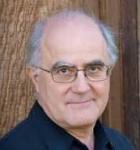
Stephen Batchelor, along with his wife Martine, are Buddhist teachers and authors, who live in South West France and conduct meditation retreats and seminars worldwide. They both trained as monastics for ten years in traditional Buddhist centers in Asia, and now present a lay and secular approach to Buddhist practice, largely based on the early teachings of the Buddha as found in the Pali Canon.

Books written by Stephen Batchelor include:


How Do We Create Our Version of Reality?

Your Brain – Your Storyteller

Your brain serves up a narrative – and each of us believes whatever narrative it tells. Whether you’re falling for a visual illusion, or believing the dream you happen to be trapped in, or experiencing letters in color (synethesia), or accepting a delusion as true during an episode of schizophrenia, we each accept our realities however our brains script them.

Despite the feeling that we’re directly experiencing the world out there, our reality is ultimately built in the dark, in a foreign language of electrochemical signals. The activity churning across vast neural networks gets turned into your story of this, your private experience of the world: the feeling of a book in your hands, the smell of roses, the sound of others speaking.

Even more strangely, it’s likely that every brain tells a slightly different narrative. For every situation with multiple witnesses, different brains are having different private subjective experiences. With seven billion human brains wandering the planet (and trillions of animal brains), there’s no single version of reality. Each brain carries its own truth.

So what is reality? It’s like a television set show that only you can see, and you can’t turn it off. The good news is that it happens to be broadcasting the most interesting show you could ask for: edited, personalized, and presented just for you.

The Brain: The Story of You

David Eagleman


David Eagleman
David Eagleman

born 1971

. David Eagleman website
. Eagleman Laboratory for Perception and Action
. Wikipedia

David Eagleman is a neuroscientist and writer, serving as an adjunct associate professor at Stanford University in the department of Psychiatry & Behavioral Sciences. He also independently serves as the director of the Center for Science and Law.

Eagleman is known for his work on brain plasticitytime perception, synesthesia, and neurolaw. He is a Guggenheim Fellow, a council member in the World Economic Forum, and a New York Times bestselling author published in 28 languages.

He is the writer and presenter of the international PBS series, The Brain with David Eagleman, and the author of the companion book, The Brain: The Story of You.

Eagleman has over 100  academic publications, and he has published many popular books. His bestselling book Incognito: The Secret Lives of the Brain, explores the neuroscience “under the hood” of the conscious mind: all the aspects of neural function to which we have no awareness or access. His work of fiction, SUM: Forty Tales from the Afterlives, is an international bestseller published in 28 languages and turned into two operas.

Books written by David Eagleman include: