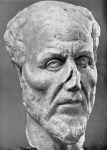
Zoroaster – One of the Most Influential Religious Figures in History

Parsees, who came originally from Persia, have been in India for many centuries. Persia was the name the Greeks gave to Iran, a land to the  north-west of India. The Parsees follow a religion called Zoroastrianism that originated in Iran about the time of Israel’s exile in Babylon in the sixth century BC.

Other than the Parsees in India, there aren’t many Zoroastrians left in the world, but their religion has had a profound effect on other faiths, including Judaism. And since Judaism gave birth to Christianity and Islam, two of the world’s most populous religions, Zoroaster, the founder of Zoroastrianism, could be described as one of history’s most influential religious figures.

A Little History of Religion
Richard Holloway

Background on Richard Holloway
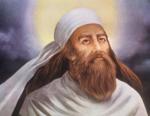


Zoroaster
Zoroaster
Persian Prophet
c. 628BC – c. 551BC

.

.. Ancient History Encyclopedia
. Encyclopaedia Brittanica
. Wikipedia

Zoroaster (Greek), also known as Zarathustra, was a Persian (Iranian) religious reformer and prophet, traditionally regarded as the founder of Zoroastrianism.

A major figure in the history of world religions, Zoroaster has been the object of much scholarly attention, in large part due to: 1) his apparent monotheism (his concept of one god, whom he referred to as Ahura Mazda or the “Wise Lord”); 2) his purported dualism (evident in the stark distinction he drew between the forces of good and the forces of evil); and, 3) the influence of his teachings on emerging Middle Eastern religions, including Judaism.

Zoroaster is said to have received a vision from Ahura Mazda who appointed him to preach the truth. Zoroaster began preaching his message of cosmic strife between Ahura Mazda, the God of Light, and Ahriman, the principle of evil. According to Zoroaster, man had been given the power to choose between good and evil. The end of the world would come when the forces of light would triumph and the saved souls rejoice in its victory.

This dualism was part of an evolution towards monotheism in the Middle East. Zoroaster’s teaching became the guiding light of Persian civilization.

After Alexander the Great conquered Persia, Zoroastrianism began to die out in Persia, but it survived in India where it became the basis of the Parsi religion.

 

How Did Ancient Philosophy Change in the Christian Era?

With the advent of the Christian era and the eventual outlawing, in 529 C.E., of the ancient philosophical schools (by Roman Emperor Justinian), philosophy conceived of as a way of life largely disappeared from the West. Its spiritual practices were integrated into, and adapted by, forms of Christian monasticism.The philosophers’ dialectical techniques and metaphysical views were integrated into, and subordinated, first to revealed theology and then, later, to the modern natural sciences.

However, the conception of philosophy as a way of life has never completely disappeared from the West, resurfacing in Montaigne, Rousseau, Goethe, Thoreau, Nietzsche, and Schopenhauer, and even in the works of Descartes, Spinoza, Kant, and Heidegger.

.
What is Ancient Philosophy?
Pierre Hadot

Background on Pierre Hadot


Was Ancient Philosophy a Spiritual Way of Life?

Twentieth- and twenty-first-century academic philosophy has largely lost sight of its ancient origin in a set of spiritual practices ranging from forms of dialogue, via meditative reflection, to theoretical contemplation.  These philosophical practices, as well as the philosophical discourses the different ancient schools developed in conjunction with them, aimed primarily to form, rather than only to inform, the philosophical student.The goal of the ancient philosophies was to cultivate a specific, constant attitude toward existence, by way of the rational comprehension of the nature of humanity and its place in the cosmos.

What is Ancient Philosophy?
Pierre Hadot

Background on Pierre Hadot


How Will Practicing Virtue Transform Us?

Practicing Virtue Engenders Gentleness

The practice of virtues assures a connection between the ecstatic and the everyday. Virtue expresses itself in a particular style of life and in a relationship with others that consists of mildness or gentleness. The secret of gentleness is to be found in a transformation of one’s whole being, a practice of virtue and contemplation that makes one present to Spirit while not excluding presence to other people, the world, and even the body.

Some Important Virtues:

plotinus-or-the-simplicity-of-vision
Plotinus or the Simplicity of Vision

Pierre Hadot

This lively philosophical portrait of Plotinus remains the preeminent introduction to him and his thought.


plotinus
Plotinus
204-270 AD

. Wikipedia
. Internet Encyclopedia of Philosophy
. Stanford Encyclopedia of Philosophy

Plotinus was a major Greek-speaking philosopher of the ancient world, influential in Late Antiquity. He is one of the most influential philosophers in antiquity after Plato and Aristotle.

Born in Egypt, Plotinus later moved to Rome, where he lectured and wrote. He is regarded as the founder of Neoplatonism  (a term invented by historians of the 19th century ). In his philosophy there are three principles: the One, the Intellect, and the Soul.  Much of the biographical information about Plotinus comes from Porphyry, a student of Plotinus. In addition, Porphory edited the Enneadsthe complete treatises of Plotinus.

Plotinus’ metaphysical writings have inspired centuries of Pagan, Christian, Islamic and Gnostic metaphysicians and mystics.


Pierre Hadot
Pierre Hadot
1922-2010

. Internet Encyclopedia of Philosophy
. Wikipedia

Pierre Hadot was a French philosopher and historian of philosophy specializing in ancient philosophy, particularly Neoplatonism. Hadot is best known for his conception of ancient philosophy as a bios (Greek), or way of life. His work has been widely influential in classical studies and on thinkers, including Michel Foucault.

Books written by Pierre Hadot include: