What’s the Process Way of Understanding God?

A process doctrine of Jesus’ significance cannot say that it is first through Christian faith that God works savingly in man, aiding him to find wholeness in life. For God as Holy Spirit is always influencing man toward that end which will bring him the greatest fulfillment consonant with the good of the rest of creation. Neither could a process view say that God’s attitude is different toward Christians and non-Christians. God loves all men equally, feeling their joys and sorrows alike, and willing each man his maximal fulfillment.

The process conceptualization of the Christian vision of reality implies an extension to the scope of the Christian’s concern beyond what is generally suggested by the term “social gospel.” Although man is objectively of much greater value than the other creatures, there is nevertheless no absolute distinction between him and the lower forms of life. Accordingly, the “social gospel” emphasis of Christianity must become an “ecological gospel” emphasis, since the “society” for which God is concerned includes the totality of beings, especially the totality of living beings.

God has led men from very primitive, tribalistic, self-serving notions of deity to the idea that their God is the creator of all men, who loves all his children equally. This has entailed the recognition that special knowledge of God does not increase God’s love for man, but increases man’s responsibility before God. The knowledge that God has achieved all this, in spite of the unviolated freedom and the natural egoism of the creatures, is an adequate ground for hope.

A Process Theology
A Process Christology
David Ray Griffin

.
Originally published in 1973, A Process Christology was the first full-scale Christology based upon process thought. Griffin contends throughout the book that Alfred North Whitehead’s process philosophy provides a basis for clarifying how Jesus of Nazareth is God’s decisive self-revelation. Process philosophy is shown to provide a way to speak of God’s self-revelation in a manner that is consistent with both modern thought and Christian faith.

A Process Christology brings together three dimensions of recent theology:

  • the new quest for the historical Jesus
  • the new-orthodox emphasis on God’s self-revealing activity in history
  • the theology based primarily on the process philosophy of Alfred North Whitehead and Charles Hartshorne
David Ray Griffin 75
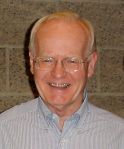
David Ray Griffin
born 1939

Professor Emeritus of Philosophy of Religion and Theology at the Claremont School of Theology.

Along with John B. Cobb, Jr., he founded the Center for Process Studies in 1973, a research center of Claremont School of Theology which seeks to promote the common good by means of the relational approach found in process thought.

David Ray Griffin’s books include:


The One Mind of the Universe

You should understand that in buddha-dharma, what is called the dharma gate of the vast total aspect of mind essence includes the whole vast dharma without separating essence and appearance and without speaking of arising and ceasing. [From life to death] and up to and including bodhi and nirvana, there is nothing that is not mind essence. Without exception, all the myriad phenomena in the entire universe are nothing other than this one mind, with everything included and interconnected. These various dharma gateways are all equally one mind. Saying there is no difference at all [between essence ans appearance] is exactly how buddhists understand mind essence.

The Wholehearted Way

Eihei Dogen’s Bendowa


Some key terms from the above quote:

  • bodhi — Sanskrit word meaning enlightenment or awakening
  • buddha-dharma — teaching of the Buddha; another name for Buddhism
  • dharma gate — opens one’s heart to the truth of the dharma
  • nirvana — state of bliss or peace; means “to extinguish,” such as extinguishing the flame of a candle, but it is not understood to mean annihilation, rather, it is thought of as passing into another kind of existence


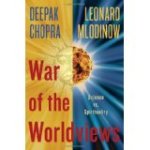
War of the Worldviews – The Battle Between Science and Spirituality

War of Worldviews
War of the Worldviews: Science Vs. Spirituality

Deepak Chopra & Leonard Mlodinow 


According to Physicist Leonard Mlodninow, Science says…

Science can answer the seemingly intractable question of how the universe came into being, and there is reason to believe that science will eventually be able to explain the origins of consciousness, too. Science is an ever-advancing process, and the end is not in sight. If at some future date we are able to explain the mind in terms of the activity of neurons, if all our mental processes do prove to have their source in the flow of charged ions within nerve cells, that would not mean that science denies the worth of “love, trust, faith, beauty, awe, wonder, compassion, truth, the arts, morality, and the mind itself.”

To explain something is not to diminish or deny its worth. It is also important to recognize that even if we consider a scientific explanation of our thought processes (or anything else) aesthetically or spiritually unsatisfying or unpalatable, that does not make it false. Our explanations must be guided by truth; truth cannot be adjusted to conform to what we want to hear.

According to Metaphysics Teacher Deepak Chopra, Spirituality says…

The curious thing is that physics, in proposing a universe where consciousness has no place for 13 billion years, undercuts its own foundation. The most advanced aspects of physics, quantum theory, tells us that a subatomic field holds reality together. But then physicists place this field outside ourselves; in other words, human consciousness knows itself, but the field isn’t permitted to do the same. This exclusion forces science into some tortuous claims.

The weakest link in the current argument from science is randomness. The factory’s assembly line produces beautifully made machines, intricate and efficient, each design displaying invention and creativity. Yet when you go around to the back of the plant and look closely, you find a cloud of iron atoms, silica, and plastic polymers swirling mindlessly as they are sucked into the factory. Is it really credible that this cloud of matter and energy, plus an indeterminate amount of time, was enough to lead to a car, all on its own? That is science’s current story about how the Big Bang led to the human brain. Incredibly, when asked if perhaps the Big Bang contained the potential for creativity and intelligence embedded in it, science’s conventional answer is a resounding no. Chaos can produce those things, we are told, given enough time and trillions of random interactions.


Deepak Chopra
Deepak Chopra (Deepak Chopra website, Wikipedia bio)
born 1947

Deepak Chopra is an Indian-born, American author and public speaker. He combines principles from Ayurveda (Hindu traditional medicine) and mainstream medicine. He believes in the primacy of consciousness over matter – that “consciousness creates reality.” Chopra is an alternative medicine advocate and a promoter of popular forms of spirituality. He is a licensed medical doctor, and specialized in endocrinology for many years.

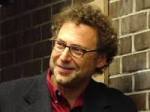
Leonard Mlodinow
Leonard Mlodinow (Wikipedia bio)
born 1954

Leonard Mlodinow is an American physicist, author and screenwriter. Apart from his research and books on popular science, he also co-wrote the screenplay for the 2009 film Beyond the Horizon and has been a screenwriter for television series, including Star Trek: The Next Generation and MacGyver. He co-authored a children’s chapter book series entitled The Kids of Einstein Elementary. Between 2008 and 2010, Mlodinow worked on a book with Stephen Hawking, entitled The Grand Designwhich explores both the question of the existence of the universe and the issue of why the laws of physics are what they are.